
If you feel stuck, scattered or flat and keep reading that your chakras might be “blocked,” here is how to unblock chakras the way most teachers describe it. You notice which part of your life feels off, match it to one of the seven chakras, then give that chakra some slow breaths, its seed sound, its color and a short affirmation.
Most people work their way up, from the root at the base of the spine to the crown at the top of the head.
Chakra work is a spiritual and yoga practice for calm and reflection. It is not a medical treatment, so a pain or symptom in your body is a job for a doctor, not for your chakras.
Quick pick
Which Chakra Should You Start With?
Tap the line that sounds most like you to jump to your match.
- Feeling scattered or unsafe? Start with the root chakra
- Has your creative spark gone flat? Work on the sacral chakra
- Low on confidence? Try the solar plexus chakra
- Lonely, or finding it hard to forgive? Open up the heart chakra
- Struggling to speak up? Go to the throat chakra
- Want to work on all seven tonight? Follow the simple routine
- Worried about a symptom in your body? See a doctor first, here is why
Keep reading below Where chakras come from Which one is blocked? Each chakra Reiki and crystals Stay safe Questions
Chakras are one of the tools we cover in our spiritual guides, next to signs, prayers and meanings. This one is practical, and you will find where the idea comes from, how to tell which chakra needs attention and what to do for each.
What Are Chakras?
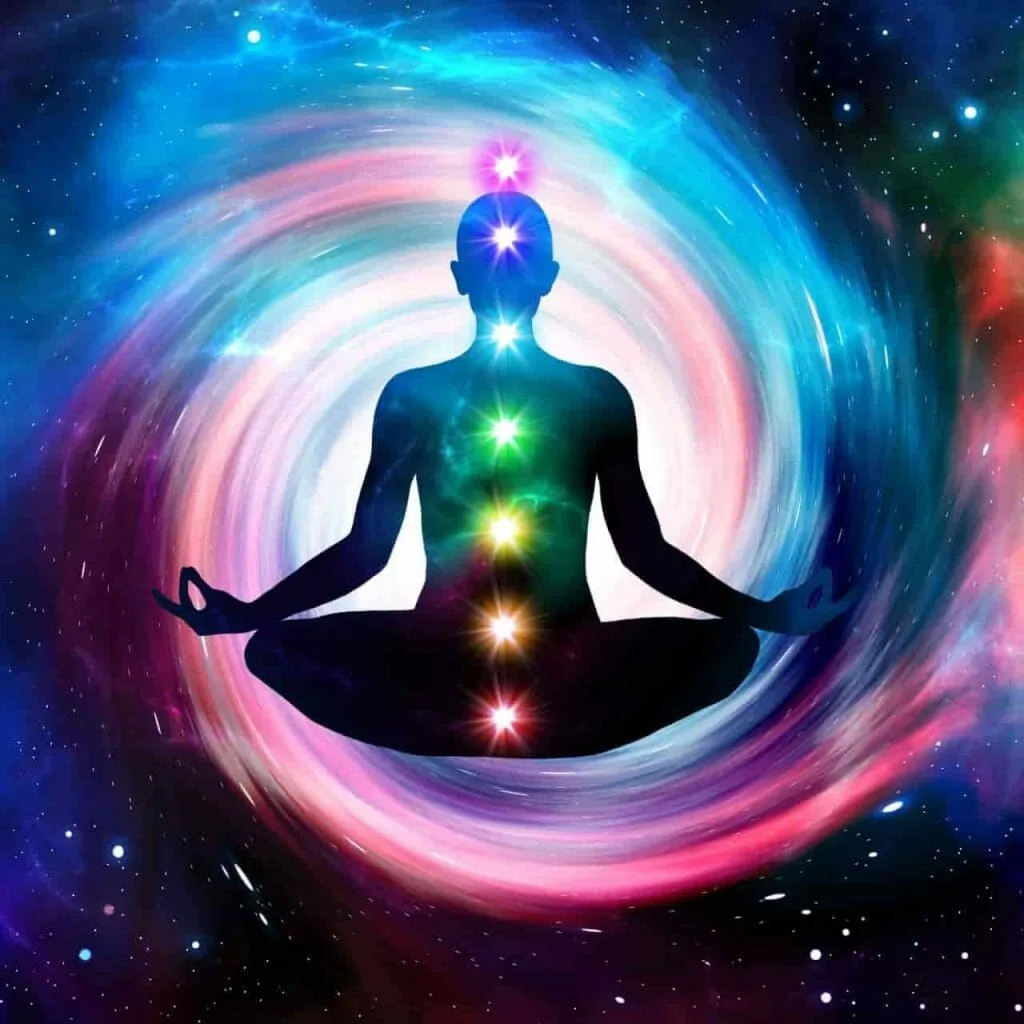
Chakras are energy centers that many yoga and meditation traditions place along your spine, from its base to the crown of your head.
Cleveland Clinic describes them as seven points that some people believe are linked to physical, emotional and spiritual functions. It adds that Western science does not recognize them, but that they can be a useful metaphor for finding balance.
The word comes from Sanskrit and means “wheel” or “circle.” So picture a column of small wheels of light, each one turning at its own spot in your body.
○ Where the Chakra Idea Comes From
Chakras come from the tantric traditions of India and Tibet, not from one single holy book. Wikipedia’s history of the idea says Buddhist texts from the 8th century mention only four or five chakras, while Hindu texts give various numbers.
The seven you know today, the same Wikipedia history says, are the set described in John Woodroffe’s 1919 book The Serpent Power. That book is a rough translation of a Sanskrit text from 1577, the Sat-chakra-nirupana, whose title means “Explanation of the Six Chakras”.
The rainbow came even later. Wikipedia credits the seven rainbow colors to the Theosophist Charles Leadbeater in 1927, and reports the writer Kurt Leland’s finding that the colors and the list of qualities for each chakra first appeared together only in 1977.
So the neat chart on every poster, red at the root and violet at the crown, is a modern Western version.
In the old texts, chakras were not something to fix. The Sanskrit scholar Christopher Wallis explains that they were focal points for meditation, and that the old traditions had many chakra systems, not one. The yogi would picture a shape of colored light at a point in the body and then sound a sacred syllable inside it.
We do not think that makes the modern chart worthless, and neither does Christopher Wallis, who writes that its history “by no means invalidates it”. It simply helps you to know that you are using a new map of an old practice.
○ The 7 Chakras and Their Meanings
Here is the modern chart, from the bottom up. Each chakra also has a seed sound, the one-syllable mantra that tradition gives it, and you can hum it while you practice.
- The root chakra, or Muladhara, sits at the base of your spine. Its color is red, it stands for safety and feeling grounded, and its seed sound is LAM.
- The sacral chakra, or Svadhisthana, sits in your lower belly. Its color is orange, it stands for creativity, pleasure and feelings, and its seed sound is VAM.
- The solar plexus chakra, or Manipura, sits in your upper belly. Its color is yellow, it stands for confidence and willpower, and its seed sound is RAM.
- The heart chakra, or Anahata, sits in the center of your chest. Its color is green, it stands for love, compassion and forgiveness, and its seed sound is YAM.
- The throat chakra, or Vishuddha, sits in your throat. Its color is blue, it stands for speaking up and self-expression, and its seed sound is HAM.
- The third eye chakra, or Ajna, sits between your eyebrows. Its color is indigo, it stands for intuition and imagination, and its seed sound is OM.
- The crown chakra, or Sahasrara, sits at the top of your head. Its color is violet, it stands for your link to the universe or something bigger than you, and it has no seed sound.
What Does It Mean When a Chakra Is Blocked?

In energy healing, a blocked chakra is one where energy is said to be stuck. Practitioners usually blame stress, hard experiences and feelings you have pushed down. You will also hear “out of balance,” “underactive” or “overactive.” Do not worry, they all point at the same idea.
We find it most useful to read a blocked chakra as a map of your feelings. Cleveland Clinic makes a similar point, that chakras are not recognized by Western science yet can work as a metaphor for finding balance.
So when your throat chakra “feels blocked,” what you usually notice in real life is that you are holding back what you want to say.
○ How to Tell Which Chakra Feels Blocked
There is no scan or test for a blocked chakra. What you have is an honest look at your own life. Yoga therapist Renee Warren, speaking to Cleveland Clinic, suggests asking yourself what makes you feel grounded versus scattered, and calm versus stressed.
Then match your answers to a chakra.
- If you feel unsafe, unsettled or worried about the basics, look at the root chakra.
- If your creativity or joy has gone flat, look at the sacral chakra.
- If you doubt yourself or struggle to make decisions, look at the solar plexus chakra.
- If you feel lonely, closed off or unable to forgive, look at the heart chakra.
- If you swallow your words or dread speaking up, look at the throat chakra.
- If you ignore your gut feelings, or your imagination has dried up, look at the third eye chakra.
- If you feel cut off from any sense of meaning or faith, look at the crown chakra.
You do not need to work on all seven at once. Most people find one or two that ring true, and that is where you start.
○ Can a Blocked Chakra Cause Physical Symptoms?
No, and if you take one thing from this page, let it be this.
Many chakra charts online list back pain, stomach trouble, thyroid problems or headaches as signs of a blocked chakra. But as Wikipedia’s article on chakras puts it, there is no scientific evidence that chakras exist and no meaningful way to measure them.
Those illness lists are not part of the old tradition either. Wikipedia notes that links to diseases, emotions and much else were added to the Western chakra system later still, after the rainbow colors.
So if your body hurts, if something keeps coming back, or if a symptom worries you, see a doctor first. The NCCIH (the US National Center for Complementary and Integrative Health) says the same about meditation, that you should not use it to replace medical care or to put off seeing a health care provider.
Our guide on when to see a doctor for body signs lists the signs that need quick help. For chest pain, trouble breathing or fainting, call your local emergency number.
Chakra practice can still sit beside that care. Slow breathing and a few quiet minutes are kind to a stressed body, whatever else is going on.
How to Unblock Chakras: A Simple Routine for All 7
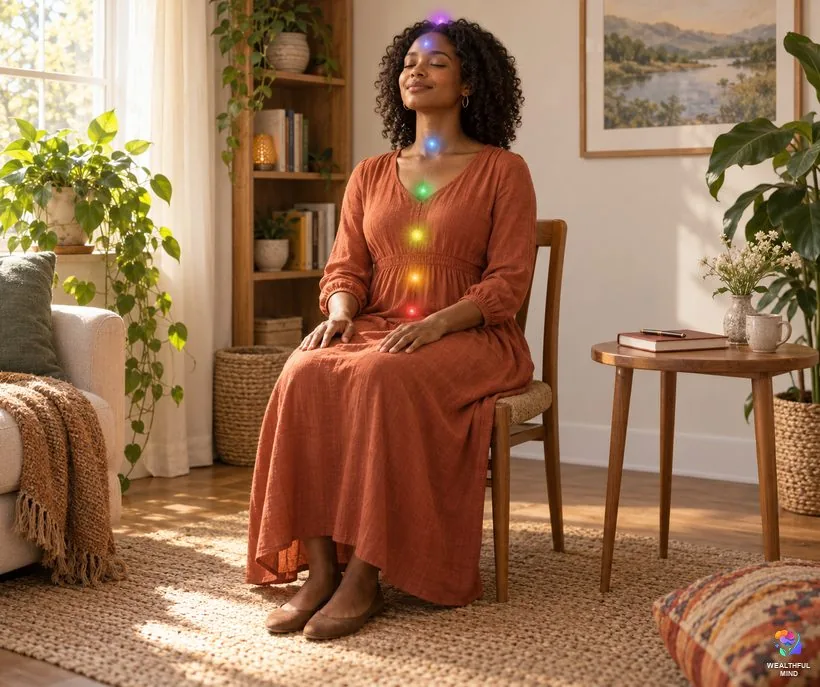
This routine works through every chakra in one sitting. Most guided chakra meditations follow the same pattern, and you can do it by yourself at home with nothing but a quiet corner.
- Sit comfortably on a cushion or a chair, with your back upright and your feet on the floor.
- Close your eyes and breathe slowly through your nose. Let your belly rise as you breathe in.
- Bring your attention to the base of your spine and picture a small red wheel of light there.
- Hum the seed sound LAM on a long out breath and feel the buzz in your body. Repeat it a few times.
- Say the chakra’s affirmation, out loud or in your head. For the root, try “I am safe and grounded.”
- Move up to the next chakra and do the same with its color, seed sound and affirmation. Keep going until you reach the crown, where you simply sit in silence.
- Finish by pressing your feet into the floor, then open your eyes slowly.
- Write down one thing you noticed. After a while, your notes will show you which chakra keeps asking for attention.
If you would rather be guided, you will find plenty of chakra meditations on YouTube. Meditative Mind’s “Unblock All 7 Chakras” is one our readers search for by name.
The next section gives you the colors, affirmations and poses for each chakra, so you can swap in your favorites.
○ Do You Have to Go in Order?
Most teachers start at the root and work upward, and we think that is the best way for you to begin. A common picture on chakra forums is a building. If the ground floor is shaky, the upper floors will be too.
But you do not have to follow it strictly. If one chakra clearly matches what you are going through, it is fine to spend a whole session on that one.
Just finish by grounding yourself, with your feet on the floor and some slow breaths.
How to Unblock Each Chakra
Each chakra below has its usual signs and a set of practices to try. The signs are about feelings and habits, never about your health. Pick the practices that appeal to you rather than trying them all.
○ Root Chakra (Muladhara)
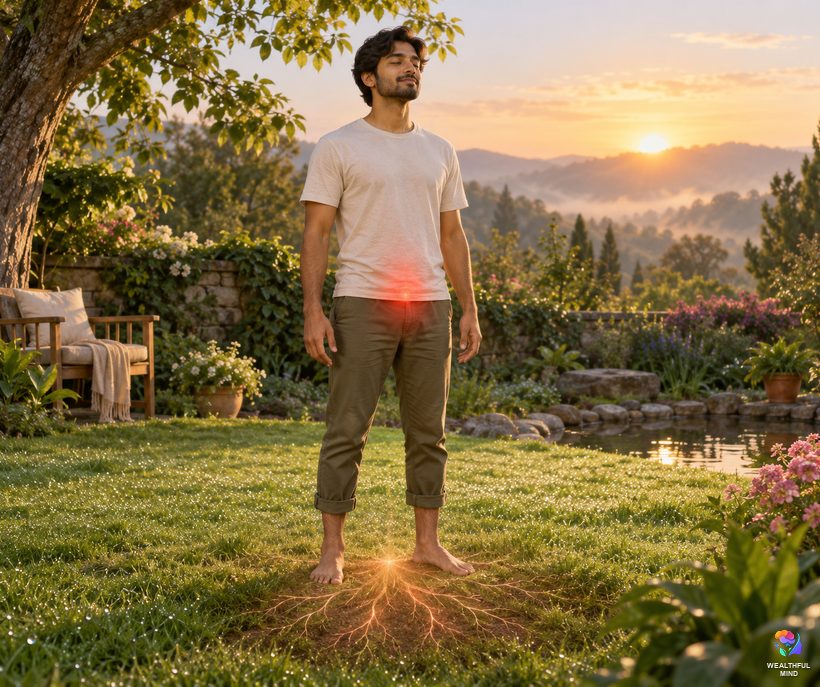
You may feel stuck in a rut, or like there is a lot of instability in your life. Maybe you feel unsettled at home or unsure of who you are. Those are the classic signs of a blocked root chakra, the first chakra at the base of your spine.
Here are some ways to work with your root chakra.
- Try grounding yoga poses like easy seated pose, child’s pose or a deep squat (Sukhasana, Balasana and Malasana).
- Try EFT tapping on the outside of your thighs. EFT stands for Emotional Freedom Techniques, where you tap lightly on a spot while you focus on a feeling.
- Imagine you are a tree, with roots growing deep into the earth and branches reaching for the sky.
- Hum LAM while you picture a red glow at the base of your spine.
- Say affirmations like “I have strong roots,” “I am grounded and centered” or “I am safe and at home.”
- Wear red, or keep red things around you.
- Walk barefoot on grass or sand when you get the chance.
○ Sacral Chakra (Svadhisthana)
When your sacral chakra, the second chakra, is blocked, you might hit creative blocks or feel that nothing is fun anymore. It can be hard for you to enjoy things or to let your feelings out, and you may feel distant from other people. Tradition also links this chakra to pleasure and sexuality.
These practices can help you bring your sacral chakra back into balance.
- Try hip-opening poses like goddess pose, a wide-legged forward fold or warrior II (Utkata Konasana, Prasarita Padottanasana C and Virabhadrasana II).
- Tap lightly just below your belly button.
- Hum VAM and picture a warm orange glow in your lower belly.
- Dance, paint, cook or make something with no goal at all.
- Say affirmations like “I am a channel for creative energy,” “I let myself feel” or “I am allowed to enjoy my life.”
- Wear orange or keep orange things nearby.
○ Solar Plexus Chakra (Manipura)
You may find it hard to trust yourself, or notice your confidence is lower than usual. These can be signs of a blocked solar plexus chakra, the third chakra, in your upper belly. It is the chakra people connect with willpower and making decisions.
Try a few of these to support your solar plexus chakra.
- Tap just below your breastbone with your fingertips.
- Try a low lunge, upward plank or boat pose (Anjaneyasana, Purvottanasana and Paripurna Navasana).
- Hum RAM and picture your solar plexus glowing with golden sunlight.
- Say affirmations like “I am capable,” “I can lead others” or “I trust myself.”
- Make one small decision today and stick to it.
- Surround yourself with yellow or gold.
○ Heart Chakra (Anahata)
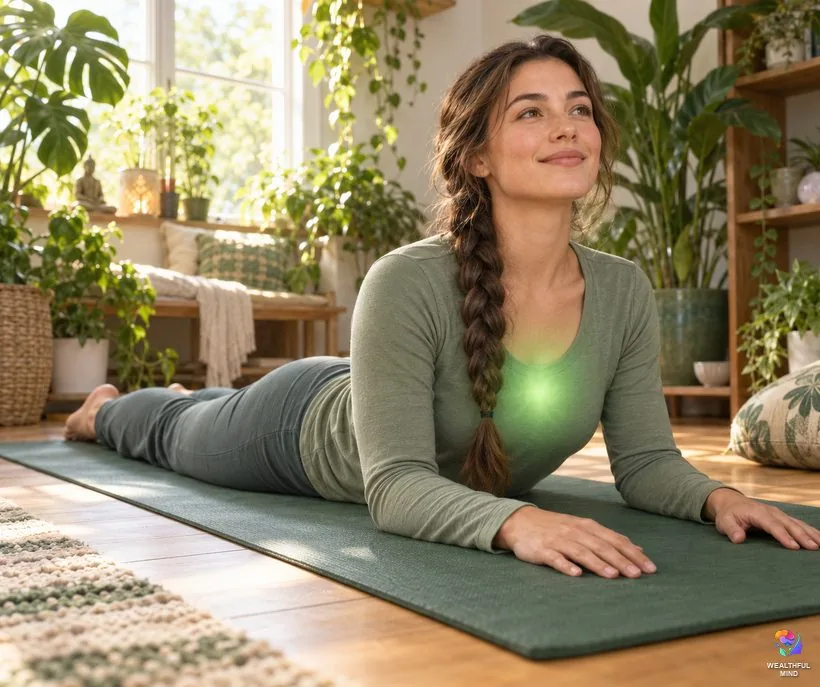
If you feel lonely or shy, or find it hard to feel compassion for others, your heart chakra, the fourth chakra, may be blocked. Forgiving people can feel impossible when it is out of balance. Some people also say they cannot cry, even when they want to.
These practices can help you open your heart chakra.
- Tap lightly at the center of your chest.
- Try gentle backbends like sphinx pose, wild thing or camel pose (Salamba Bhujangasana, Camatkarasana and Ustrasana), going only as far as feels easy.
- Hum YAM and picture a soft green light filling your chest.
- Say affirmations like “I am capable of deep empathy, compassion and forgiveness” or “I am ready for love.”
- Write a thank you note to someone, even if you never send it.
- Wear green, spend time among trees and plants, or bring green things into your room.
○ Throat Chakra (Vishuddha)
If you find it hard to speak up for yourself, feel nervous in groups, or dread giving a presentation, your throat chakra, the fifth chakra, may be blocked. You might also feel that your needs do not matter or do not deserve to be heard.
Here is how you can work with your throat chakra.
- Tap gently at the front of your throat.
- Try fish pose, simple neck stretches or lion’s breath, where you stick out your tongue and breathe out with a loud “ha.”
- Hum HAM, or sing along to a song you love.
- Say affirmations like “I speak my truth,” “I deserve to be heard” or “I share my needs clearly.”
- Write down what you wish you had said, then practice saying it out loud.
- Wear blue or keep blue things around you.
○ Third Eye Chakra (Ajna)

If you feel out of touch with your instincts, or your imagination seems to have dried up, your third eye chakra, the sixth chakra, may be blocked. People who work with this chakra often say they second-guess every decision.
If gut feelings interest you, our post on instinct vs intuition explains how the two differ.
Try some of these practices for your third eye chakra.
- Tap lightly between your eyebrows, the spot tradition links to the third eye.
- Try child’s pose, legs up the wall or crocodile pose (Balasana, Viparita Karani and Makarasana).
- Hum OM and picture a deep indigo light between your brows.
- Say affirmations like “I trust my instincts,” “My imagination is boundless” or “The universe guides me through my intuition.”
- Keep a dream journal by your bed and jot down whatever you remember when you wake.
- Choose indigo clothes or keep indigo things nearby.
○ Crown Chakra (Sahasrara)
A blocked crown chakra, the seventh chakra, is often linked to closed-mindedness, or a feeling that life has no bigger meaning. You might feel cut off from God, the universe or anything greater than yourself. Like a blocked root chakra, it can also leave you feeling scattered and off-center.
These practices help you connect with your crown chakra.
- Tap lightly on the very top of your head.
- Try tree pose or Savasana, where you lie on your back and let your whole body relax.
- Sit in silence for a while, since tradition gives this chakra no seed sound.
- Say affirmations like “I am connected to something bigger than me,” “I am aligned with my higher power” or “The highest good guides me.”
- Talk to the universe, or to God, the way you would talk to a friend. Our universe prayers give you somewhere to start.
- Picture a violet light just above your head, like a bridge between the seen and unseen worlds.
- Bring violet or purple things into your life, or wear these colors more often.
Reiki, Crystals and Other Tools
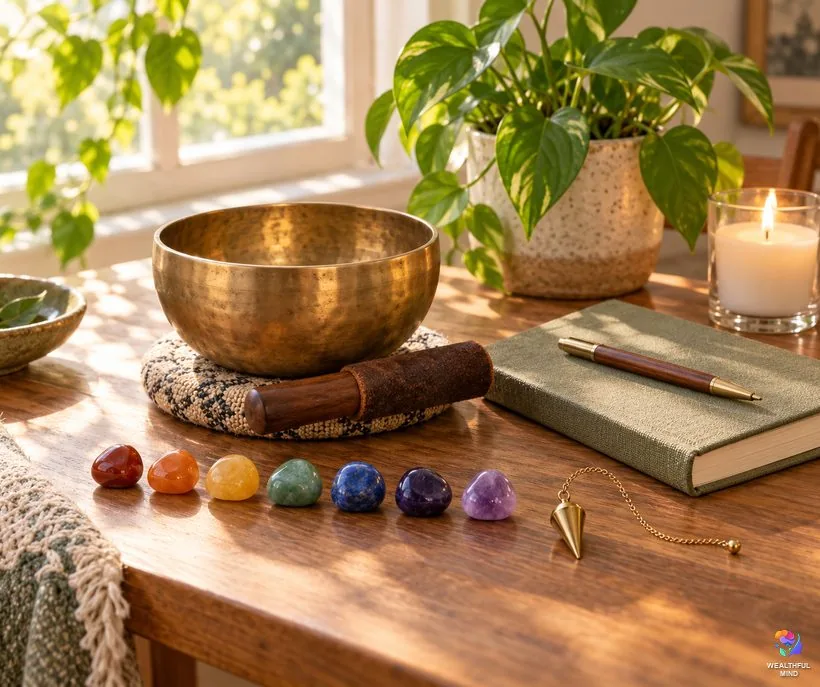
Beyond breath, sound and yoga, you will see all sorts of tools sold for chakra work. Here is an honest look at the most common ones.
Reiki. A Reiki practitioner rests their hands on or just above you, aiming to direct energy.
The NCCIH says Reiki has not been clearly shown to work for any health purpose, and there is no scientific evidence for the energy field it relies on. It also has not been shown to cause harm, so if a session relaxes you, enjoy it, but never pay for it in place of medical care.
Crystals. Each chakra has stones people match to it, like red jasper for the root or amethyst for the crown. Nothing shows a stone can move energy, but holding one can remind you to come back to your practice. A cheap stone does that job as well as an expensive one.
Sound. Singing bowls, tuning forks and chakra music are popular. You get much the same feeling for free when you hum the seed sounds yourself.
Pendulums. Some people hold a pendulum over each chakra and read its swing. Treat it as a ritual for reflection, not as a reading of your body.
Journaling. This one is underrated. A few honest lines about what each chakra’s questions stir up in you will tell you more than any tool.
Is Unblocking Chakras Safe?
For most people, slow and simple chakra work is calm and safe. But meditation is not free of risk for everyone. The NCCIH describes a 2020 review of 83 studies, which found that about 8 percent of the people taking part had a negative effect from meditating, most often anxiety or depression.
So take it slowly and keep your first sessions short. Stop, open your eyes and press your feet into the floor if you notice any of these.
- You feel dizzy, your heart races, your chest feels tight or you cannot catch your breath.
- Panic or a wave of fear comes up and does not settle.
- You feel as if you are outside yourself, or as if the world is not real.
If a body sign does not settle after a few minutes of rest, get medical help, and treat chest pain or real trouble breathing as an emergency.
That last one has a name. The NHS describes it as feeling disconnected from yourself and the world around you, or feeling that the world is unreal. It is a warning sign, not a chakra opening, so pause your practice and tell someone you trust, like a parent, a teacher or your doctor.
Yoga needs a little care too.
The NCCIH says serious yoga injuries are rare, but beginners should avoid extreme practices such as headstands and forceful breathing, and anyone pregnant or with a health condition should check with their provider first. That is why we have left out the headstand some chakra guides suggest for the crown.
And if you ever feel you might hurt yourself, phone your local emergency number straight away.
Start With One Chakra
You do not need to unblock all seven chakras this week. Pick the one whose questions made you nod, give it a few quiet minutes tonight, and see what you notice.
Over time, the practice itself becomes the point. Some calm breaths, a color, a sound and a kind word to yourself make a lovely way to end any day.
Frequently Asked Questions About Chakras
How many chakras are there?
The modern system most people use has seven main chakras, from the root at the base of the spine to the crown at the top of the head. The old tantric texts never agreed on a single number, and different schools describe fewer or more. Some modern teachers also add chakras above the head or below the feet. Seven is simply the most common map, and it is the one this guide uses.
Do chakras open in a specific order?
Most teachers start with the root chakra and work up to the crown, because the root is seen as the foundation for the rest. That is a good habit for beginners. But if one chakra clearly matches what you are going through, it is fine to spend a session on that one alone. Just finish by grounding yourself with your feet on the floor.
How long does it take to unblock chakras?
Nobody can give you a real timeline, because there is no way to measure a chakra. Some people say they feel calmer after one session, while others describe chakra work as a practice they keep up for years. We suggest treating it like any good habit: do a little often, keep notes, and judge it by whether you feel calmer and clearer, not by a deadline.
Can you unblock chakras by yourself?
Yes. The routine on this page needs nothing but a quiet place, your breath and your voice, and many people practice alone at home. A yoga teacher can help with the poses, and a guided meditation can help you stay focused. You do not need to pay a healer to do it for you.
Does the Bible talk about chakras?
No. The word chakra comes from Sanskrit and from Hindu and Buddhist tantric traditions, so it does not appear in the Bible. If you are Christian and unsure whether chakra meditation fits your faith, you can keep the slow breathing and quiet prayer and leave the rest out, or talk it over with your pastor or priest.
Is unblocking chakras dangerous?
Chakra work is safe for most people, but meditation can stir up anxiety or low mood in some, as the NCCIH notes. Stop if you feel dizzy, panicky or short of breath, or as if the world is not real, and talk to someone you trust or a doctor. Beginners should also skip headstands and forceful breathing. And a body symptom is never a sign of a chakra opening, so see a doctor about it.

Thanku my friend Manasa, you have guided so well. Image of every chakra is amazing. I want to talk with you..
Your friend
Namrata