

The holy basil spiritual benefits that tradition names all grow from one belief: in Hinduism, the tulsi plant is the goddess herself. Tending it is said to bring Lakshmi’s blessings, guard and purify your home, and help a soul pass safely after death.
That is why it stands apart among the magical herbs, and you can work with it whatever your own path. These are beliefs and practices, not proven effects.
The health side of tulsi is a separate, smaller story, and we cover it honestly further down (along with what to check before you drink it). You can read about other plants with long histories in our herbs section.
Holy Basil Magical Properties
In Ayurveda, India’s traditional medicine, tulsi carries some grand nicknames. Marc Cohen’s 2014 review of tulsi research lists “The Incomparable One,” “Mother Medicine of Nature” and “The Queen of Herbs.”
In the West, it often gets the opposite title, “King of Herbs” (more on where that comes from below). Practitioners associate it with wealth, prosperity and transitions, and also use it for purification and energy balancing. Below, we explore how you can use holy basil to enhance your spiritual well-being.
○ Call Upon the Mother Goddess Lakshmi with Holy Basil

In India, holy basil is a sacred herb, often called “Tulsi.” Sometimes it also is called “Tulasi” or “Vrinda.” In Hinduism, “Tulsi” is seen as a form of the goddess Lakshmi.
Which goddess depends a little on whom you ask. Hinduism Today explains that devotees of Vishnu usually see Tulsi as Lakshmi or Vrinda, devotees of Rama may see Sita, and devotees of Krishna see Vrinda, Radha or Rukmini.
Lakshmi is known as the Mother Goddess. Her name comes from Sanskrit words for knowing and for a goal or aim, so it is often read as “the one who knows the goal.” She is the goddess of wealth, prosperity, fortune, abundance, love, beauty and power.
In one well-known Puranic story, a devoted woman named Vrinda becomes the tulsi plant, and Vishnu promises to marry her. Families still celebrate that wedding every year in the month of Kartika. The festival is called Tulsi Vivah, and the plant is married to Vishnu in the form of a sacred shaligram stone.
On ordinary days, many families simply water the plant in the morning and light a small clay lamp beside it in the evening.
Many of the spiritual benefits of holy basil are derived from the herb’s relationship with Lakshmi.
○ Holy Basil is the “King of Herbs”
Here is a small mix-up worth clearing up. The English word basil comes from the Greek for “royal plant,” so in Europe the whole basil family carried a kingly name, and that is where the title “King of Herbs” comes from.
Tulsi got the word “holy” because of its sacred place in India (its older Latin name, Ocimum sanctum, means just that).
Christians hold basil dear too. In Greek Orthodox churches, a sprig of basil is used to sprinkle holy water (usually the sweet basil you know from the kitchen). The plant is also tied to the legend of the finding of the Holy Cross.
A popular retelling says that basil grew at the site of Christ’s crucifixion, where his blood fell on the soil below the cross. We could not trace that version to an old source, so treat it as a modern story rather than church tradition.
So, whatever spiritual traditions you believe in or follow, basil in one form or another has a place there. Many people find that holy basil helps them feel connected with the divine.
○ Basil Can Bring Prosperity and Abundance Into Your Life
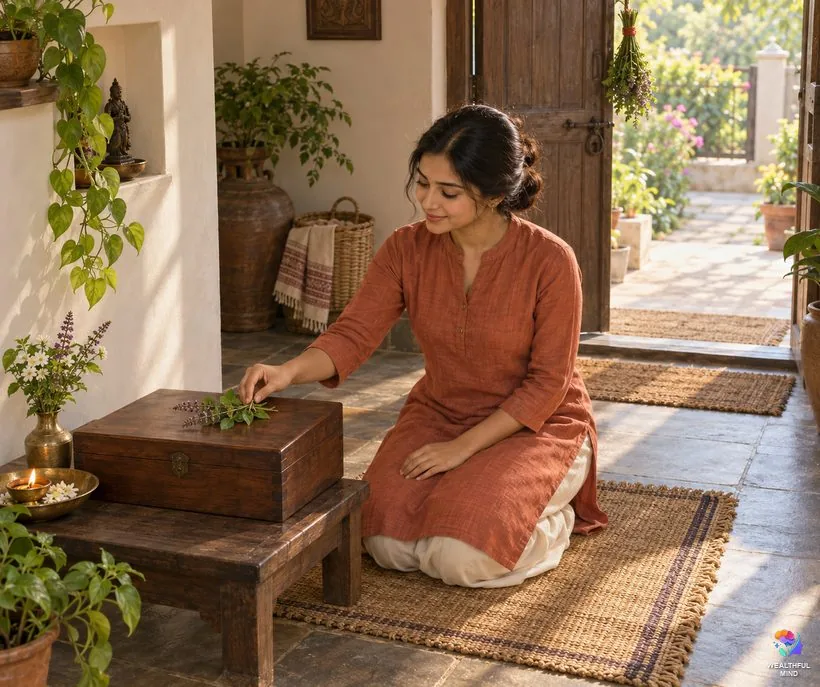
Because holy basil represents the goddess Lakshmi, practitioners use it to help draw wealth and prosperity.
Here are some ideas for rituals and spells you can try:
- Hang holy basil above your doors, inviting wealth to enter your home.
- Put money inside a box, and then place holy basil on top of it. Write or say your intent for your funds to multiply, and then close the box and put it somewhere secure.
- Carry a sachet of holy basil in your pocket so that you can attract business opportunities as you are out and about.
A ritual works best as a reminder of the real steps you are taking toward your money goal. Our guide on how to manifest money sets out those steps one by one.
○ Purify Your Ritual Space with Holy Basil
Practitioners say holy basil can help dispel negative energies from your environment. To use holy basil for purification, you can try any of the following approaches:
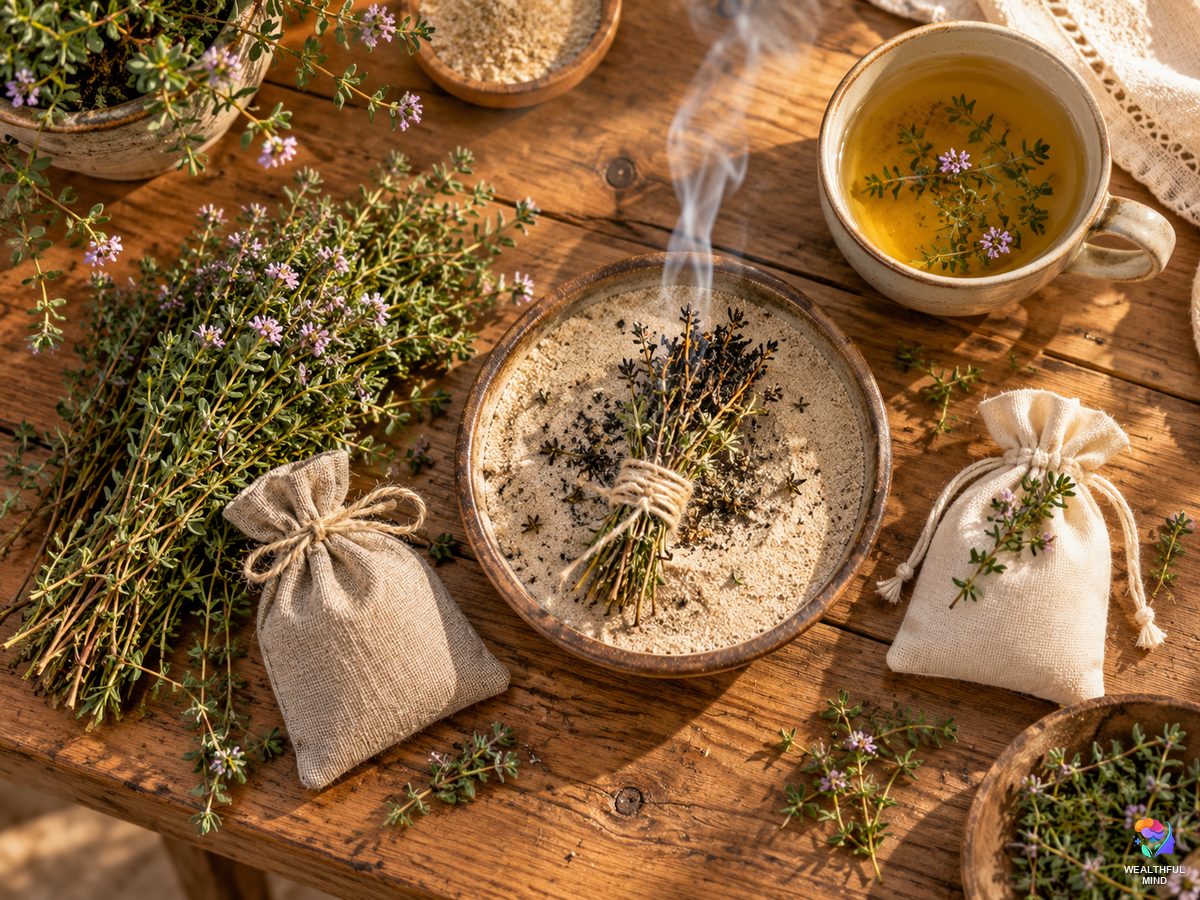
- Walk around your ritual space with a holy basil smudge stick, smoke wand, or incense.
- Make holy basil tea and sprinkle the water.
- Hold your ritual tools over the smoke from a smudge stick to purify them individually.
In Indian homes, tulsi also guards the door. Hinduism Today notes that tulsi leaves and sprigs are hung in the entryways of homes to keep troublesome spirits away. So if you have holy basil hanging over your thresholds to attract money, it should also help protect your entrances.
A word on smoke, since two of these ideas involve burning. The US Environmental Protection Agency names burning candles as one indoor source of fine particles that can affect your lungs and heart.
So open a window and keep the burn short. The National Fire Protection Association’s candle advice fits a smoldering stick too: blow it out whenever you step out of the room, and always before sleep.
In a house where anyone has asthma, or where a cat or a bird shares the room, let the tulsi water do the cleansing. It smells lovely and leaves nothing in the air.
○ Ensure Safe Transitions with Holy Basil

In Hindu tradition, tulsi leaves are closely tied to the transition after death.
Hinduism Today describes the custom of keeping a tulsi leaf in the mouth of a dying person, to ensure the soul’s passage to the heavenly realms.
If you want to say a prayer for a departed soul, you can burn holy basil incense or simply sit beside a tulsi plant. Meditate on your intent for that person to reach their destination safely.
As we walk through life, we are constantly experiencing many small deaths.
Even if we are not talking about physical losses, every moment, the past dies, and we transition toward the future through an ephemeral present.
Because life is always in transition, practitioners believe holy basil can help you find your way in this life too, not only in the next.
If you are facing a time of turbulence and change, you can burn holy basil and say a prayer that you will reach your destination safely.
○ Get Energy Moving with Holy Basil
Practitioners think of holy basil as a flow facilitator. They say it helps move energy, whether in your body or in your environment.
If you have been feeling “stuck,” Tulsi is an herb that many people turn to for getting “unstuck.”
- While burning holy basil leaves, say an affirmation like, “I am no longer stuck. My life is full of flow and forward movement. Lakshmi is helping me reach my goal.”
- Carry holy basil with you in a sachet so that no matter where you are, you have a bit of universal “flow” in your pocket, clearing obstacles from your path and inviting possibilities.
○ Balance Your Chakras
Because of its reputation for promoting flow and clearing away blockages and impurities, practitioners count holy basil among the most useful herbs for balancing, aligning and opening your chakras.
Tulsi is not tied to one particular chakra. Practitioners use it to balance all of your chakras together.
- Burn Tulsi incense (or set a fresh sprig beside you if you prefer no smoke).
- Lie down comfortably on your back.
- Starting at the base and working your way up to the crown, visualize each of your chakras getting brighter and clearer.
Many practitioners say this simple meditation leaves them feeling calmer, clearer and more balanced.
Healing Properties and Household Uses for Holy Basil
Now you know the spiritual benefits of Tulsi for abundance, balancing chakras, and more. But there are other uses for holy basil as well. Indeed, it has become a popular herbal remedy, and also is useful in the kitchen.
○ Fight Stress with Holy Basil

Holy basil is what herbalists call an “adaptogen,” an herb that is thought to help your body respond to stress.
Researchers are finding early signs that Tulsi may help the body and mind to weather stressful situations with fewer adverse effects, and that it may help to decrease anxiety. But the Merck Manual points out that the evidence in people is limited, and that many of the studies so far are small and of poor quality.
So, if you are going through a challenging or scary time, you may want to ask your doctor whether a holy basil supplement is right for you.
The Merck Manual explains why that check matters. Holy basil may lower blood sugar when you take it with diabetes medicine, and it may slow blood clotting, which matters with blood thinners or around surgery. It might also lower thyroid hormone, a concern if your thyroid is underactive.
If you are pregnant or trying to get pregnant, avoid taking holy basil by mouth, because the Merck Manual says it might not be safe then. Its safety while breastfeeding has not been studied at all.
And if worry is getting in the way of school, sleep or everyday life, don’t carry it alone. A doctor, a school counselor or someone in your family can help.
○ Additional Health Benefits of Holy Basil
Along with its reputation for easing stress and anxiety, holy basil is credited with many other health benefits as well.
It contains compounds thought to fight viruses, fungi and bacteria, and it may also ease pain and inflammation, though much of this comes from lab and animal studies.
Early research also hints at benefits such as reducing blood sugar, supporting wound healing, lowering cholesterol, protecting joint health, and bolstering stomach health. Still, the Merck Manual is clear that there are no high-quality studies in people showing that holy basil treats any health condition.
So, Tulsi is a promising herb to enjoy, but not one to rely on to treat a health problem.
○ Cooking with Holy Basil
Like many other herbs with magical properties, holy basil also can be a helper in the kitchen. You can use it in place of garden basil to make pesto, or you can grind it to make chutney. It also goes well with chicken or on pizza.
In Thailand, it is the star of phat kaphrao, a quick, peppery stir-fry served over rice.
Using basil in your recipes is a great way to bring the herb into your daily life while also making your cuisine taste delicious.
You can also use cooking in some of your rituals for abundance and prosperity. If you are preparing for an upcoming business dinner, for example, you could add holy basil to your recipe as a small wish for profitable deals and opportunities.
Frequently Asked Questions about Holy Basil (Tulsi)
Now you have had a chance to discover the healing properties, culinary uses, and magical properties of holy basil, let’s answer a few frequently asked questions about this herb.
What is the difference between Tulsi basil and garden basil?
Holy basil typically refers to the plant with the scientific name Ocimum tenuiflorum, previously Ocimum sanctum. What we call “garden basil” or “sweet basil” is Ocimum basilicum. The flavor profile for holy basil reminds some people of peppery cloves. Many compare the flavor of sweet basil to that of licorice (but still with an element of cloves). So, take taste differences into account before making substitutions in your recipes.
What are the different types of holy basil?
Holy basil comes in a few main types. Rama Tulsi has bright green leaves and Krishna (or Shyama) Tulsi has purple-tinged leaves, but both are the same species, Ocimum tenuiflorum (once called Ocimum sanctum). Vana Tulsi, the wild type, is a close relative such as Ocimum gratissimum rather than true holy basil.
Is holy basil safe during pregnancy?
No, it’s best to avoid holy basil if you’re pregnant or trying to get pregnant. In animal studies, large doses made it less likely that a pregnancy would take hold and last to full term, and nobody yet knows whether the same happens in people. Its safety while breastfeeding hasn’t been studied, so you should also avoid it when you are nursing.
How do you grow holy basil?
Either full sun or partial shade is ideal for growing holy basil. Plant it in rich, well-draining soil. Water often enough to keep the soil moist, but do not allow this plant to get wet feet.
How do you harvest holy basil?
In the morning after the dew evaporates, take your holy basil cuttings. Look for the bottom two sets of true leaves on the stems, and cut right above them. You can use shears or a knife.
How do you dry holy basil?
The best way to dry holy basil is to hang small bunches upside down in a dry, airy spot until the leaves crumble easily. Many practitioners believe that a drying bunch also lends its protection to the room it hangs in.
How do you store holy basil?
Fresh Tulsi keeps for a short while. Either put it in a sealed plastic bag with a damp paper towel in the fridge, or stand it in a jar of water like a bouquet of flowers, with a plastic bag loosely over the top, on your counter. For longer storage, freeze it. Keep dried leaves in an airtight container or bag labeled with the date, and replace them once their scent fades.
Why should you not touch tulsi on Sundays?
Many Hindu families avoid touching or plucking tulsi on Sundays, on Ekadashi and during eclipses, because Tulsi is said to be fasting in devotion to Vishnu on those days. Customs differ from family to family, and some also skip watering. If your plant is drying out in the heat, devotees in a recent r/hinduism discussion said that letting a sacred plant suffer is the bigger mistake, so give it a little extra water the day before.
Is it bad luck if your tulsi plant dies?
Some vastu writers treat a dying tulsi as a sign of money troubles ahead, but we would not read it that way. Tulsi is a warm-weather plant, and most die from cold, too little sun or too much water (some families find that milk poured on the soil harms it too). Thank the plant, return it to a river or the earth as many families do, and start a new one in your sunniest window.
Is holy basil safe for cats and dogs?
The ASPCA lists sweet basil as non-toxic to dogs and cats, but holy basil itself is not on its list. To be safe, keep the pot where pets cannot chew it, keep incense smoke and essential oils away from them, and call your vet if your pet seems unwell after eating any plant.



Thanks for the education,I have alot in my garden
I find this content good