“Manliness consists not in bluff, bravado or lordliness. It consists in daring to do the right and facing consequences, whether it is in matters social, political or other. It consists in deeds not in words.” (Mahatma Gandhi, Young India, 1929)
Learning how to become a better man has far less to do with appearance or money than most of us are told, and far more to do with the everyday habits we build: how we look after our body and mind, take responsibility for our mistakes, treat other people well and show up for those who count on us. None of it depends on your height, your income or how much you can lift, and all of it can be learned!
Nobody is born finished. Working out how to be a better man starts with the willingness to grow. You do not need to work through every tip at once either, so pick two or three that genuinely hit home and begin there.
Our personal growth guides carry on from here whenever one tip opens up a bigger question.
Is There a Masculinity Crisis?

We hear the phrase a lot, usually from commentators who cannot agree on what it means. What is clear is that plenty of young men feel unsure of themselves right now, and that feeling deserves to be taken seriously rather than mocked.
○ Why Many Men Feel Unsure of Their Place
The old script was straightforward: be tough, earn the money and never talk about feelings. Many of us grew up with that script, only to find that it did not fit the lives we actually lead.
Work has changed, families share roles differently, and social media throws a hundred loud, conflicting ideas of ‘a real man’ at us every single day. Caught between traditional expectations and the internet’s contradictory advice, many men simply feel lost.
That confusion is completely understandable, and the answer is not to find someone to blame. Respecting how other people live, love or identify takes nothing away from you, because your worth as a man was never a competition with anyone else’s.
○ Masculinity Is Not About Dominance and Aggression
There is a narrow definition of manhood that is all power, anger and winning every argument. Some men copy it because it is the loudest version they have encountered, and it tends to leave them lonely and permanently on edge.
The men we actually admire are usually dependable rather than loud. They keep their word, stay calm under pressure, protect people instead of frightening them and can laugh at themselves.
That is the version this guide is about, and it sits close to what Gandhi meant at the top: daring to do the right thing and facing whatever comes of it.
The Tip List: 15 Ways to Become a “Better Man”
1. Lift Weights: Take Care of Your Body

Your body carries you through everything else on this list, and the way you treat it shows up in your mood, your concentration and your energy. Think of it as the foundation that the rest of the house sits on.
Strength training is an excellent starting point, as long as you balance it with movement that gets your heart going. The NHS advises adults to do strengthening activities for all the major muscle groups on at least 2 days a week, plus at least 150 minutes of moderate activity or 75 minutes of vigorous activity across the week.
Under 18? The NHS target for young people is an average of at least 60 minutes of activity a day, and it says they can use weights as long as a qualified adult has trained them to use the weights properly and supervises them. A PE teacher, coach or gym instructor can show you the basics before you ever load up a bar.
The rest is simple, even if it is not easy:
- Eat mostly unprocessed food, and reach for water before energy drinks.
- Protect your sleep, because late-night scrolling costs more than it gives.
- Build the habit slowly, since discipline beats motivation on the days you do not feel like training.
Please skip the shortcuts. The NHS warns that anabolic steroids taken without medical advice to build muscle can cause serious side effects and addiction, and in teenagers who have not yet had their growth spurt, they can restrict growth.
2. Make Time for Friends and Hands-On Hobbies
It is easy to let work, college and screens swallow every available hour. However, doing real things with real people is one of the quickest ways for us to feel like ourselves again.
What that looks like is entirely up to you, whether it is a sport, a long hike, learning to fix a bike, cooking a proper meal for friends, joining a community club or finally picking up a skill you have always wanted. Volunteering counts too, and serving others is one of the fastest ways to build a bond with the people around you.
Shared projects also make conversation easier. Plenty of men find it hard to open up face to face, yet talk comfortably side by side whilst fixing something or walking somewhere.
3. Show Up for Your Family
Being there for your family is about far more than money. Who earns what differs from home to home, and that is for each family to negotiate together, but what every family needs is people who are emotionally present.
Being present means noticing when someone is struggling and asking about it. It means doing your share of the cooking, cleaning and caring without being asked, and being the same person at home that you are in public.
Difficult seasons come for every family, whether it is money worries, illness, a death or a move to a new town. You don’t need to have every answer.
Staying calm, staying in the room and dealing with problems as a team is what your family will remember.
4. Stop Giving Your Power Away
We give our power away every time someone else decides how we feel about ourselves. That someone might be a boss, an ex, a group chat or a complete stranger online.
A particularly loud one right now is the online ‘alpha’ industry. Plenty of people will happily sell you a course, a supplement or a rulebook that promises to make you a real man, and many of them sell the very insecurity they claim to cure.
So be careful with anyone whose advice comes with a price tag and a lot of anger!
Taking your power back looks much quieter than that. Decide what you value, make decisions that match it and stop checking whether everyone approves, because confidence built on your own standards is the kind nobody can take away.
5. Learn to Stand on Your Own Feet
Growing up is hard, especially after a long stretch of being comfortable. Living with your parents is not the problem, though, since in India and many other places it is completely normal for grown men to live with family, and saving money is smart.
The real question is whether you are pulling your weight. Can you cook a few meals, do your own laundry, keep to a budget, pay your share and sort out your own difficulties?
If someone else still cleans up every mess you make, you miss the lessons that only come from handling the consequences yourself.
Independence is also where life purpose tends to show up. When we start making our own decisions and living with the results, we discover what we actually care about.
If you can afford to move out and fear is the only thing stopping you, take that as a sign to try. A winning mentality is mostly built from small, brave steps like that one.
6. Face the Pressures of Life Head-On
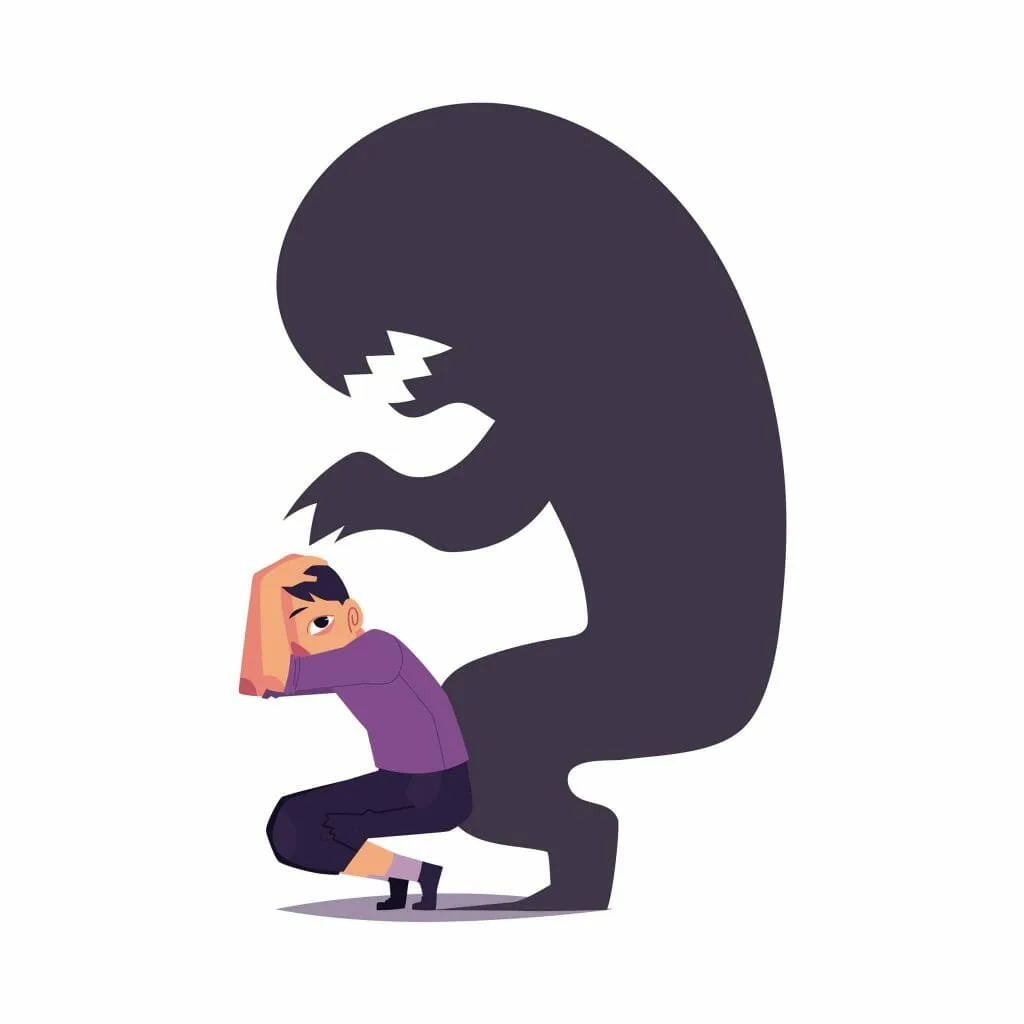
Problems we avoid do not disappear. They grow, like a shadow that gets longer the more we turn our back on it. Facing them early, even when you feel frightened, almost always costs less than waiting.
Facing things head-on also means recognizing when to get help. Many men were taught that asking for support is weak, when it usually takes far more courage than staying quiet.
The CDC’s figures show why this matters so much. In the US, the suicide rate for men was about 3 to 4 times the rate for women throughout 2014 to 2024. So talk when life gets heavy, to a friend, a family member, a doctor or a counselor, and our guide on when life gets hard has more ideas for getting through a rough patch.
If life feels so heavy that you have thought about ending it, please tell someone today. Saying it out loud takes the same courage as everything else in this tip.
Anywhere in the US, you can call or text 988, and the 988 Suicide & Crisis Lifeline answers 24/7, free and in confidence. In the UK, you can ring Samaritans on 116 123 at any hour, and the call is free. In India, Tele MANAS is a toll-free government helpline on 14416.
If you do not feel safe right now, phone your local emergency number instead.
7. Remain Accountable for Your Actions

Everybody messes up, and what separates a good man from a careless one is what happens next.
Accountability means saying ‘that was my fault’ without adding ‘but’. A good apology names what you did, says sorry for its effect on the other person and explains what you will do differently, and then you actually do it.
Excuses, blame and disappearing when things go wrong all chip away at trust, which is slow to rebuild.
Accountability works in our favor too, because owning a mistake quickly usually shrinks it, and people respect us more for it, not less.
8. Learn the Art of Saying “No”
Saying no is a skill, and it is more difficult than it looks. If we agree to everything, we end up resentful, overcommitted and living on everyone else’s terms.
Start small, with something like “No, I can’t make it this time” or “No, I’m not comfortable with that.” None of us owes anyone a long explanation, and a clear, polite no is kinder than a yes you do not mean.
Learning to hold your own boundaries also makes you better at respecting other people’s. If you know someone who struggles to say no, look out for them rather than taking advantage.
Respecting yourself and refusing to tolerate disrespect go hand in hand with treating others the same way.
9. Keep Control of Your Envy and Anger

Everybody feels envy and anger sometimes, and feeling them is perfectly normal. The trouble starts when they begin making our decisions for us.
Envy often comes from comparing our behind-the-scenes life with someone else’s highlight reel. When you catch yourself doing it, close the app and turn that energy towards something you can actually work on.
For anger, the NHS suggests giving yourself time to think before reacting: count to 10, do some calming breathing, talk the problem through with someone outside the situation, and burn off stress with exercise like running, walking, swimming or yoga.
If anger is taking over, or you are ever abusive or violent towards anyone, the NHS says to see a doctor, who may be able to refer you to counseling or an anger management program. Asking for that help is a sign you are seriously committed to changing, and learning to be more mature about strong feelings is a lifelong skill that nobody gets perfect.
10. You’ve Got to Give Respect, to Get Respect
Respect is a two-way street. If we expect it from others but hand out none ourselves, people notice immediately.
Give it to everyone, not only to people who can do something for you. Be polite to waiters, cleaners and the new kid at work, let people finish their sentences, and take other people’s opinions seriously even when you disagree.
There is a reason humble men who have accomplished a great deal are so often the most admired. They have nothing left to prove, so they lift others up.
And remember, kindness matters, because the way we treat people tends to come back to us.
11. Listen More Than You Speak

Most of us listen just long enough to work out what we will say next. Real listening is rarer, and people feel the difference straight away.
When your partner, a friend or a family member wants to talk about their day, give them your full attention, put the phone down and ask questions. If you are not sure what they need, simply ask whether they want advice or just want to vent.
However, very often they only want to be heard, and jumping in with solutions makes them feel dismissed.
Good listeners make better friends, better partners and better leaders, because they genuinely understand what is happening around them.
12. Tell the People You Love That You Love Them
When did you last tell someone you love them, and mean it? For a lot of men the honest answer is “I can’t remember”, especially with fathers, brothers and friends.
You are far from alone in that. In a 2021 US survey by the Survey Center on American Life, 30 percent of men said they had a private conversation with a friend about their personal feelings in the past week, compared with 48 percent of women.
Many of us were raised to be the strong one who never needs anything, and our piece on being tired of being strong looks at where that leaves us. Expressing what you feel is awkward at first, and it gets easier with practice.
Tell your mom, your dad, your partner, your siblings or your best friend that you love and appreciate them. If saying it out loud feels like too much, start with a message, because these words cost nothing and can mean the world to the person who hears them!
13. Become a Leader When the Situation Calls For It

Leadership is not a title, and it does not belong to one type of person. Anyone can lead, great leaders come from every gender and background, and leading is mostly about stepping up when a group needs someone to take responsibility.
That moment might be organizing a group project, calming things down when a friend is in trouble or being the first to admit that something has gone wrong at work. Most leadership happens in small moments like these.
○ What Good Leaders Actually Do
Good leaders make decisions when others hesitate, and they own the results. They share the credit, take the blame, say what they think in their own words and listen properly to people who disagree.
Making decisions that affect other people can feel intimidating, and that is a good sign, because it means you take the responsibility seriously. Lead by example rather than by volume, and people will want to follow.
14. Strive to Become Someone That People Look Up To
Think about the people we looked up to growing up. Maybe it was a sportsman, a teacher, an uncle or an older cousin, and what we probably remember is not their talent so much as how they treated people.
Someone younger is probably watching you right now, whether it is a little brother, a cousin, a student or a new colleague. They notice how you handle disappointment, how you talk about people behind their backs, how you treat people who can do nothing for you and whether you keep your promises.
Being a role model takes consistency far more than fame. Mentoring someone, coaching a junior team or simply being there for someone in need can change their life, and watching them grow is one of the best feelings there is.
15. Never Settle and Always Bring Your “Best Self” to the Table

Settling means giving up on something you still care about because trying feels too hard, whether it is a goal, a skill, a better job or a healthier routine. That is different from being content, since being happy with what we have is a strength, whilst quietly giving up on ourselves is not.
So keep growing, but be realistic about it. Set realistic goals you can actually hit, raise the bar once you have hit them, and keep friends around who encourage you.
If your confidence has taken a hit, rebuild it one small win at a time.
However, bringing your best self does not mean being perfect every day. Some days your best is simply getting through, and that counts too, so rest when you need to and then pick yourself back up.
Overview: You CAN Change for the Better

You do not have to be tall, with a six-pack and broad shoulders, to be a good man. Plenty of people have lived truly admirable lives without ‘amazing genetics’, because the things that matter most here are choices, not features.
How long does the change take? Well, longer than a weekend and shorter than most of us fear. In a study described by Gardner and colleagues in the British Journal of General Practice, a new daily habit took an average of 66 days to start feeling automatic, and missing the odd day did not undo the progress.
So give a new habit time before you judge it, and never throw it away over one bad day.
Not sure where to begin? Go back to the tip that felt most uncomfortable to read, because that is usually the one we need most, and the people around you will probably notice the difference before you do.
A better man is not born. He is built, one ordinary day at a time.
FAQ: Becoming a Better Man
How do I improve myself as a man?
Start with the basics that touch everything else: move your body, protect your sleep, keep your word and own your mistakes. Then pick one relationship to invest in, whether it is a parent, a partner or a friend you have drifted from. Small, steady habits change a man far more than one big resolution does.
What are the qualities of a good man?
There is no official list, and every guide picks its own. The qualities people admire most are fairly steady, though: honesty, reliability, kindness, calm under pressure, the courage to admit a mistake and the habit of treating everyone with respect, not only the people who can do something for him.
How can I improve my masculinity?
Healthy masculinity is about strength of character rather than dominance. Look after your body, keep your promises, protect people instead of scaring them and be brave enough to ask for help when you need it. Be wary of online sellers who promise to make you a real man for a fee; many of them sell the insecurity they claim to cure.
What do men struggle with most?
Many men struggle quietly with loneliness and with asking for help, because they were taught that needing support is weak. Talking to a friend, a family member or a doctor is a strength, and if life ever feels too heavy to carry, please reach a crisis line or your local emergency number straight away.
Is it too late to become a better man in your 30s or 40s?
No. Plenty of men start the real work in their thirties, forties or later, often after a hard season that made them take stock. Habits can be built at any age, and the people around you will usually welcome the change rather than hold the past against you.
Where should I start if I want to become a better man?
Reread the tip in this guide that made you most uncomfortable, because that is usually the one you need. Choose one small action for it, do it daily, and give it time before you judge whether it is working. Our personal growth guides can help with whatever comes up next.