
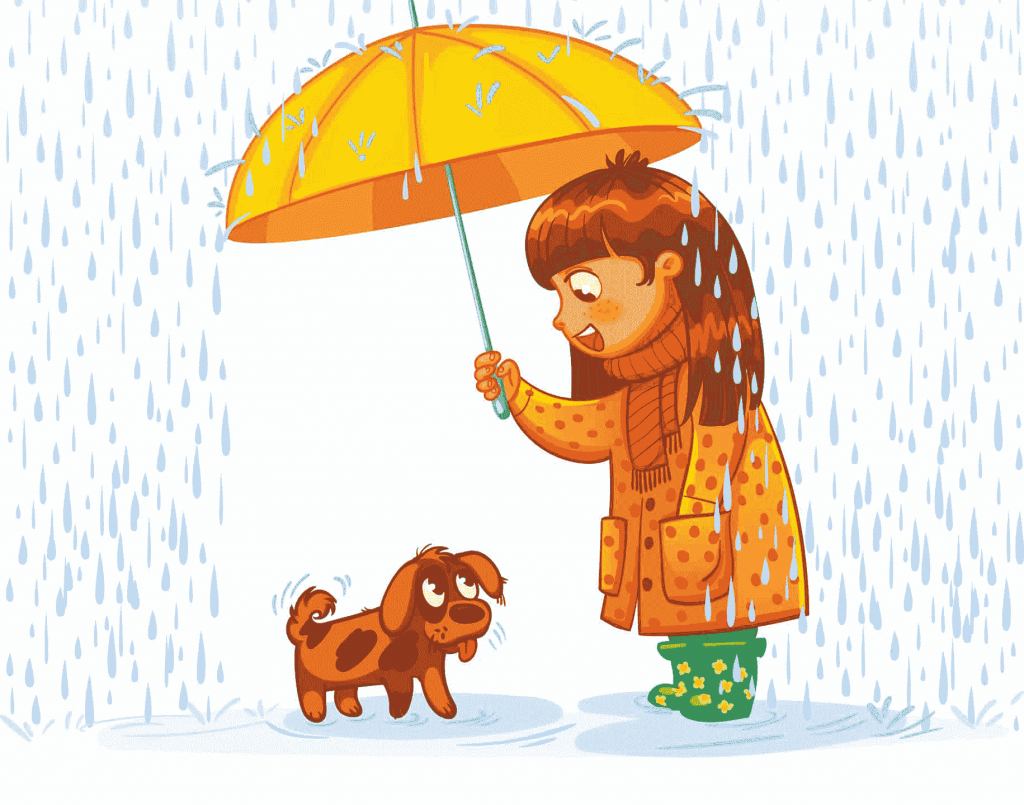
The importance of kindness is easy to say and harder to live, because being kind makes someone else’s day lighter, it quietly makes our own lives feel fuller and more meaningful, and it builds the trust that families, classrooms and whole societies run on. We all know this already, of course. However, knowing it and practicing it on a tired Tuesday are two very different things!
The research behind kindness is more modest than the motivational posters suggest, and we actually find that reassuring. Kindness does not have to be spectacular to count. For more ideas on growing as a person, browse our self-help guides.
You have probably seen “Be kind, for everyone you meet is fighting a hard battle” credited to Plato. Well, Quote Investigator traced it to the Scottish minister Ian Maclaren, whose Christmas message in the late 1890s read “Be pitiful, for every man is fighting a hard battle”, and in his day ‘pitiful’ meant compassionate. The words have changed over the years, but the point has not.
Kindness in Two Forms
Before we get to the reasons, it helps to agree on what kindness actually is. We can look at it from two sides, what we do for others and what we give to ourselves.
○ Kindness to Others

Showing kindness to others is a phrase we all use, and yet when we hear it, many of us picture something big, like a generous donation or a painful sacrifice. Some of us even believe that kindness does not count unless it hurts us in some way.
It doesn’t work that way. We don’t have to hurt ourselves to be kind to others. Holding the door, giving someone your seat on the bus or asking a friend how the exam went can all make a real difference to someone’s day.
Kindness also tends to grow as we become more mature, because maturity teaches us that other people’s days are every bit as complicated as ours.
○ Kindness to Oneself

The quieter of the two forms, kindness to oneself, is usually overlooked because we assume it should come naturally. It rarely does! Plenty of us are endlessly patient with our friends whilst talking to ourselves like a harsh coach after one bad grade.
Psychologist Kristin Neff, who has spent her career studying self-compassion, describes self-compassion as being kind and understanding toward ourselves when we suffer, fail or feel inadequate, warm and supportive the way a good friend or mentor would be. In her view, that inner support is what puts us in a better frame of mind to cope and to change.
As per the old saying, one cannot pour from an empty cup. If we never learn to be kind to ourselves, being kind to other people only gets harder.
Why is kindness important? 11 Reasons why being kind matters
As we grow up, we are taught that being kind is a good thing, and most of us never stop to ask why. The answer seems obvious until someone actually pushes us on it.
These are the reasons we find most convincing, from the deeply personal to the social.
1. Tremendous emotional return for minimal effort

Kindness is something of a ‘cheat code’ for life. A two-minute favor can lift our mood in a way that very few things in life we take for granted can.
How big is that lift, really? Well, a review led by Oxford’s Oliver Scott Curry pooled 21 studies and found that people who do kind acts enjoy a moderate boost in well-being, smaller than the popular press often claims, as Cornell University’s Evidence Based Living blog reported. Moderate may sound disappointing, but for something that costs us almost nothing, it is a very good deal.
Life gets complicated, and on the days we lose track of what matters to us, a few small acts of kindness are one of the quickest ways back to our own values.
2. Kindness is Contagious
“Kindness is a language which the deaf can hear and the blind can see” is usually credited to Mark Twain. Quote Investigator found nothing to back that up: its earliest match is an 1857 book of sayings by the writer Christian Nestell Bovee, and the first Twain credit it found appeared in 1942, long after Twain’s death. Whoever said it first, the idea itself spread, which is rather the point.
Bad moods often seem to travel fastest, yet kindness is one of the few good traits that spreads almost as easily. At UCLA’s Bedari Kindness Institute, director Daniel Fessler has studied how people become kinder simply by witnessing acts of kindness, which he called “contagious kindness” when he spoke to the BBC.
So every kind act we do in public is, in a small way, a lesson for whoever happens to be watching.
“Small Kindness” Movement
Japan turned this idea into a movement. As the Christian Science Monitor reported, it began with a graduation speech by Seiji Kaya, then president of the University of Tokyo, who told students to be brave in practicing small kindnesses, and the Small Kindness Movement was founded to give visitors a warm welcome at the 1964 Tokyo Olympics.
The Christian Science Monitor’s reporter met a Tokyo cab driver who received the movement’s certificate of appreciation for clearing garbage bags off a busy street, and he shrugged it off as no big deal. That shrug is the whole philosophy. Every day, we get the same chance to be a little kinder than we were yesterday.
3. Kindness Builds Bridges
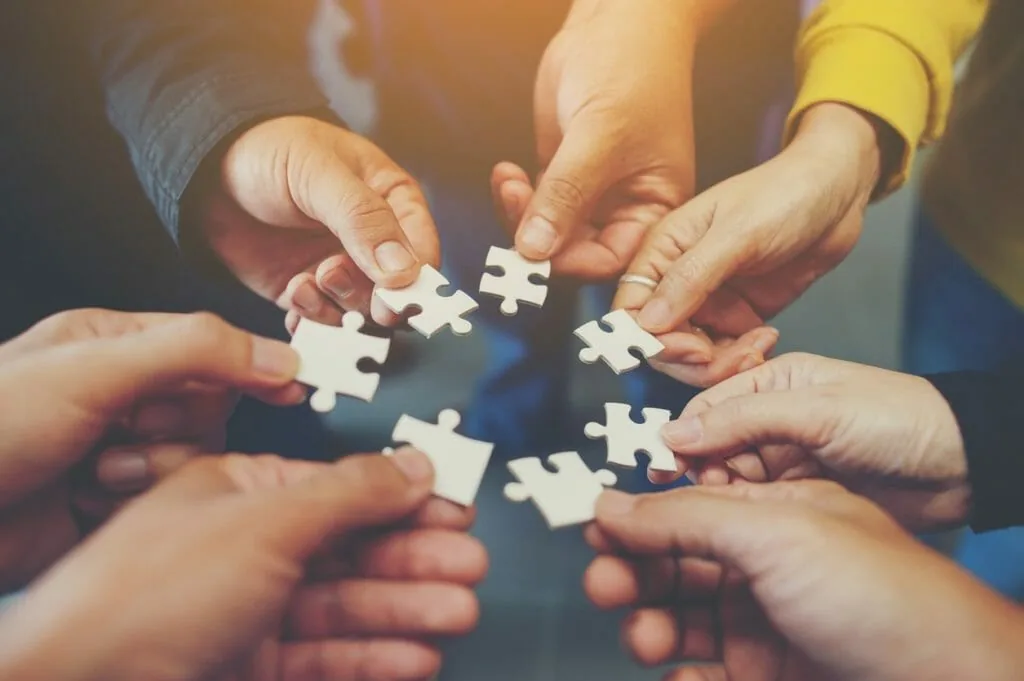
Kindness touches people in a way that arguments rarely do. Even the most stubborn heart, on its most stressful day, can soften after a small act of kindness.
Kindness is a bridge that connects people from different backgrounds, races and cultures. It starts at home, with parents showing children what empathy looks like, and it carries on in schools that talk openly about how every student can make a classroom kinder.
No gift, compliment or apology works quite like genuine kindness, because kindness tells the other person that we see them.
4. It Helps Lift Mental Blocks

Self-defeating thoughts can be hard to shake, and kindness, both toward ourselves and toward others, is one of the gentlest ways to loosen their grip. It will not cure anything on its own. However, it can shift our mood just enough to try again, and sometimes that is everything.
The NHS lists giving to others as one of its five steps to mental wellbeing, saying that acts of kindness can create positive feelings and a sense of reward, give us a feeling of purpose and self-worth, and help us connect with other people.
Gratitude counts too, since it is kindness aimed at someone who has already helped us. Greater Good, the magazine of UC Berkeley’s Greater Good Science Center, describes a study by Daryl Van Tongeren and colleagues in which people randomly asked to write a gratitude letter went on to rate their lives as more meaningful than people who wrote about other things. You can read more in Greater Good’s piece on whether helping others can help you find meaning.
A lot of everyday stress comes from feeling stuck, as if nothing we do makes any difference. Doing something kind is the quickest proof that it does, and that small sense of pride can take the edge off whatever is weighing on us in the moment.
If a low mood or heavy stress keeps hanging around, though, kindness is not the fix, and talking to a doctor or someone you trust is the kindest thing you can do for yourself.
Kindness also has a way of boosting our self-esteem. The thanks we receive, the pride of making someone’s day and the joy we see in their eyes all help us feel better about ourselves.
It’s just human nature. Over time, these small moments remind us that we are capable and worth something, and that quiet confidence tends to show up in everything else we do.
5. It is Good Karma
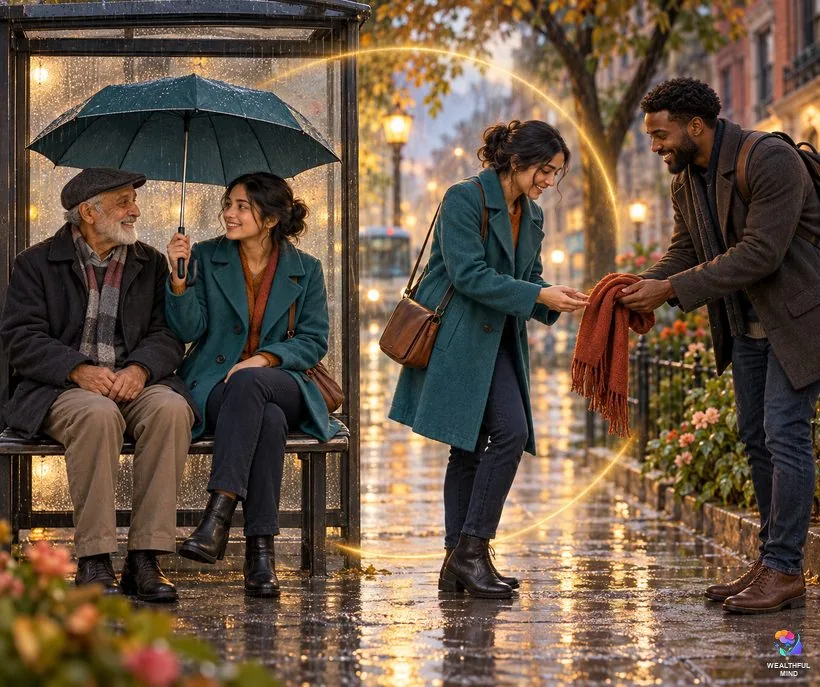
In its simplest sense, karma is the belief, found in Hinduism, Buddhism and other traditions, that whatever we do comes back to us, for better or for worse. Believers say the kindness we give tends to return either directly or indirectly.
Direct karma is when the person we helped repays us themselves. Many people see this as the Universal Law of Compensation at work, the idea that we receive in proportion to what we give.
Sometimes it happens quickly, when the stranger we helped turns out to be exactly the person who can help us. Sometimes it takes years. In the language of the law of attraction, every action sends something out into the world that eventually finds its way back.
Even when the person never repays us, believers say kindness still finds its way home. Someone we helped may help a stranger because of us, and that stranger may go on to help someone who one day helps us, without anyone realizing how the chain began.
Whether or not you believe in karma, the practical version holds up rather well: people remember who was kind to them!
6. Kindness Provides Clarity
Many people describe a moment of clarity that arrives right while they are helping someone else, a link between a kind heart and a clear mind that the Dalai Lama explores in his book “Kindness, Clarity, and Insight“.
Why does this happen, you might wonder? Well, helping others makes us feel things we would not have felt otherwise, and when we step out of our own heads for a few minutes, we see our own problems at their real size.
That clarity will not solve everything, of course. Quite often, though, it shows us the next step.
7. It Can Brighten up Someone Else’s Day

It is hard to overestimate the joy a small act of kindness can bring to someone else. We all know how heavy a bad day can get, when one more setback feels like the last straw.
The good news is that one kind gesture can also pull someone back from that edge. A smile, a patient word or a simple “are you okay?” can help someone else regain the composure they need to face the rest of their day.
Kindness expert Gabriella Van Rij, speaking to the BBC, suggested including someone who is on the sidelines, because going through life unnoticed and unwanted is dehumanizing. Look around the next group chat or lunch table, and you will usually find that person.
8. Life is to Live and Love Fully
No one has ever become poor by giving. (Anne Frank)
Her exact words, in an essay called “Give” that she wrote on 26 March 1944, were “No one has ever become poor from giving!”, as the word researcher Barry Popik notes. Barry Popik also found a far older cousin of the line in an 1843 book of Tamil proverbs: “Did ever any one become poor by giving alms?”
Living and loving fully does not need elaborate plans. At its simplest, kindness is giving someone all of our attention, listening to them without an agenda, without checking our phone and without planning what we will say while they are still talking.
The world has plenty of suffering in it, and plenty of people quietly overcoming it. Life is to live and love fully, and kindness lets us do both at once.
9. It is a form of Catharsis
A cathartic experience helps us let out feelings we have been holding in, and many people find that doing something kind for someone else gives them just that. The weight lifts a little, and we come back to our own problems feeling lighter.
Seeing someone do better because of our help can be the release we did not even know we needed. It doesn’t end there, either. With ourselves, too, sometimes all it takes is a kind word to ourselves at the end of a long week.
10. Being Kind May Help You Live Longer

This is the boldest claim people make about kindness, so it deserves an honest look. Daniel Fessler of UCLA told the BBC that living among people who treat us with hostility “shortens your life, quite literally”, while giving and receiving kindness are “the antithesis of this toxic stress”. In the same BBC report, Columbia University doctor Kelli Harding said kindness helps people live longer and better.
Those are expert views rather than a proven lifespan figure. However, there is at least one measured result worth knowing: Regis University professor Dan Berlau points to a study in Health Psychology in which older adults with high blood pressure, given $40 to spend for three weeks, had lower blood pressure when they spent it on others rather than on themselves.
So being kind may well help us live longer, and it certainly helps us live better while we are here.
Kindness Is a Much Better Option Than Selfishness
Many people go through life with selfishness and self-obsession because they believe it is their best chance of getting ahead. Yet chasing a happier life through selfishness is a bit like trying to cure a cold by standing out in the rain.
Once we see how much of a long, fulfilling life is built on kindness, selfishness starts to look like a very poor bargain.
11. Kindness is the Perfect Example to Set for Younger Generation
Children copy what we do far more than what we say. If there is one example worth setting for the younger generation, it is kindness, especially the kind that expects nothing in return.
Kindness pays off for children, too. In a study published in PLOS ONE, Kristin Layous and her colleagues asked 415 students aged 9 to 11 in Vancouver to do three acts of kindness a week for four weeks, and while both groups in the study felt better, the kind group gained more acceptance from classmates than a group who simply visited places.
Kindness is one of the most natural, innate strengths we have as humans, and childhood is the easiest time to make kindness a habit.
Kindness in Daily Life: Simple Acts to Try Today

Kindness in daily life is mostly small and ordinary, and that is exactly why it works. The NHS suggests simple things like saying thank you to someone for something they have done, and asking friends, family or colleagues how they are and really listening to their answer.
Here are a few more ideas that cost almost nothing.
- Be happy for a friend’s good news, and keep the conversation on them, not on you.
- Send a thank-you message to a teacher or a relative who once helped you.
- Let a piece of gossip stop with you.
- Offer to help a neighbor with a difficult chore.
- Give away the clothes and books you no longer use.
Oliver Scott Curry, the Oxford researcher behind that kindness review, argues that random acts for strangers are unlikely to reach the people who need them most, Cornell University’s blog notes, so he suggests aiming our kindness where it is needed. In practice, that might mean the classmate who has been eating lunch alone, rather than the stranger behind us in the line for coffee.
For the bigger picture of how helping others gives life direction, read our piece on serving others and finding purpose.
○ Kind, Not a Pushover
A worry we hear often is that kind people get walked over, and online forums are full of people asking why others slowly stop respecting them even though they are kind and mean well.
Kindness and people-pleasing are not the same thing. Psychologist Karyn Hall, writing in Psychology Today, notes that being kind often requires courage and strength, and that kindness includes telling the truth kindly when doing so helps the other person.
So say no when you need to, keep your promises and let your kindness come from choice rather than fear. If someone keeps taking advantage, our guide on why you should never tolerate disrespect will help you hold that line.
Conclusion
The novelist Henry James once said that three things in human life are important. The first is to be kind, the second is to be kind, and the third is to be kind. His nephew Billy James overheard him say it in 1902, and we know about it because James’s biographer Leon Edel recorded it.
Looking back at the eleven reasons above, it is not hard to see why he felt it needed saying three times.
Kindness is a habit, and like every habit, it is built on ordinary days. Start with one today!
Frequently Asked Questions About Kindness
What are the five benefits of kindness?
Five benefits the evidence supports are a lift in mood and well-being for the giver, a stronger sense of purpose and self-worth, closer relationships, lower blood pressure in one study of older adults who spent money on others, and kinder communities, because people tend to copy the kindness they see. The effects are modest rather than magical, but they cost almost nothing, which makes kindness one of the best deals we know.
Why is kindness an important value?
Kindness is the value that makes the others livable. Honesty without kindness turns harsh, and success without it turns lonely. Treating people with care, whether or not they can do anything for us, is what makes us trustworthy, and trust is what every friendship, family and team is built on.
What is the golden rule of kindness?
The golden rule is to treat others the way you would like to be treated. Versions of it appear in the Sermon on the Mount, in the sayings of Confucius and in many other traditions, which tells us how basic it is to living together. A kinder twist many people use is to treat others the way they would like to be treated, which means asking and listening first.
What are some simple acts of kindness?
Say thank you and mean it, ask someone how they are and really listen, include the person sitting alone, celebrate a friend’s good news without making it about you, let gossip stop with you, help a neighbor with a heavy job, and give away things you no longer use. Small and regular beats big and rare.
Why is kindness important in society?
A society runs on strangers trusting each other: on a bus, in a line, online. Kindness keeps that trust going, softens conflict between people who disagree, and spreads, because people who witness kind acts are more likely to act kindly themselves. Japan’s Small Kindness Movement grew out of exactly that idea.
Can you be too kind?
Kindness itself is not the problem, but people-pleasing can be. If you keep saying yes when you mean no, ignore your own needs or let people treat you badly to avoid conflict, that is fear dressed up as kindness. Real kindness can be honest, set limits and still be warm.






love the break-down of the benefits both personal and universal — well done! BJ
lovley yes yes