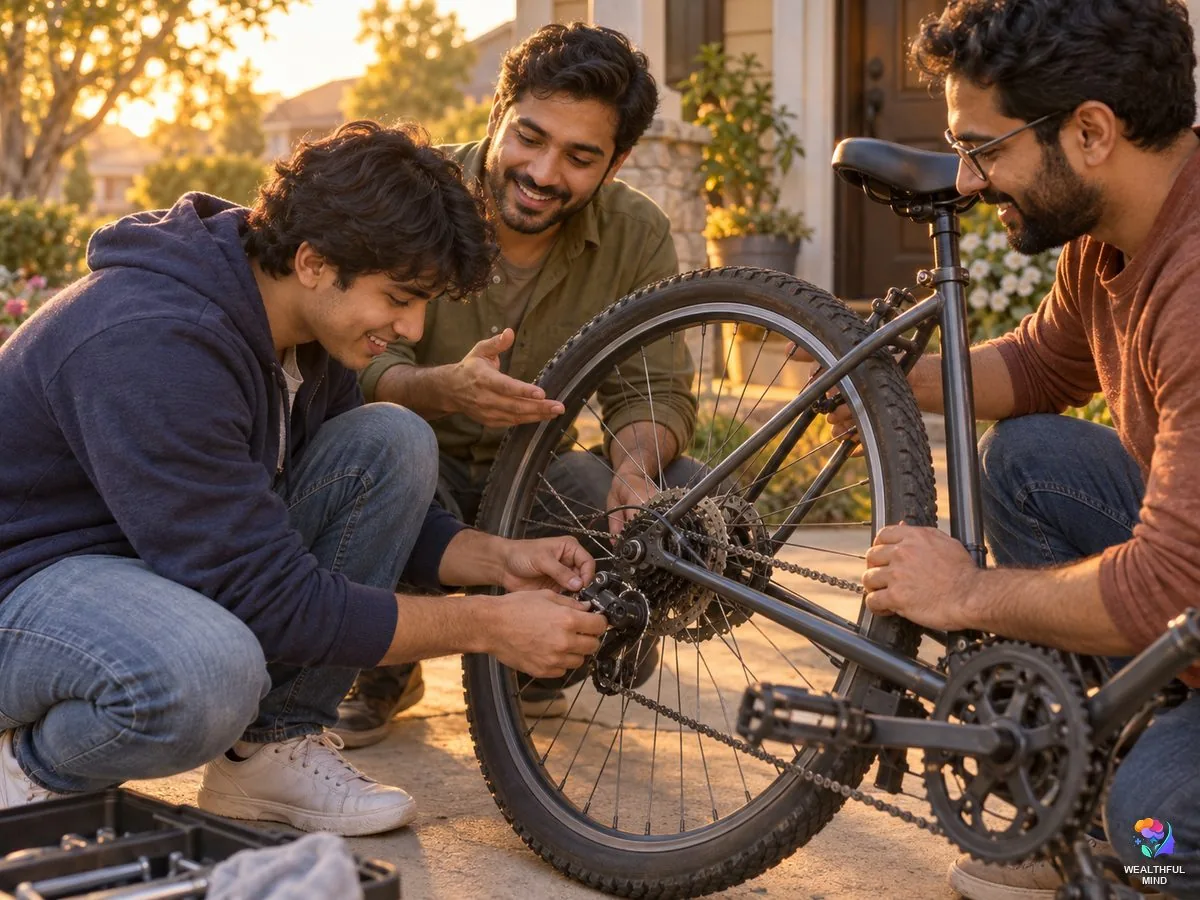
Most of us have wondered, at least once, whether we are the friend who only texts when something has gone wrong. How to be a good friend comes down to plain habits: show up when you said you would, listen before you advise, keep confidences, say sorry properly and stay in touch, both ways. If we could keep only one of them, it would be making the next plan before saying goodbye.
Charm, wit and the perfect birthday gift are lovely extras, but reliability is what people remember.
Friendship is one of the quieter parts of how we grow as people, and it can be learned at any age. If your worry runs the other way, that people leave you out or stop replying, our guide on why people ignore you starts from that side.
Qualities of a Good Friend

What makes a good friend, then? Well, the science writer Lydia Denworth, in Psychology Today, describes a good friendship as a quality relationship, one that is long lasting, positive and cooperative. It’s a neat definition, although it does not tell us much about a wet Tuesday evening when a friend needs a lift.
In daily life, the qualities people mention again and again are trust, reliability, kindness, honesty told kindly and respect for who the other person is. Trust sits underneath all of them, because a friend who repeats your secret to the group chat, even once, teaches you to edit everything you say around them for years.
Respect is the quality we tend to forget. HelpGuide puts it well when it says a good friend does not require you to compromise your values, always agree with them or disregard your own needs.
Two people can disagree about music, politics and pineapple on pizza and still be very good friends. However, all of it has to run both ways, and a friendship where one person does all the listening, planning and forgiving is closer to a service than a friendship.
How to Be a Better Friend: 10 Habits

None of these needs a big personality or a free weekend. We’d pick the two you are weakest at and work on those for a month, because ten new habits at once is exactly how good intentions go missing!
1. Keep Your Word, and Their Secrets
Mayo Clinic’s guide to friendship puts the basics into three short instructions, to show up on time, do what you say you will do, and keep what your friends tell you in private to yourself. They sound almost too obvious to write down.
However, a friend who cancels at the last minute twice in a row has said something louder than any apology text can take back.
2. Listen First, Advise Only When Asked
Most of us hear a friend’s problem and immediately start fixing it, because fixing feels like caring. Advice nobody asked for, however kindly meant, can sound like a verdict on how they are handling their own life.
A simple question saves a lot of misunderstanding, “Do you want ideas, or do you just need to get this off your chest?” The harder part is believing the answer when it comes.
3. Remember the Small Things
A good friend asks how the driving test went, and remembers the name of the coworker who keeps taking credit or the teacher who never smiles. These follow-up questions prove we were listening last time, and they cost nothing except a little attention.
4. Make a Specific Invitation
“We should hang out sometime” is the most polite way of making no plan at all. On Reddit’s r/socialskills, readers answering someone who felt forgettable gave the same advice, to invite people to something specific with a day and a time attached.
Their example was a talk about squirrels at the museum on Friday at 7 pm, which is oddly specific, and that is precisely why it works! A clear invitation is easy to accept and just as easy to turn down without any awkwardness.
5. Reach Out First, More Than Once
Plenty of us wait to be invited and then quietly decide that nobody cares. Mayo Clinic advises reaching out instead of waiting for others to come to you, and adds that you may need to suggest plans a few times before you can tell whether a new friend wants to spend time with you.
Texting first isn’t needy, since somebody has to go first and it might as well be us.
6. Never Leave Without the Next Date
HelpGuide suggests scheduling friends the way you would schedule errands, with a standing weekly or monthly plan, or simply never leaving a get-together without setting the next date. We like that last idea best of all, since it takes ten seconds at the door.
7. Celebrate Their Wins Without Keeping Score
When a friend gets the internship, the part in the play or the apartment we also wanted, the honest first reaction is sometimes a small sting, and that is only human. The kind thing is to feel it privately, then congratulate them properly, out loud, and ask how they pulled it off.
A friend who competes with every piece of good news soon stops hearing any.
8. Say Thank You Out Loud
Long friendships run on unspoken assumptions, and gratitude is usually the first thing to go unspoken. The friend who drove across town, who sat through the rant about your manager or who remembered the morning of your exam deserves to hear it.
A specific thank you (“thanks for checking on me on Thursday, it really helped”) lands far better than a general one.
9. Give Them Room
Close does not mean constant. Everyone needs time alone and time with other people, and a friend with a new partner, a new job or a quiet month is not necessarily replacing you.
10. Let the Small Things Go
Every friendship has its scuffles, the joke that landed badly or the message left on read for two days. Scientific American’s guide to being a better friend makes a hopeful case here, that once you make it through the occasional tiff or misunderstanding, the bond is likely to be stronger than ever.
We save the serious conversations for patterns, not for one bad afternoon.
Why Close Friendships Take Hours

Why do some friendships stay polite for years while others turn close within a single summer? One study gives a surprisingly concrete answer.
Jeffrey Hall, a researcher at the University of Kansas, found that it takes roughly 50 hours together to move from acquaintance to casual friend, about 90 hours to become a friend, and more than 200 hours before someone feels like a close friend.
These are rough figures from one study, not a stopwatch, and the kind of hours matters a great deal. According to the University of Kansas, the time that counts is hanging out, joking around and playing video games, while hours spent working together don’t count as much.
Psychology Today, reporting on the same research, notes that some adults had spent hundreds of hours with colleagues and still called those people acquaintances.
At a couple of hours a week, even the first stage takes months, which is why school and college friendships fade so quickly once the timetable that held them together comes to an end.
Hall’s own advice, as the University of Kansas reports it, is to make time with potential friends a priority and to switch up the context, so if you work together, go to lunch or out for a drink. For a student, it might mean turning a study partner into someone you also watch a film with on Saturday.
○ How to Become Someone’s Best Friend
Nobody can be flattered or argued into a best friendship. What we can do is give it the conditions it needs, which are regular time, a mix of fun and real conversation, and steady proof that we are safe to confide in.
Lydia Denworth sums up the research in Psychology Today in plain terms, saying that the more time we spend with our friends, talking, sharing a meal or going to a movie, the closer we usually are. The rest belongs to the other person, and that is exactly how it should be.
What to Say: Words for the Awkward Moments

Most of us know roughly what we want to tell a friend, and then stare at an empty message box for twenty minutes. Here are some lines to borrow, and they work best once you change the words until they sound like you.
After months or years of silence, it helps to know that readers on r/socialskills who had drifted from school friends, with no fight and no reason beyond time passing, got very practical replies from other readers. Mention a good or funny memory, say you would love to know what they are up to, and suggest a coffee.
One reply added that the length of the gap matters far less than we fear, since they will be glad or they won’t, and either way we stop wondering.
A message might read, “I walked past the place where we used to get those terrible milkshakes and thought of you. It has been far too long! How are things with you these days, and are you free for a coffee soon?”
Sometimes the silence is ours, after a heavy term, a new relationship or a stretch we did not want to talk about. Owning it briefly works better than a long story, something like “I have been hard to reach lately and I’m sorry. I miss you, so are you free for a walk on Saturday morning?”
One sentence of explanation is plenty, because a paragraph of excuses turns the message into something about us.
When you want to make a plan, give it a day, a time, a place and a small sweetener, as in “There’s a night market on Friday from six, want to come? The first round of dumplings is on me.”
Asking for space is kinder than slowly disappearing. A friend who reads “I have a lot on this month, so I’ve been quiet, but it is nothing you did and I would love to see you once things settle” will not fill the silence with worst case stories.
How to Say Sorry to a Friend

An apology to a friend is not a defense in court, and the friends who apologize well rarely sound clever doing it. The sociologist Christine Carter, writing for UC Berkeley’s Greater Good Science Center, breaks an effective apology into three parts, and we find them easiest to remember in this order.
Firstly, say what you did and show you understand how it felt for them. Greater Good’s article calls this the most important part, demonstrating that you are trying to understand how the other person feels.
Next, leave out the excuse. As the same Greater Good article puts it, when in doubt, leave the explanation out, because explaining away what we did can sound defensive. Lastly, make it right, since Greater Good says good apologies include a reparation of some kind, real or symbolic.
There is a reason the feeling comes first. Research described by the Greater Good Science Center found that for people who place a high value on close relationships, such as those with friends and family, the apology that expressed empathy worked best.
Put together, it might sound like this, “I made that joke about your exam in front of everyone, and I could see it embarrassed you. That was unkind, and I am sorry. Next time I will keep it between us, and lunch is on me this week.”
Notice what is missing, with no “but”, no “I was only joking” and no “if you were hurt”, the small words that quietly take an apology back.
A Friendship Check-In

A check-in is a few honest questions we ask ourselves, perhaps every few months, about one friendship at a time. It is not a test and there is no score at the end, only a chance to notice something early while it is still small and easy to mend.
The first half is about how we show up. We think about the last time we reached out first, whether we listen to the end or wait for our turn, whether we message mostly when we need something, and how we reacted when something good last happened to them.
The second half is about how the friendship feels. HelpGuide suggests paying attention to how a friendship makes you feel rather than how it looks from outside, and it offers a short set of questions to ask yourself, which in our own words come to these.
- Do I usually feel better or worse after we spend time together?
- Can I be myself around them?
- Do I feel at ease, or do I watch every word?
- Am I supported and treated with respect?
- Can I trust them?
If the first half worries you, the fix is in your own hands, and the ten habits above are a fair place to begin. If the second half worries you, the section on stepping back is written for exactly that.
When a Friend Is Going Through a Hard Time

This is when friendships are made, or quietly lost. Our full guide on how to be there for someone in need covers it properly, so here are just the two ideas we would hold on to.
The first is to support without taking over. Scientific American reports that Edward Deci, a psychology professor at the University of Rochester, found that supporting a friend’s autonomy, so they feel able to make their own choices, creates a better relationship.
The second is to listen without rushing to cheer them up. The 988 Lifeline’s advice for helping someone else is to be willing to listen, allow expressions of feelings and accept the feelings.
If a friend ever tells you they are thinking of hurting themselves, do not keep it a secret, and in the US you can call, text or chat with the 988 Lifeline for them or alongside them, or text HOME to 741741 for Crisis Text Line, while in the UK Samaritans answer free on 116 123 and in India Tele MANAS takes calls on 14416.
When to Step Back From a Friendship

Not every friendship is meant to last a lifetime, and not every rough patch means one should end. HelpGuide’s test is refreshingly plain, that if the friendship feels good, it is good, but if a person tries to control you, criticizes you, abuses your generosity or brings unwanted drama into your life, it is time to re-evaluate.
Re-evaluating does not have to mean ending anything today. We would go in three stages, and most friendships never need the third.
The first stage is one calm, direct conversation about the specific thing, whether that is the constant digs about your clothes or plans that only ever happen on their terms. Before that talk, it is worth checking your own reading of the situation, and our guide to perception checking shows how. A friend who has gone quiet is often just busy, tired or dealing with something they have not mentioned.
If nothing changes, the second stage is to see them less and expect less, with group plans instead of evenings alone together, slower replies and no more three hour phone calls. Plenty of friendships settle quite comfortably at this smaller size.
If it still leaves you worse off, the third stage is to let it fade, quietly and without a dramatic final message. Learning not to hang your whole mood on one person is a skill of its own, and our guide on how not to get too attached to people covers it.
One honest note, because readers on Reddit raise it too. Sometimes the real trouble is our own feeling, such as envy of a friend’s success, rather than anything the friend has done, and that deserves a look before we step back from anyone.
If a friend frightens you, threatens you or tries to control who you see, that is more than a friendship problem, and it is time to tell someone you trust in person. The help lines in the hard-time section above are open to you too.
○ When You Have Simply Grown Apart
Sometimes nobody did anything wrong. Mayo Clinic notes that work, or caring for children or aging parents, can come before friends, and that people grow apart as their lives or interests change.
A friendship that belonged to one stage of life is not a failure because that stage ended. It was real, it mattered, and a warm message on their birthday keeps the door open!
Picture two old friends at a bus stop after a long evening, one of them already pulling out a phone to suggest a date next month. Nothing about that moment is impressive, and nobody would ever film it, yet most lasting friendships are built from exactly that sort of small, slightly boring act of turning up again.
Friendship, in the end, is mostly the habit of coming back.
Questions About Being a Good Friend
What qualifies as a good friend?
A good friend is someone you can trust, who keeps their word and your confidences, listens before giving advice, respects who you are and makes the effort to stay in touch. HelpGuide adds a simple test: if the friendship feels good and you can be yourself, it is good. And it runs both ways, so a good friend is also someone you are glad to support.
How many hours does it take to become close friends?
One study by Jeffrey Hall at the University of Kansas found it takes roughly 50 hours together to go from acquaintance to casual friend, about 90 hours to become a friend and more than 200 hours to become close friends. The kind of time matters too: hanging out and joking around counted for much more than working side by side.
How can I be a better friend when I am busy?
Keep it small and regular. A short message when you think of someone, remembering one thing they told you, and never leaving a meet-up without setting the next date do more than an occasional big gesture. HelpGuide suggests a standing weekly or monthly plan, so seeing friends stops depending on a free weekend.
What do I say to a friend I have lost touch with?
Keep it light and specific. Mention a good or funny memory, say you would love to know how they are, and suggest a coffee or a walk. You do not need to explain the whole gap; one line such as “I have been hard to reach and I am sorry, I miss you” is enough if the silence was on your side.
Is it normal for friendships to fade?
Yes. Mayo Clinic notes that work, caring for family and changing interests often pull friends apart, and nobody has to be at fault. A friendship that belonged to one stage of life still mattered, and a warm message now and then keeps the door open.
What is the 2-2-2 rule for friendship?
The 2-2-2 rule is a couples rule, not a friendship one: IFLScience describes it as a date night every two weeks, a weekend away every two months and a week’s vacation every two years, first shared by a Reddit user in 2015. Nobody has tested it on friendships, though a simple rhythm of your own, such as a message most weeks and a meet-up every month, works on the same idea.