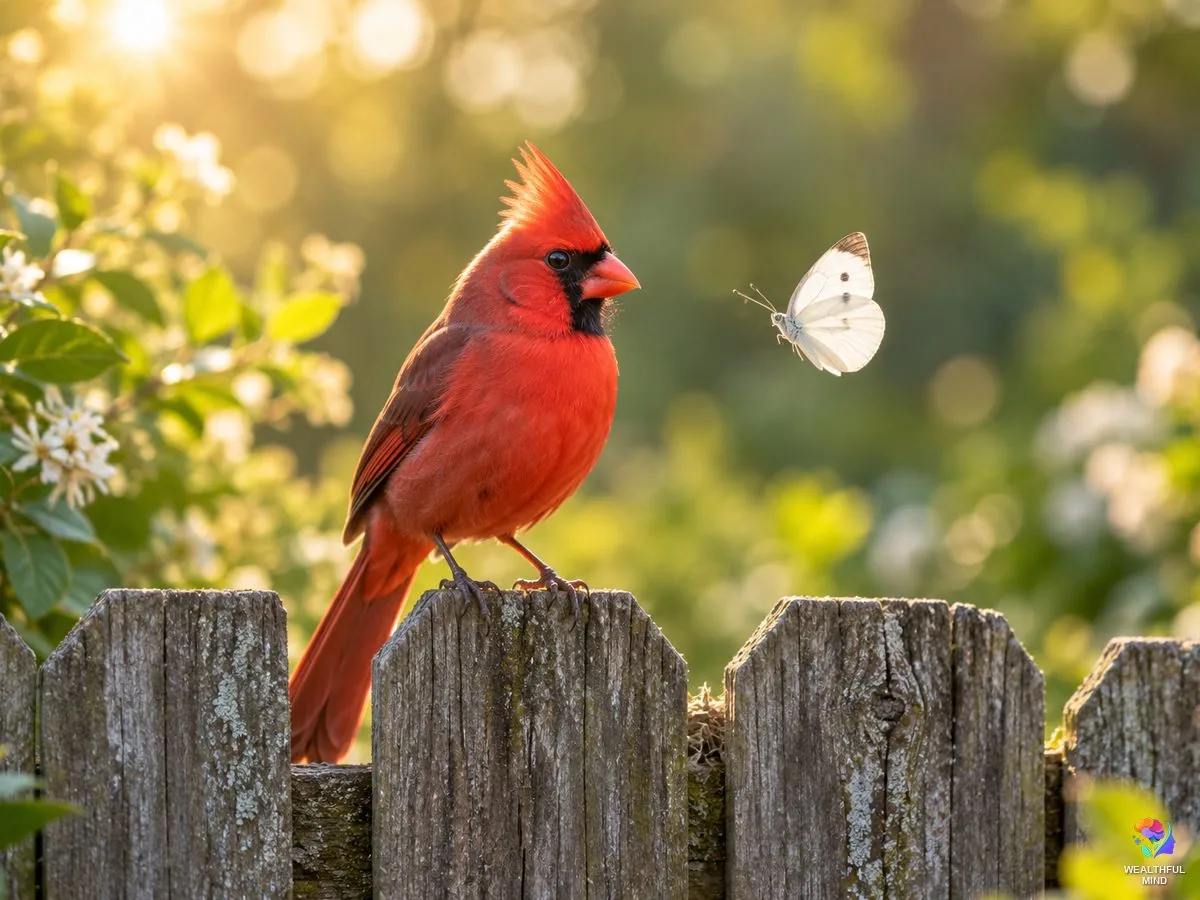
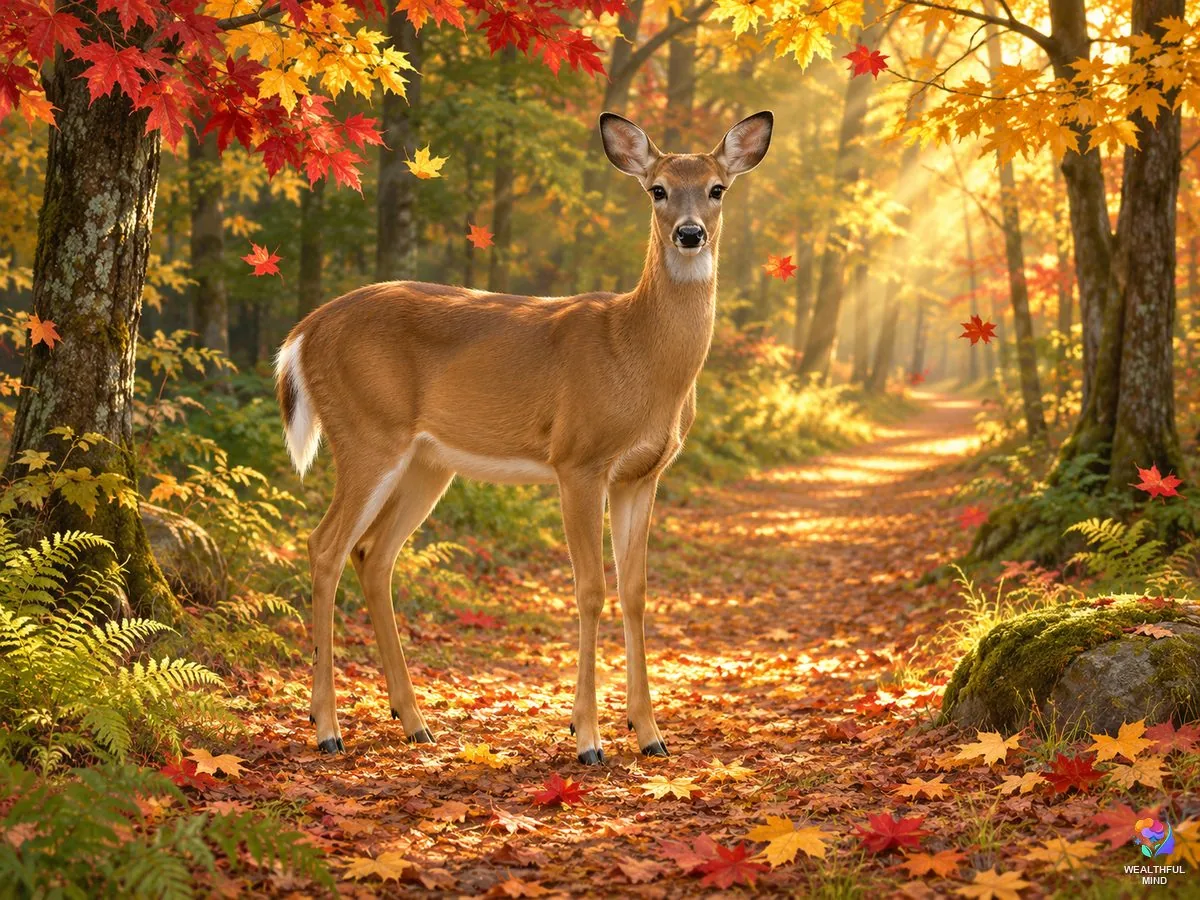
What is a spirit animal? To most people today, it is an animal they feel guides, protects or mirrors them, and to plenty of others it is simply a joke (“my spirit animal is a sloth”). We think you can keep the animal you love and still drop the claim that the idea is “Native American”, because the Smithsonian’s National Museum of the American Indian calls the popular idea “non-Native”.
Under that one phrase, you will find three different things: teachings that belong to particular nations, a modern New Age belief and internet slang (most arguments about the word come from mixing them up).
If you are looking for what one animal means, our guide to animal spiritual meaning covers the animals people ask about most. For signs of every kind, from feathers to repeating numbers, you can start with signs from the universe.
What Is a Spirit Animal?

Look the phrase up in Merriam-Webster and you will find two senses. The first is “a supernatural being of many distinct Indigenous cultures and traditions that assumes the form of an animal”. Merriam-Webster adds that the phrase also covers that kind of being as New Age spirituality describes it.
The second sense is slang, for “something or someone (such as an animal or celebrity) that one enjoys and identifies with”. Merriam-Webster puts a usage warning on that one.
In daily life, you will meet the phrase in three forms:
- A nation’s own teaching, where the animal comes to a person through family, clan, a name or ceremony. Each nation’s teaching is its own, and it is not something you can pick for yourself.
- A personal animal guide, the New Age belief most websites describe. People who hold it say an animal walks beside you for a stretch of your life, keeps showing up and has something to teach you.
- A joke. When your friend says “tacos are my spirit animal,” they just mean “this is so me.”
Most websites that answer the question mean the second one.
It is a belief, and a Psychology Today blog post says so plainly: “there is no evidence for the presence of such animal spirit guides,” though the writing on the subject “points back to archetypes as old as man”.
But a missing study does not stop an animal from mattering to you. If a heron keeps landing near your bus stop on the worst mornings of your month, it can still mean something to you.
○ Spirit Animal, Totem, Power Animal or Animal Guide?
You will see these four words used as if they were the same. One big spirit animal site, spiritanimal.info, says it uses spirit animal, animal spirit guide and power animal “interchangeably”.
They came from different places, though, and once you know which is which, you can talk about your own animal much more clearly.
- A totem, from the Ojibwe word doodem, is the emblem of a group such as a family or clan. In its first meaning, a totem belongs to a group, so you would not have one on your own.
- A power animal is what Core Shamanism, the system Michael Harner built, calls the animal spirits its practitioners try to contact. Shawn Leonard, a Mi’kmaq teacher quoted by Gabrielle Bernstein, describes it as an animal you call on for strength when you face a particular challenge.
- A spirit animal, in the New Age sense, is the animal you feel is with you through a long stretch of life. Shawn Leonard calls it a longer-term guide for “a full stage or chapter of life”.
- An animal guide is a plain phrase for the same personal belief, in words nobody owns, and it is the one we would suggest you use.
Where the Idea of a Spirit Animal Comes From

If you were hoping for a neat date and a founder, we have to disappoint you. Discover magazine, which interviewed several Indigenous experts for a 2021 article, wrote that “It’s difficult to pinpoint how old the concept of a spirit animal is”.
Discover reports that for Pinny Lavalier, a Sicangu Lakota volunteer at Native Languages of the Americas, and for many others, the origin is unclear and may lie in New Age spirituality.
We searched for a first printed use too and found nothing we could trust (so you will not get a made-up date from us).
○ Animal Relatives in Indigenous Nations
The Smithsonian’s National Museum of the American Indian says Indigenous peoples’ bonds with animals grew out of tens of thousands of years of living with their environments. The museum also says clan and kinship systems are specific to each tribal community and can be very different from one another.
Here is how different that can look in three nations.
- Eastern Shawnee. Renee Gokey, who works at the museum and is Eastern Shawnee, told Discover that after a baby is born, an elder who speaks the language gives the child a name that reflects an animal clan. “These things aren’t taken lightly,” she said.
- Heiltsuk. In Bella Bella, British Columbia, families are linked to crest animals, and some arrange their crests on totem poles by family history. William Housty told Discover, “My grandmother is a wolf, and my grandfather is an eagle”. As Housty put it, “They didn’t just put a grizzly bear there because the grizzly bear was cool”.
- Anishinaabe. Their clans, called doodeman, are named mainly for animals. If you have ever wondered where the English word “totem” came from, this is it.
In all three, the animal comes through a family, a clan, an elder or a ceremony. You do not choose it from a list, and you cannot borrow it.
Some Indigenous teachers do speak of personal animal guides, and you should know that too. Shawn Leonard, a Mi’kmaq teacher from Nova Scotia whose teachings make up Gabrielle Bernstein’s popular page on spirit animals, teaches that each of us has at least four totem animals, tied to the four directions and the four stages of life.
That is his teaching, and we pass it on as his, not as what all Native people believe.
If you want a nation’s own view, go to that nation. The Chickasaw Nation, for example, has a short video on its own channel, Chickasaw.tv, called “Our Spiritual Animal Guides”, in which LaDonna Brown describes Chickasaw spiritual beliefs.
○ The New Age Spirit Animal
The personal spirit animal you see on most websites grew out of New Age and neoshamanic movements, which took shape in the second half of the twentieth century. Michael Harner’s 1980 book, The Way of the Shaman, set out a shamanism meant to stand apart from any one culture.
In the same circles, “totem” came to mean a person’s own spirit guide rather than a clan emblem. Many Indigenous groups object to that imported word for their own older practices, although others use it.
Native American scholars have criticized teachers who present these practices as coming from Native American cultures. Laura Redish, who co-founded Native Languages of the Americas, told Discover the phrase might never have been seen as appropriation if New Age books had not sold it as something “learned from Native American wisdom”.
That marketing is one reason a modern belief can look ancient. When you see a wolf in a headdress on a book cover, it tells you more about the publisher than about any nation.
Is It Okay to Say “Spirit Animal”?

It depends on who you ask.
We think the kind choice is to keep your animal and change the words, because you lose nothing and nobody gets hurt.
The Smithsonian museum is clear about one setting, the classroom. Using the idea of a “spirit animal” to teach Native culture “trivializes Native relationships to the animal world,” it says. In the same paragraph, the museum calls finding animals you connect with a fun activity for many students.
So the museum has no problem with you loving an animal. What it asks you to drop is the label.
Merriam-Webster is firmer about the slang. Its usage note says that use “is often considered an offensive appropriation and trivialization of Indigenous American cultural traditions”.
Indigenous people do not all feel the same way, and you should not expect them to. Laura Redish told Discover that people who had bad experiences with New Age practitioners may have strong feelings about the term, while others will not care.
Pinny Lavalier’s answer speaks straight to you if you are young. “In theory, it’s quite harmless if white teenagers want to say their spirit animal is a wolf, but in practice it goes along with dehumanizing us,” she told Discover. She was talking about the memes and quizzes around the phrase, such as pictures of bears in feathered headdresses.
Discover’s own conclusion is a kind one: “the idea of having an animal to relate to, or that inspires you, isn’t offensive”.
○ What to Say Instead
You do not need a new vocabulary, only a few swaps. Pick the one that matches what you really mean.
- “Otters are my favorite animal.” Plain, and it says exactly what you feel.
- “I feel so drawn to owls.” Good for the pull you cannot explain.
- “The heron is my animal guide.” For the spiritual belief, without borrowing anyone’s word.
- “That sloth is my Patronus.” For jokes, Discover suggests the Harry Potter word Patronus.
- “You are my role model,” or “you are so me.” For a person you admire or see yourself in.
If you belong to a nation with its own teaching about animals, use the words your own people use. These swaps are for everyone else.
○ What Not to Copy
Some things belong to a family or a nation. Leave them where they are, even when they would look beautiful on your phone case.
- Clan images. The Smithsonian museum asks people not to copy imagery “from totem poles, pictographs, etc.”. The museum also asks teachers not to adopt clans into their classrooms.
- Crests. A Heiltsuk crest records a family’s history, which is why that grizzly bear was never there just for being cool.
- Eagle feathers and ceremony. Even Shawn Leonard, who teaches spirit animals openly on Gabrielle Bernstein’s page, reminds readers that “Eagle feathers are sacred ceremonial objects”.
- Headdresses and “Native” costumes, on people or on cartoon animals. These are the images Lavalier objects to.
How to Find Your Spirit Animal Without a Quiz

You find an animal guide by watching your own life for a while. Shawn Leonard, in his interview with Gabrielle Bernstein, says these animals usually make themselves known through repeated encounters, powerful dreams or a pull you cannot quite explain.
The steps below are a modern practice and a belief, not any nation’s method, and you can start them today.
- Notice for a few weeks. Pay attention to which animal keeps turning up for you, on walks, in dreams, in shows you watch and in art you keep saving. One sighting is a nice moment, while the same animal again and again is what people mean.
- Write it down. Note the date, the place, what the animal did and what was on your mind, because patterns are much easier to see on paper than in memory.
- Keep a note by your bed. Dream animals fade fast, so write down the animal and the feeling as soon as you wake up.
- Learn the real animal. Find out where it lives, what it eats and how it raises its young. The thing you admire is often something the animal really does.
- Notice how it makes you feel. Maybe you feel calmer, braver or more curious when it appears, and many people take that feeling as the message.
- Give it time. If no animal stands out, that is completely alright, and you do not have to have one at all.
- Ask the right people about a nation’s teaching. If you have Indigenous family, ask your own elders. If you do not, learn from that nation’s own museum, college or media, and credit them when you share what you learned.
If your animal is a wild one, enjoy it from a distance. The National Park Service tells visitors to “Enjoy wildlife from the safety of your car or from a safe distance”. In the parks it runs, the Park Service says feeding wildlife is “strictly prohibited and subject to a fine”, so never use food to coax your animal closer.
○ An Example: The Heron at the Bus Stop
Say you catch an early bus beside a canal. On Monday, a great blue heron stands in the shallows, perfectly still, while everyone around you rushes. On Thursday you spot a heron on a stranger’s tote bag, and that weekend you dream you are standing in cool water, oddly calm.
You write each one down. Then you read a little about herons and learn that they spend long stretches standing still at the water’s edge, waiting for a fish to come close.
You have been rushing everything this month, so you take the heron as your reminder to slow down and wait for the right moment.
Nobody handed you that meaning. You found it in your own notes.
If you want to compare your reading with the meanings people usually give an animal, look it up in our animal spiritual meaning guide afterward.
○ Can It Be an Animal That Scares You?
You are not alone if the animal that keeps finding you is a spider or a snake. No rule settles it. Some teachers say your animal is the one most like you, some say it is the one you fear, and many say it is simply personal.
We think fear is a fine place to start. Learning about the real animal often turns fear into respect, and you can still keep a healthy distance from it.
○ Can You Have More Than One?
Yes, in most of the beliefs we read. A Psychology Today blog post notes that some metaphysical researchers suggest one main spirit animal with other helpers as needed, while others say you may have several.
Shawn Leonard teaches that you walk with at least four across a lifetime, one for each stage.
○ Can a Pet Be Your Spirit Animal?
Some people believe so. Shawn Leonard, in his interview with Gabrielle Bernstein, teaches that you can have “soul contracts with animals that transcend many lifetimes”.
That is a belief. But the bond with a dog or cat who saw you through a hard year is real, and you can call that animal whatever feels right to you.
○ Why We Do Not Have a Quiz
There is no “find your spirit animal” quiz on this page, and that is on purpose.
None of the traditions we read works that way. A Shawnee clan name comes from an elder, a Heiltsuk crest comes from your family, and even New Age teachers talk about weeks of noticing rather than ten questions.
Quizzes also tend to pick from the same short list. A study of Estonian spirit animal stories, described in Psychology Today, found that people “usually presented only a limited diversity of spirit animals, including wolves, deer, bears, horses, and eagles”. A quiz that only offers big, handsome animals can never tell you that your animal is a pigeon (and pigeons deserve a fan club).
Many quizzes also come with the very headdress pictures Lavalier described. Play one as a game if you like, but do your real noticing outside.
People also ask which spirit animals are the most powerful. No tradition we read ranks them, and a small, quiet animal can matter to you every bit as much as a bear.
Spirit Animal by Birthday, and “the 12 Spirit Animals”

If you have looked up your birthday animal, you have met a modern idea. The best-known source we could trace is a 1980 book, The Medicine Wheel: Earth Astrology, by Sun Bear and Wabun.
In that book, the moon or month you were born in sets your starting place on the wheel and your first animal, plant and mineral totems. The book’s own description calls it “a whole new system of earth astrology,” which grew from a vision Sun Bear had.
Sun Bear, born Vincent LaDuke, was a White Earth Nation actor and New Age author. His paid Medicine Wheel Gatherings were denounced and picketed by the American Indian Movement.
So a birthday animal is not an old Native American zodiac, and no nation we read about gives you an animal by your birth date. We found no source at all for the “12 spirit animals” either.
If you enjoy a birthday chart the way you enjoy your horoscope, that is your choice, but please do not call it Native American.
When Someone Says “You Are My Spirit Animal”

When a friend says “you are my spirit animal,” they mean you are someone they enjoy and see themselves in. It is Merriam-Webster’s slang sense, a person or thing “that one enjoys and identifies with”.
Laura Redish told Discover that this pop culture use “actually has no relation to Native American culture at all”. The trouble, she explained, is that New Age books dressed spirit animals in Native pictures, so now everyone assumes a link.
It is meant as a compliment, so take it as one. If you would like to answer kindly, try “Aw, you are my twin” or “You are my Patronus too.”
Saying it about someone else? The same dictionary warning covers people, so we would pick “role model”, “hero” or “twin” instead. Nobody needs a lecture over a caption, and a friendly “I say animal guide now” usually does more good than a long correction.
Look After the Real Animal

The best gift you can give your animal guide is care for the animal itself. The Smithsonian museum suggests supporting your local environment by speaking up for animals and the places they live.
You could plant something native for the bees and birds, pick up litter along the creek where your heron fishes or learn the names of the animals on your own street. Then, the next time your animal turns up, you will know a little more about who has come to visit.
Happy noticing!
Frequently Asked Questions About Spirit Animals
What is a spirit animal in simple words?
It is an animal that a person feels guides, protects or reflects them. Merriam-Webster also lists an older sense, a spirit being in many distinct Indigenous cultures that takes an animal form, and a slang sense for anything you enjoy and relate to. The Smithsonian’s National Museum of the American Indian calls the popular personal idea non-Native, so many people now say animal guide instead.
Is it disrespectful to say “spirit animal”?
It can be. Merriam-Webster’s usage note says the casual slang use is often considered an offensive appropriation of Indigenous traditions, and the Smithsonian museum says the idea trivializes Native relationships with animals when it is used to teach Native culture. The Indigenous people Discover magazine interviewed did not all agree on how much it matters. Loving an animal is fine, and saying favorite animal or animal guide avoids the problem.
What is the difference between a spirit animal, a totem and a power animal?
A totem, from the Ojibwe word doodem, is the emblem of a group such as a clan. A power animal is the name Core Shamanism, the modern system Michael Harner set out, gives to the animal spirits its practitioners try to contact. A spirit animal, in New Age use, is a personal guide that people feel is with them over a long stretch of life. Many websites use all three words for the same thing.
How do I find my spirit animal?
People who believe in animal guides suggest noticing which animal keeps appearing over several weeks, writing down each sighting and dream, and learning about the real animal and how it lives. No quiz can do that noticing for you. If you want a particular nation’s teaching, learn it from that nation’s own people and sources.
Is there a spirit animal for my birthday?
Not in any old tradition we could find. The birthday animal charts follow modern systems, and the best known is Sun Bear and Wabun’s 1980 book The Medicine Wheel: Earth Astrology, which its own description calls a whole new system of earth astrology. We found no source for the idea of exactly 12 spirit animals.
Can a pet be my spirit animal?
Some people believe so. Shawn Leonard, a Mi’kmaq teacher interviewed by Gabrielle Bernstein, teaches that people can have soul contracts with animals across lifetimes. Whatever you believe, the bond with a pet who has seen you through hard times is real, and you can call it whatever feels right.