The body signs spiritual meaning most of us grow up with is that your body is passing on news. An itch, a sneeze, a twitch or a shiver can mean money on its way, a visitor or someone talking about you. People already read the body like this in ancient Rome, where Pliny the Elder asked why everyone greets a person who sneezes.
The meanings shift from home to home, so we think you should hold on to whichever reading helps you and let the rest go. But we have one rule for every sign on this page, and it is to check the body first. An itch that will not settle or hiccups that go on for days belong with when a body sign needs a doctor before they belong with a meaning.
Quick pick
Where Did You Feel It?
Pick the sign that matches yours and jump straight to it.
- Palm itching? Right hand for money in, left for money out, in the oldest version
- Foot itching? A trip ahead, and a welcome one if it is your right foot
- Nose itching or sneezing? Company coming, or someone talking about you
- Hiccups out of nowhere? In many Indian families, someone is thinking of you
- Sudden goosebumps? An old shiver omen, and a reflex music can trigger
- Ringing ear or twitching eye? Each side has its own full page, linked here
Keep reading below Sneezing once, twice or three times Sleep signs and dreams Birthmarks and awakening How to read a body sign When to see a doctor

This page is the body chapter of signs from the universe, with sister guides on bird meanings and insect meanings. Find your sign below. The six everyday ones come first, then every ear, eye, sleep and dream sign with a full page of its own.
Itchy Palms, Feet and Nose

Your grandmother probably had a saying for at least one of these. Our best record of them is a book by Fanny D. Bergen, who collected American folk beliefs for the American Folk-Lore Society in 1896. She wrote down where she heard each one.
○ Itchy Palms: Left Hand or Right Hand
The classic rule says a right palm that itches brings money in, and a left one sends money out. Bergen heard it in New York with a neat trick for remembering it: “R stands for receive, and L for let go.”
But the hands were swapping places even then. In New Brunswick and New England, you rubbed an itchy left hand on wood to get money by the end of the week. In Alabama, Bergen recorded, an itchy left hand meant you would shake hands with a friend.
An Indian family in the USC Digital Folklore Archives keeps a softer reading. For them, an itchy palm means someone back home is missing you.
Some websites claim that Samudrika Shastra settles which palm means money, or that the hands swap for men and women. Neither rule turned up in any old text we opened, so treat both as unconfirmed. (And when Shakespeare’s Brutus accuses Cassius of “an itching palm” in Julius Caesar, he means greed for bribes, not luck.)
Most itchy skin is nothing serious, the NHS says, and dry, cracked or irritated skin is a common cause.
So if your hands itch on a cold winter day, reach for the moisturizer first and make your wish second.
○ Itchy Feet: Left Foot or Right Foot
An itchy foot is a travel sign. In Boston, Bergen heard that an itchy sole means you will “walk on strange ground”. In Baldwinsville, New York, the right foot sent you where you are welcome and the left foot where you are not.
Plenty of people search for itchy feet at night, but no tradition we checked gives the night its own meaning. You can read it as restlessness, a trip on your mind or a change you are ready to make.
The NHS calls athlete’s foot a common fungal infection. One of its main symptoms is itchy white patches between your toes.
If your feet match that description, a pharmacist can help you long before any journey does.
○ Itchy Nose
An itchy nose collects more meanings than any other itch. In Bergen’s collection it means company is coming, and in central New York the right side meant a man and the left a woman. Other versions promise an old friend, a letter, someone getting cross with you, or the Massachusetts rhyme “see a stranger, kiss a fool, or be in danger”.
Today most people say an itchy nose means someone is talking about you. A San Antonio student’s entry in the USC Digital Folklore Archives remembers her grandmother saying it whenever she scratched her nose. It always started a guessing game about who it could be.
An itchy nose is also a main symptom of allergic rhinitis. The NHS says pollen, dust mites, pet dander and mould can set it off, usually within minutes.
Sneezing, Hiccups and Goosebumps

These three arrive without warning, which is probably why so many people have read them as messages.
○ Sneezing Once, Twice or Three Times
A sneeze is the oldest body sign we could trace. In Homer’s Odyssey, Telemachus sneezes just as his mother Penelope wishes for her husband’s return. She laughs, sure the sneeze means her wish will come true.
In Xenophon’s Anabasis, a soldier sneezes just as Xenophon speaks of deliverance. The whole army bows to the god.
Greeting a sneeze is old too. Pliny the Elder asked why Romans did it, a habit even the unsociable emperor Tiberius insisted on in his chariot. So the popular story that “bless you” began with Pope Gregory during a plague cannot be where the custom started, and we found no record that he said it at all.
Islam gives the sneeze its own words. Hadith 6224 in Sahih al-Bukhari teaches you to say Alhamdulillah (praise be to Allah) when you sneeze. The person who hears you answers Yarhamuk Allah, may Allah have mercy on you.
The Heibonsha World Encyclopedia, a Japanese reference work, says China’s ancient Book of Songs links a sneeze to someone talking about you. It also gives a Japanese counting saying. One sneeze means praise, two mean someone dislikes you, three mean someone loves you, and four mean you are catching a cold.
Bergen’s American notes count sneezes too. However many times you sneeze before breakfast, that is how many callers you will have before bedtime.
Your body sneezes to clear your nose. The NHS lists sneezing next to an itchy nose as a common sign of allergic rhinitis.
○ Hiccups
In many Indian families, hiccups mean someone is thinking of you. That is how an Indian American man described his family’s belief to the USC Digital Folklore Archives. Another entry there, from a Tamil and Sourashtra speaker, adds that someone in your family may be missing you. A North Indian version in the Dartmouth folklore archive is less friendly, and says someone close is thinking of you badly, a cousin of the evil eye.
Neither belief seems to have an old text behind it, at least none that we could find. The nearest is a hiccup cure that Bergen recorded on Prince Edward Island, “Think of the one you love best.”
The NHS says there is often no obvious reason for hiccups. Stress, strong emotions like excitement, and eating and drinking can set them off.
That may be why they feel so tied to your feelings.
○ Goosebumps and Chills
The old belief about a sudden shiver is a spooky one. Someone, it says, is walking over the spot where your grave will be. Bergen found it “general in the United States”.
According to phrases.org.uk, Jonathan Swift put the line in a character’s mouth in 1738. Francis Grose wrote the belief down in 1787, and then joked that people living beside a churchyard path would never stop shaking.
Today, you may feel goosebumps as a yes from the universe, the Holy Spirit moving during prayer or a loved one who died coming close. We could not find these readings in any older tradition. They are still yours to keep, and no less real to you for being new.
Cleveland Clinic explains goosebumps as an automatic fight-or-flight reaction. Tiny muscles at the base of each hair pull tight. Music, films and a moving speech can set them off (a shiver called frisson), which may be why they rise during a worship song.
Chills are a different thing. MedlinePlus describes chills as shivering that often comes with a fever. Goosebumps come from cold air or strong emotions such as shock or fear.
Ringing, Itching or Burning Ears

If only your left ear rang, read left ear ringing spiritual meaning. It covers the unkind-gossip reading many families give it, and whether it is a warning. You will also find ringing at night, sudden ringing that fades and the readings for women.
Folk belief tends to treat the right ear well, with praise or good news to come. Right ear ringing spiritual meaning shows where that idea came from. It has sections on love and on ringing while you pray.
When both ears ring, or you cannot tell which side it was, start with what ear ringing means spiritually. It looks at the “a spirit is near” idea, the verses about tingling ears and the spiritual side of tinnitus.
Burning ears are read in a similar way. Bergen found it all over the United States: if your right ear burns, someone is talking well of you, and if your left ear burns, someone is talking ill of you. In Pennsylvania, if both ears burn, a friend and a foe are fighting about you. The left and right ear pages each give itchy or burning ears a short section too.
Twitching Eyes
A twitching left eye can mean luck or trouble depending on your tradition, and often on whether you are a woman or a man. Left eye twitching spiritual meaning goes through the Indian and Chinese readings, the upper and lower lid and the time of day.
The right eye tends to get the reverse. Read right eye twitching spiritual meaning for the Chinese saying that ties it to trouble and the readings for women and men. It also explains the old advice against slapping a twitching eye.
Signs While You Sleep
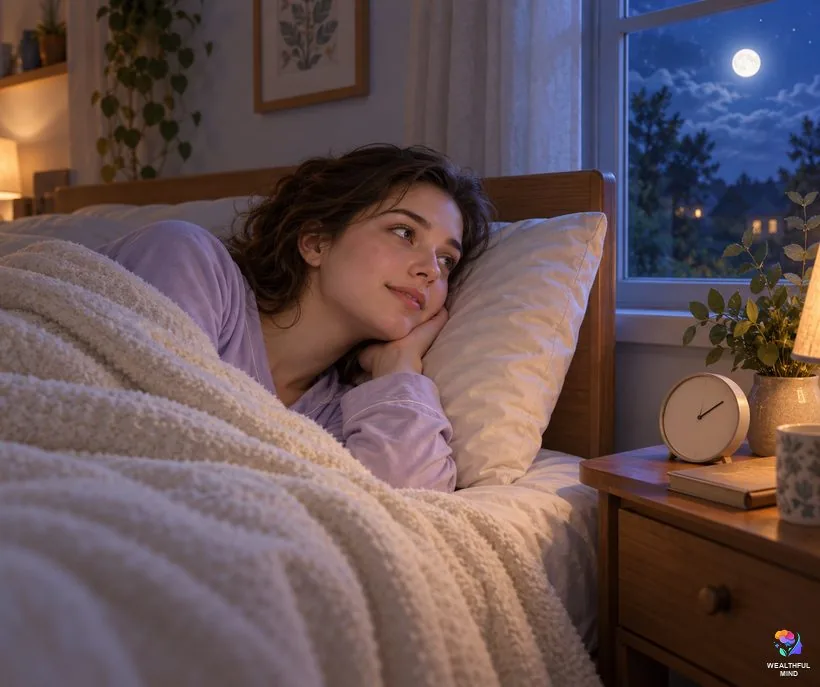
Waking at one hour every night gets its own page, the spiritual meaning of waking up at 3am. It sets the night prayer hours of Christianity, Islam and Hinduism beside the plain body reasons, and asks whether 3am really is a “devil’s hour”. (If birdsong is what woke you, try birds chirping at night.)
Has someone told you that you talk in your sleep? Sleep talking spiritual meaning covers the belief that your spirit speaks at night and whether sleep talkers tell the truth. It also says when shouting or kicking in your sleep needs a doctor.
If your tongue was sore and bitten when you woke, biting your tongue in your sleep connects it to the words you say and the ones you hold back. It also lists the body reasons that make it a medical question first.
Dreams and Dreamless Nights

For any dream at all, begin with the spiritual meaning of dreams. It walks you through reading a dream of your own and how different faiths tell a message from an ordinary dream. The science of why you dream is there too.
If a snake slid through your sleep, snake dream meaning goes through bites, colors and snakes in your house or in water. It adds the biblical, Islamic and Hindu readings.
If your teeth crumbled or fell out, read teeth falling out dream meaning. It explains the usual readings, what the research on these dreams found and whether they really point to a death.
And if your nights have gone blank, the spiritual meaning of not dreaming helps you work out whether you stopped dreaming or only stopped remembering. It also explains what a quiet season can mean.
Birthmarks and Spiritual Awakening
A blue-gray birthmark on a baby carries gentle meanings in Korean, Turkic and Mongolian folk belief. The Mongolian spot spiritual meaning page puts the medical facts first. That includes why the mark is sometimes mistaken for a bruise.
If you have been reading lists of physical changes during a spiritual awakening, see ascension symptoms. It explains where the idea comes from and draws a firm line around the symptoms that belong with a doctor.
Body Signs Spiritual Meaning: Where the Idea Comes From

People were reading the body long before the internet. Gideon Bohak, a historian of Jewish magic at Tel Aviv University, describes whole manuals of “twitch divination”, arranged from head to toe. He traces the practice back to Mesopotamian texts of the second millennium BCE, and it spread through Greek, Syriac, Hebrew and Arabic.
Here is the part we find most freeing. Gideon Bohak shows that the manuals disagree with each other. One says a twitching right eyelid means a long journey, and another says illness.
The hands did the same thing in the American notes above, and families still argue about them today. So no chart online holds “the” meaning of your sign, and the choice is yours.
How to Read a Body Sign
Once your body has the all clear, these steps help you find a meaning that fits.
- Notice the moment. Think about who you were thinking of and what you were doing when the sign came.
- Start with your own family’s reading. If your grandmother had a saying for it, that is your tradition, and it matters more than a stranger’s chart.
- Keep the reading that leads somewhere good. The old sources never agreed, so you lose nothing by choosing the hopeful one.
- Let it nudge you, not decide for you. An itchy palm is a fun reason to look at your savings, never a reason to spend them. No sign should make a health or relationship choice for you.
- Write it down. Note the date, the sign and the thought you had. In a few weeks, look back and see if a pattern is really there.
When a Body Sign Needs a Doctor
None of the six everyday signs is usually serious. But a few versions of them are a reason to book an appointment rather than look up a meaning.
- Itching. See a GP, the NHS says, if the itch is all over your body, is severe or keeps coming back. The same goes for itching with a new rash, lump or swelling, or itching in pregnancy.
- Itchy feet. With athlete’s foot, the NHS advises a GP if pharmacy treatments do not work. See one too if you have diabetes, because foot problems can be more serious then.
- Sneezing and an itchy nose. The NHS suggests a GP if your allergy symptoms get worse, disturb your sleep and daily life, or pharmacy treatments are not helping.
- Hiccups. The NHS points you to a GP if they last longer than 48 hours, or keep coming back and affect your life.
- Chills. MedlinePlus says to contact a doctor promptly if your chills come with a stiff neck or confusion. The same goes for a bad cough, shortness of breath, belly pain, burning or needing to pee often.
- Goosebumps. Cleveland Clinic says goosebumps themselves are nothing to worry about. Ones that keep coming with no known cause can point to an underlying condition, though, so mention them to your doctor.
For ringing ears, twitching eyes, broken nights, a bitten tongue or a blue-gray mark, see our doctor checklist for body signs. It says which of them need help quickly.
Itches, Sneezes and Shivers: Your Questions
Which hand itching means money is coming?
In the oldest American version we found, recorded by the folklorist Fanny D. Bergen in New York in 1896, the right hand means money coming in and the left means money going out (R for receive, L for let go). But Bergen also heard the left hand called lucky for money, and many families today still disagree, so go with the version you grew up with. If your hands keep itching, check for dry or irritated skin first.
What does it mean when your left foot itches?
Old American folk belief reads an itchy foot as travel, and in one version Bergen recorded in New York, the left foot means you will go somewhere you are not welcome while the right foot means a warm welcome. Many people now read either foot simply as a trip or a change coming. Itchy white patches between your toes are a sign of athlete’s foot, which the NHS calls a common fungal infection.
What does it mean when your nose itches?
Most people today say it means someone is talking about you. Older American sayings add that company is coming, an old friend will turn up, or you will “see a stranger, kiss a fool, or be in danger”. An itchy nose is also a main symptom of allergies such as hay fever, according to the NHS.
Why do people say “bless you” when you sneeze?
People have greeted sneezes for a very long time. Pliny the Elder already asked why everyone did it, nearly 2,000 years ago, and in Islam the listener answers a sneeze with Yarhamuk Allah, may Allah have mercy on you. The popular story that the custom began with Pope Gregory during a plague is much later than Pliny, and we could not find any record that backs it up.
Do hiccups mean someone is thinking about you?
In many Indian families, yes, hiccups mean someone is thinking of you or missing you, and one North Indian version says they are thinking of you badly. No old text for it turned up in our search. The NHS says hiccups often have no obvious reason, and to see a GP if they last longer than 48 hours.
Are goosebumps a spiritual sign?
Many people feel them as a yes from the universe, the Holy Spirit during prayer or a loved one close by, and those readings can mean a great deal to you even though they are modern. The old belief about a sudden shiver is that someone is walking over the spot of your future grave. In the body, Cleveland Clinic explains goosebumps as an automatic reaction that music or a moving speech can set off.