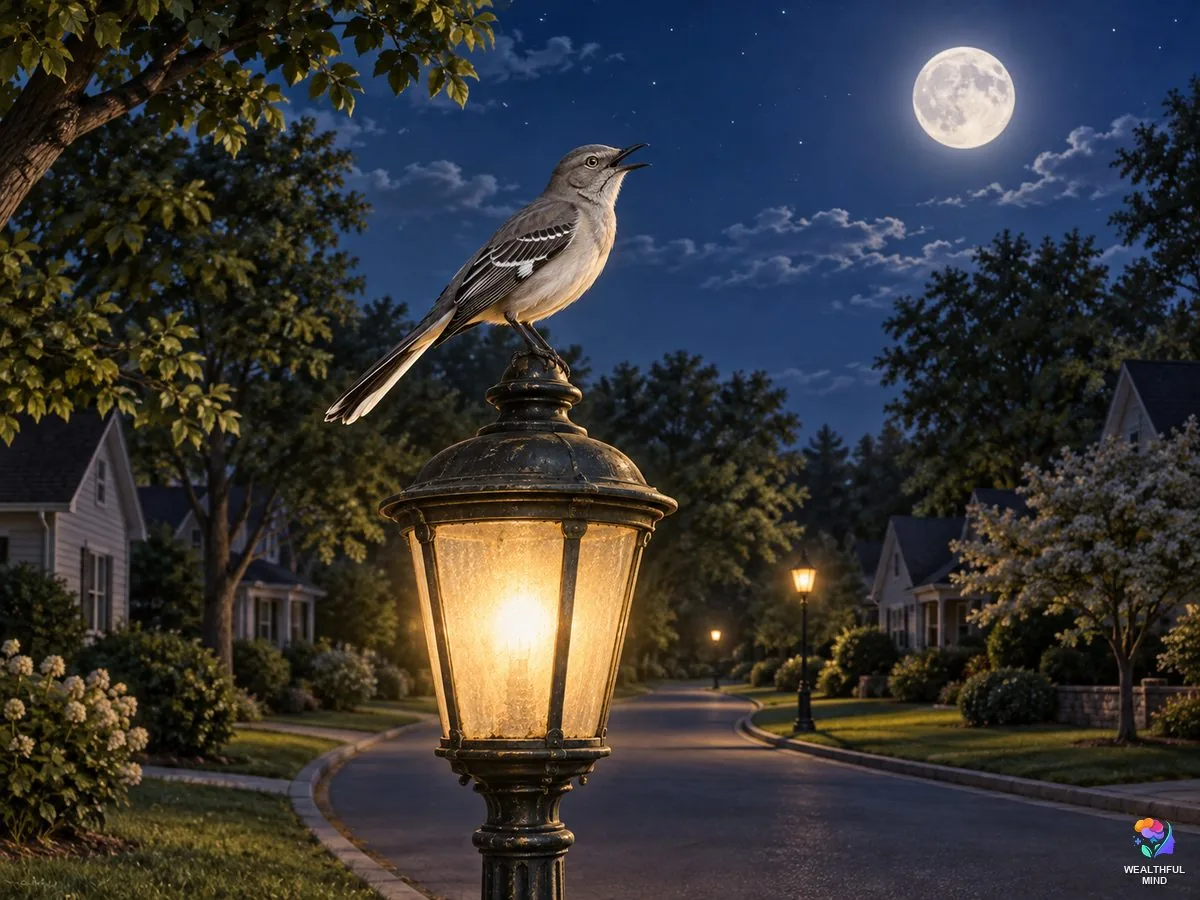
The spiritual meaning of waking up at 3am, for most people, is a quiet call to pray, think or listen. No tradition we found calls 3am itself holy, but the real night prayer times sit right beside it: “the fourth watch of the night” in the Gospel of Matthew, and “the last third of the night” in Sahih al-Bukhari, a collection of the Prophet Muhammad’s sayings. Your body has plain reasons for that hour too, so we think the kindest reading holds the prayer and the body together.
So you woke at three again, and your mind is already busy. If you wake gasping or choking, snore loudly with pauses in your breathing, or feel very tired every day, the NHS and Mayo Clinic say to see a doctor. Read when waking at night needs a doctor before any meaning.
Quick pick
What Woke You at 3am?
Pick the night that sounds like yours, then jump straight to it.
- Same time, every single night? Many read it as a message not yet heard, and the body learns the habit too
- Feel God woke you to pray? A short prayer and one line in a notebook, then rest
- Woke up scared? Turn on a soft light first, because nightmares cluster in these hours
- Missing someone who died? Many take it as a visit, and it is fine if it is simply grief
- Awake between 3 and 5am? This is where the old prayer hours meet, right up to the hour before dawn
- Gasping, snoring or always tired? See a doctor before you look for a meaning
Keep reading below The real night prayer hours Is 3am the devil’s hour? What your body is doing Getting back to sleep Questions
Night waking sits beside ringing ears and twitching eyes in our guide to what body signs mean spiritually. For signs that arrive from outside you, like feathers, repeating numbers and birds, start with signs from the universe.
What Is the Spiritual Meaning of Waking Up at 3am?
People read a 3am waking in a handful of ways. None of them can be proven, and you are free to keep the one that fits you.
- A call to pray. This is the reading you will meet most, in churches, mosques and temples alike.
- A time to reflect. With no messages and no noise, the thoughts you push away all day finally get a turn.
- Feelings coming up. Many people take it as a sign that something unresolved, like an argument or a fear, wants your attention.
- Someone on your mind. Some feel that a person they love, living or gone, is close in the stillness.
- A nudge to change. Others read it as part of a spiritual awakening, a push to live a little differently.
To find yours, notice what was in your head the moment you woke. Notice how you felt, and whether it keeps happening.
A calm, wide-awake feeling is often read as a call to pray or create. Dread usually points to a worry you are carrying (and sometimes to the body causes further down this page).
Write it down before you touch your phone. By morning the feeling will have faded, and the note is what you will have left.
Why 3am Feels Holy: the Night Prayer Hours

Here is what the faiths actually say about the small hours. You will see that 3am is the doorway to these prayer times, not the exact hour, which is good news if you woke a little before or after it.
○ The Fourth Watch of the Night
In the Gospel of Matthew, chapter 14, verse 25, the disciples are rowing against a storm all night. Then “in the fourth watch of the night Jesus went unto them, walking on the sea” (King James Version). Newer translations such as the NIV simply say “Shortly before dawn.”
Barnes’ Notes on the Bible, a classic commentary, says the night in Jesus’ day was split into four watches of three hours. The fourth ran “from three to six” in the morning. Barnes adds that Jesus had spent most of that night alone on the mountain in prayer.
The Gospel of Mark, chapter 13, verse 35, names the four watches: evening, midnight, “when the rooster crows” and dawn. It also tells believers to “keep watch,” and many Christians who wake at 3am take that verse as their own.
○ Tahajjud and the Last Third of the Night
In Islam, Sahih al-Bukhari files this teaching under Tahajjud, the night prayer, in a chapter on praying in the last hours of the night. In hadith 1145, God “comes every night down on the nearest Heaven to us when the last third of the night remains.” He asks who will call on Him, ask of Him or seek His forgiveness, and Sahih Muslim 758a carries the same teaching.
The last third that Sahih al-Bukhari speaks of moves with the seasons. As a rough sum of our own, if your night ran from 7pm to 5am, the last third would begin around 1:40am, so 3am would sit inside it. We did not check how each school of scholars measures the night, so your local mosque or a prayer-times app is your best guide.
Muslims online often ask whether Allah woke them for Tahajjud on purpose. Many find real comfort in that thought. If you do get up, come with your thanks as well as your requests, the way you would visit someone you love.
○ Brahma Muhurta, the Hindu Hour Before Dawn
In Ayurveda, India’s traditional medicine, a classic text tells a healthy person to wake in Brahma muhurta to protect their life. That text is Vagbhata’s Ashtanga Hridaya (Sutrasthana, chapter 2, verse 1), according to a 2026 review by Kirti Soni and Smita Aswar. The review counts fifteen muhurtas in the night, each about 48 minutes, and Brahma muhurta is the fourteenth, from about 1 hour 36 minutes before sunrise to about 48 minutes before it.
In practice, Soni and Aswar give roughly 4:00 to 5:30am, shifting with your local sunrise. You will see 3:30 to 4:30am online, but by our own sums a 6:30am sunrise puts it at about 4:54 to 5:42am. It only starts close to 3am where summer sunrise comes around 4:30.
Soni and Aswar also note a sensible condition from the Ashtanga Sangraha: wake this early only if last night’s food has been digested. So if you are Hindu and woke at 3am, use the quiet for a mantra if you like. Then go back to bed, and let Brahma muhurta be a goal for another morning.
○ First Sleep and Second Sleep
Waking in the night used to be completely normal. The BBC reports that historian Roger Ekirch of Virginia Tech found more than 500 references to a “first sleep” and a “second sleep.” They turned up in old diaries, court records, medical books and literature.
People slept from about two hours after dusk, woke for an hour or two, then slept again. In between, most stayed in bed, read, wrote and often prayed, and the BBC says late 15th century prayer manuals had special prayers for those hours.
So if you lie awake at 3am and pray, you are doing something people did for centuries.
Is 3am the Witching Hour or the Devil’s Hour?

Two scary names get attached to 3am. Neither has the old roots people assume, and knowing that can take some of the fear out of the dark.
○ Where “Witching Hour” Comes From
Shakespeare’s Hamlet speaks of “the very witching time of night, when churchyards yawn.” World Wide Words, a long-running word-history site, dates the play to 1603 and says Shakespeare himself placed that time at midnight.
The words “witching hour” came much later, and the earliest example World Wide Words found is a 1793 poem by Mary Robinson. Most uses today still mean midnight.
Some list sites claim a pope coined “witching hour” in 1560. We could not trace that to any source, so please do not take it as history.
○ Why People Call 3am the Devil’s Hour
Some Christians hold that 3am is the true witching hour, and the idea runs like this: Jesus died at 3pm, so the devil supposedly mocks God by claiming 3am. In the Gospel of Mark, chapter 15, verse 34, Jesus cries out “at three in the afternoon” (NIV).
Catholic Answers is a Catholic group that answers questions about the faith. It says plainly that “Church teaching says nothing about the time of 3 a.m.” The devil’s hour idea, it says, “should be taken with a large grain of salt,” and its advice is short: “If you’re awake at 3 a.m., consider prayer.”
We found no early source for the 3pm and 3am mirror, only modern belief. If the idea frightens you, let the hour be one for prayer instead of fear.
What to Do When God Wakes You Up at 3am

If you feel God woke you, you do not need to get up and kneel for an hour. A small, calm response is enough, and then you can rest.
- Turn on a soft lamp if you feel nervous. It is gentler on your sleep than a bright phone screen.
- Take three slow breaths and say a short prayer, in bed if you like. “Here I am, I am listening” works in any faith.
- Pray for whoever comes to mind. A name often pops up, and many people feel that is the point of the waking.
- Write one line in a notebook by your bed: the feeling, and any words that came.
- Lie back down and let yourself sleep. Resting is not a failed vigil.
Christians often reach for a psalm or the Lord’s Prayer. Muslims may rise for Tahajjud, and Hindus may sit quietly with a mantra. If you would like ready-made words, our universe prayers can give you a starting point.
And if school or work starts in a few hours, God is not keeping score of how long you stayed up. Your sleep matters too.
Waking Up at 3am Every Night
Waking at the same time night after night is one of the most common things people describe. In one US study the Sleep Foundation points to, 35.5% of people woke in the middle of the night on three or more nights a week. You are far from alone, then.
Spiritually, many people read a repeating 3am waking as a message that has not been heard yet. If it keeps coming, try answering it for one week. Pray, journal or simply ask “what do I need to see?”, then go back to sleep.
There is a plain side as well. Many people say that after a few 3am wakings they start to expect it, and the dread of bedtime makes the next night worse. If it has gone on for weeks and leaves you worn out, read the doctor section further down.
○ Seeing 333 on the Clock
Mental Floss notes that numerology links a 3:33 waking to “angel numbers.” It is often read as a nudge toward alignment, creativity and personal growth. If 3:33 keeps finding you, our guide to angel numbers explains how people read repeating numbers.
Waking Between 3am and 5am

Many people wake “somewhere between 3 and 5,” not at 3 on the dot. That window is where the traditions above overlap, from the fourth watch to the quiet hour before sunrise.
So you can read a waking anywhere inside it the same way. Take it as an invitation to pray, set an intention or simply notice the stillness before your day begins.
○ The Chinese Body Clock: Liver and Lung Hours
Traditional Chinese Medicine teaches that qi, or energy, moves through the organs in 2-hour slots, as Healthline explains. The liver’s time is 1 to 3am and the lungs’ time is 3 to 5am. Healthline is also clear that there is “little scientific research” behind the body clock, so we treat it as a tradition, not a fact about your organs.
An acupuncturist quoted by Parade puts it this way: “Waking up at 3 a.m. is the time when the energy moves from the liver channel to the lung channel.” Practitioners also tie the liver hours to anger and stress, according to Mental Floss.
You may read elsewhere that “the liver detoxes between 1 and 3am” and that this is science. It is the body clock tradition. Enjoy it as one, and do not worry about your liver.
○ Waking at 2am or 4am Instead
In Barnes’ Notes on the Bible, 2am falls in the third watch, called “cock-crowing,” and 4am falls inside the fourth. In the body clock, 2am belongs to the liver hours, Healthline says. A 4am waking also sits close to Brahma muhurta.
Many people read a 2am waking much like a 3am one, as a cue to let go of whatever weighs on you. A 4am waking is the one most often treated as a gift for prayer, study or meditation. If you feel rested, you might like to use it that way.
Waking at 3am Scared, or Feeling Something in the Room

Some of you wake at 3am with your heart pounding, sure that something is in the room. That fear is real, and years of horror films have taught many of us to dread this exact hour.
The Sleep Foundation says nightmares are most likely in the middle of the night or early morning. The distress from one can make it hard to fall back asleep. If you also woke unable to move or speak for a moment, the Sleep Foundation calls that sleep paralysis, and says it can come with hallucinations.
If that happens often, tell a parent or another adult you trust, and mention it to a doctor.
Turn on a soft light, look around the room and name five things you can see. Many Christians repeat what Jesus said to his frightened friends on the stormy lake, in the Gospel of Matthew, chapter 14, verse 27. “Be of good cheer; it is I; be not afraid.”
○ Waking From a Bad Dream
If a nightmare woke you, jot down the part you remember before reading anything into it. Our page on the spiritual meaning of dreams shows how to read a dream by your own feelings, and when frequent nightmares need a doctor.
Waking at 3am After Someone Died
Maybe you woke at 3am the night after a funeral, or on the anniversary. Maybe you lost the pet who always slept at the end of your bed. Many people take that waking as a visit, a sign that the one they miss is close.
If that is how it felt, you are free to hold onto it. Say their name, tell them what you wish they knew, or write it down while it is fresh.
It is also fine if it was simply grief. The Mayo Clinic lists the death or illness of a loved one among the stressful events that may lead to insomnia. A broken night after a loss is your body grieving too.
If the missing feels too heavy to carry alone, tell a friend, a parent or a counselor how you are really doing.
Why Your Body Wakes Up at 3am

Here is the plain side, from sleep doctors and health services. It sits next to the meaning rather than replacing it.
○ Lighter Sleep in the Early Hours
The Sleep Foundation says a night holds four to six sleep cycles of about 90 minutes each. Most of your deep sleep comes in the first half of the night, and dream (REM) stages grow longer in the second half, some lasting around an hour. As the night goes on you spend more time in light sleep, the Sleep Foundation adds, and light sleep is easier to break with noise or light.
So a car door, a partner rolling over or a dim nightlight can be enough to wake you. (If it really was birds singing in the dark, we have a whole page on birds singing at 3am.)
○ Cortisol Starts to Rise
Cortisol is a hormone that helps you wake up and get going. A 2009 study in the Journal of Clinical Endocrinology and Metabolism describes its daily rhythm. It is low when you fall asleep and lowest around midnight, then begins to rise between 2am and 4am and peaks within an hour of waking.
So the popular line that “cortisol spikes at exactly 3am” is too neat. It starts climbing in the early hours, which may be part of why the small hours can feel so wakeful.
○ Stress, Worry and Low Mood
The Mayo Clinic says worries about work, school, health, money or family can keep your mind active at night.
The Sleep Foundation calls this “sleep reactivity,” the habit of sleeping worse in stressful times. It says it is more common in women and in people who tend to dwell on what stresses them.
If 3am brings the same heavy dread night after night, please talk to a doctor or someone you trust, because low mood deserves care too.
○ Alcohol in the Evening
A drink can make you sleepy at first. But the Sleep Foundation says that as your body clears the alcohol, sleep turns lighter and more broken, especially in the second half of the night. It advises no alcohol within three to four hours of bed.
The NHS goes further and says to avoid alcohol, tea and coffee for at least 6 hours before going to bed.
○ Waking Up Needing to Pee
Needing to pee at night is called nocturia. The Sleep Foundation says it often comes from drinking too much near bedtime, especially coffee or alcohol. It can also come from health conditions such as sleep apnea, and people with sleep apnea may think they simply woke up to pee.
So if it happens every night, mention it to a doctor.
○ Waking Up Hot or Sweating
Many women in midlife describe waking hot or damp in the small hours, and some online call it “the 3am club.” The Sleep Foundation says menopause often brings night and early morning wakings, sometimes with hot flashes and night sweats.
Some people read a hot 3am waking as energy moving through them. You can keep that view, but let a doctor look at the body side first.
When Waking at 3am Is a Reason to See a Doctor

Night waking is common, but please see a doctor, before you look for any meaning, if one of these fits you.
- Your breathing stops and starts in your sleep, or you gasp, snort or choke, which the NHS lists as signs of sleep apnea.
- You snore loud enough to disturb others, especially with silent pauses, a sign Mayo Clinic says to get checked.
- You always feel very tired in the day, the NHS says, or nod off at work or while driving, Mayo Clinic adds.
- Your sleep trouble makes daily life hard to cope with, which the NHS says is a reason to see a GP.
- It happens at least three nights a week for three months or more, which the American Academy of Sleep Medicine calls chronic insomnia.
- You wake too early and feel low most days, since Mayo Clinic says early waking can be a sign of depression.
The NHS says sleep apnea can be serious if it is not diagnosed and treated. It suggests bringing along anyone who has seen your symptoms.
The American Academy of Sleep Medicine suggests a sleep diary for two weeks before you go. Note when you slept, when you woke and how long you lay awake.
Our page on when to see a doctor about waking up at night covers this in more detail. It also lists helplines for the US, the UK and India, if the night ever brings thoughts of ending your life.
How to Fall Back Asleep After a 3am Waking

Try these the next time you wake.
- Leave your phone where it is. The NHS says the blue light from devices right before bed makes you more awake.
- Keep the room dark and quiet, with an eye mask or ear plugs if you need them, as the NHS suggests.
- Breathe slowly, or pray. A short prayer or a few counted breaths gives a racing mind one small job.
- Stop checking the time. Watching the minutes tick toward morning only adds worry.
- Get up at your usual time tomorrow, even after a bad night. The NHS advises the same wake-up time every day and no sleeping in.
During the day, the Sleep Foundation suggests daylight or a bright lamp, exercise earlier in the day, and no eating in the three hours before sleep.
And if you do lie awake for a while, be gentle with yourself. Say what is on your heart, pull the blanket up, and let the morning come to you.
Quick Answers About Waking Up at 3am
Why is 3am called the holy hour, or the God hour?
We found no tradition that calls 3am “the holy hour” or “the God hour”, so we could not trace either name. The real night prayer times sit close to it instead: the fourth watch of the night, which ran from three to six in the morning according to Barnes’ Notes on the Bible; the last third of the night, which Sahih al-Bukhari names as the time God listens for those who call on Him; and Hindu Brahma muhurta, just before sunrise.
What is God trying to tell me at 3am?
Nobody can answer that for you from the outside, and Catholic Answers points out that church teaching says nothing special about 3am. Many Christians take the waking as a call to pray for whoever comes to mind, or to “keep watch”, as Jesus says in the Gospel of Mark, chapter 13, verse 35. Pray briefly, write down what comes, test it the way your church teaches, and then let yourself go back to sleep.
What does it mean to wake up at 4am spiritually?
4am falls inside the fourth watch of the night, the last three hours before dawn in Bible times, and close to Hindu Brahma muhurta, the quiet stretch before sunrise. Many people treat it as the best hour for prayer, study or meditation. If it leaves you exhausted, though, treat it as a sleep question first.
Is waking up at 3am a sign of spiritual awakening?
Some people take it that way, especially when it comes with vivid dreams or a new pull toward quiet and prayer. But waking in the night on its own is very common, so it is not proof of anything by itself. If you want to explore the awakening idea, our page on ascension symptoms explains what people mean by it.
Is 3am a good time for Tahajjud?
Often, yes. Sahih al-Bukhari 1145 and Sahih Muslim 758a both place the special hour in the last third of the night, and on many nights 3am falls inside it. The last third moves with the seasons, so check the times for your city with your local mosque or a prayer-times app.
What time is Brahma muhurta?
It is the 14th of the night’s 15 muhurtas, starting about 1 hour 36 minutes before sunrise and ending about 48 minutes before it, according to a 2026 Ayurveda review by Kirti Soni and Smita Aswar. In practice that is roughly 4:00 to 5:30am, shifting with your local sunrise, so 3am is usually a little early.