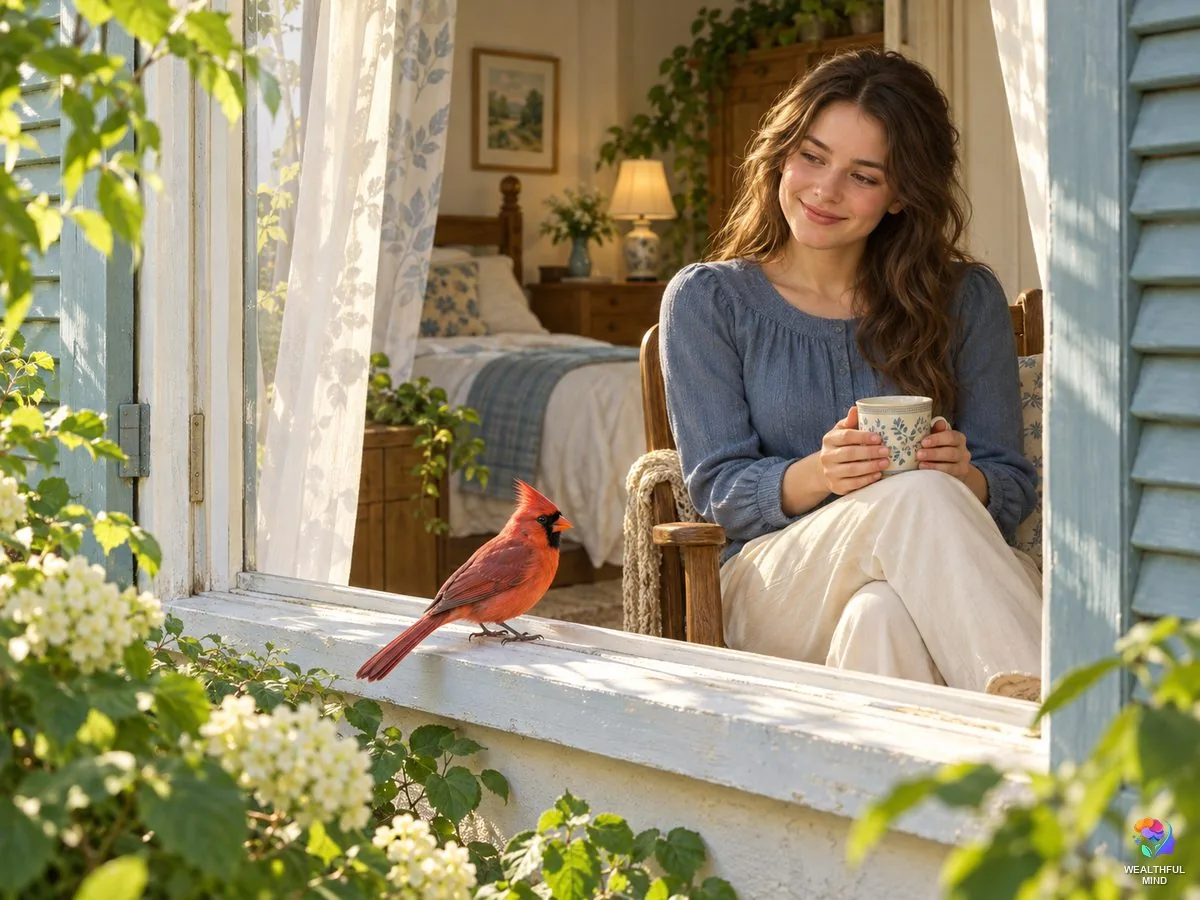
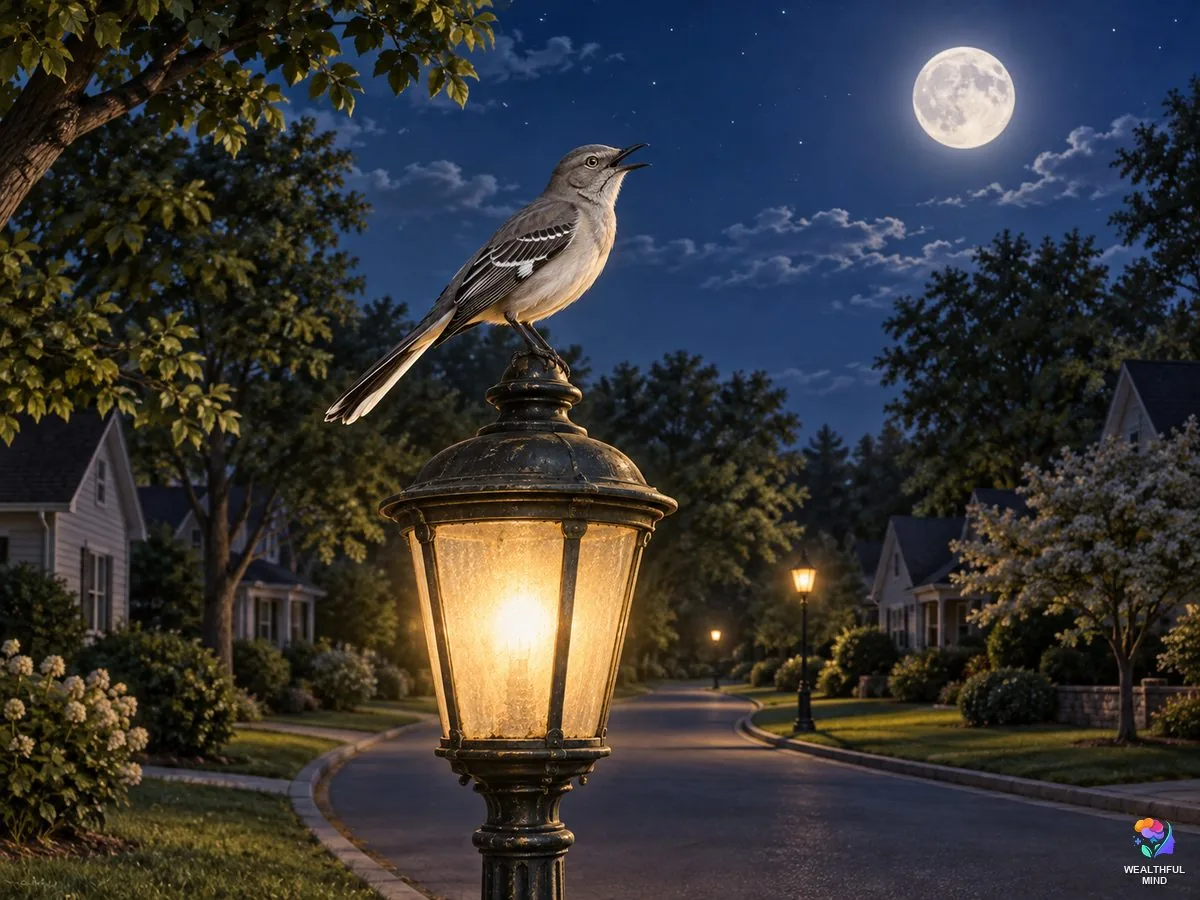
The most common cardinal spiritual meaning is that someone you have lost is close to you, and many people also take the red bird as a sign of hope, love or courage. The famous line “when cardinals appear, angels are near” comes from a poem by Victoria McGovern, not from the Bible (Our State magazine credits her), and the oldest cardinal story we could find, a Cherokee one that James Mooney wrote down, makes the redbird the daughter of the Sun.
If a cardinal just landed on your fence, you do not have to choose between the meaning and the bird. We think you get the most from it when you know both.
Quick pick
What Did the Cardinal Do?
Find the moment that matches yours, then jump to the full answer.
- Came after someone died? Many take it as a loved one saying hello, and it is fine if none comes
- Keeps tapping your window? It is fighting its own reflection, so cover the outside of the glass
- Brown, with a red crest? A female, and many read her as a mother’s or grandmother’s care
- Two of them together? Partnership and love, or two people you miss
- Shows up every day? It lives near you all year, and it can still be your reminder
- Saw one in a dream? Read it by how the dream made you feel
Keep reading below Where “angels are near” comes from The Cherokee redbird story Is it in the Bible? Winter and Christmas Questions

Cardinals sit beside dozens of other birds in what birds mean spiritually, our wider guide. To see how people read signs of every kind, try signs from the universe, our main guide to them. Here, we stay with the red bird.
What Does It Mean When You See a Cardinal?
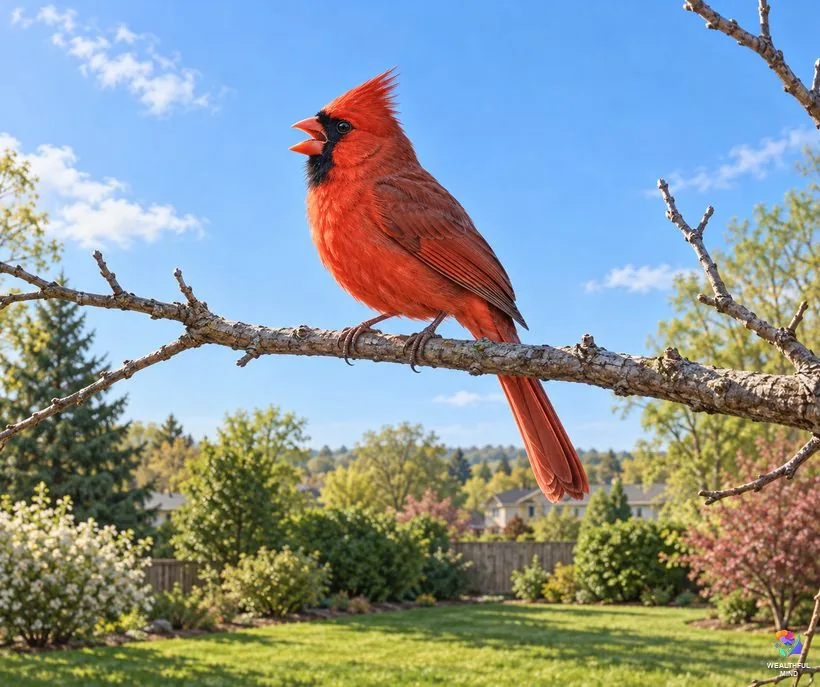
You can read cardinals in a handful of different ways. None of them is proven, and you are free to keep the one that fits you.
- Someone you lost, stopping by. This is the big one. Many people take a cardinal as someone in heaven saying hello.
- Hope in a hard season. The bird stays bright red through gray winter days, so it feels like a promise to you that things will warm up.
- Love and partnership. Cardinals are often seen in pairs, so you might read one as a sign about your relationship.
- Confidence. That loud red wants to be seen, and you can hear it as a cue to speak up for yourself.
- A reminder to notice. Sometimes the message is simply “look up, you are here, this is beautiful.”
So which one is yours? Go back to the moment just before you saw it. Who or what filled your head?
If you were missing your grandfather, it is probably about him. If you were dreading a hard week, it may be the hope one. A person who loved cardinals, a date that matters to you or a bird that keeps coming back all make your sighting more personal. The four steps in our signs guide work for a cardinal too.
Every sighting has a plain bird side as well, and on this page you will find it next to each meaning, drawn from Cornell University’s bird lab and the National Audubon Society.
Cardinals like to sing from high, easy-to-see perches, and they live in hedges, backyards and the edges of woods, right where you are. You notice them easily, which is part of why they became the bird of so many stories.
○ A Red Bird Flying in Front of You
A cardinal that darts across your path is read like any other sighting. Someone is thinking of you, or you are being asked to stay in the moment. Many people take it as a soft “slow down.”
Cardinals travel in short trips between thickets on short, round wings, so a cardinal crossing your path or a quiet road is everyday cardinal behavior.
If it happened while you were driving, take the “slow down” literally first. Keep your eyes on the road, and think about the meaning once you are parked.
A Cardinal After a Death or at a Funeral
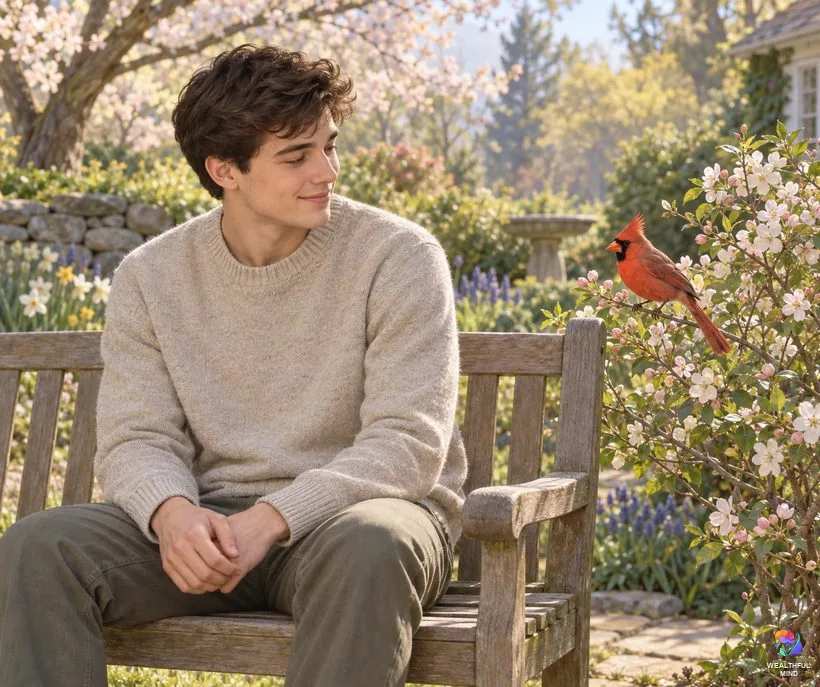
This is the reason most of you are searching for cardinals.
A red bird lands next to you on Father’s Day. One sits on the fence the morning after the funeral. You see one at the grave, or for the first time since your dad passed, and something in your chest goes quiet.
To many people, that moment is a visit from the one they miss. If that is how it felt to you, you have plenty of company. Grief groups online are full of these stories, and cardinals turn up in them again and again, on birthdays, holidays and anniversaries too.
Many grieving people sense someone close after a death. In a 2021 study in the OMEGA Journal of Death and Dying, people who felt some kind of contact from a person who had died mostly described it as a positive experience, and only 12.1 percent found it frightening.
The study did not ask about birds, but it does tell you that you are not strange for feeling what you felt.
If a cardinal came to you, here are a few small things you can do.
- Say hello, out loud or in your head. Many people do, and it can feel good.
- Write down the date, the place and who you were thinking about.
- Tell someone who loved the same person. A shared story is a gift to both of you.
- Put out a little seed by your window, if you would like the visits to continue.
And if no cardinal comes? That is completely alright. An empty branch is not a message that they have moved on, and it is no mark against you either. Plenty of people live where cardinals never go, and they miss their people every bit as much.
It is also fine if you do not believe any of this. You may feel pushed when relatives turn every red bird into a message. You can enjoy the bird, let others keep their meaning and grieve in your own way.
Some days the missing may feel too big to hold by yourself. On those days, tell a friend, a parent or a counselor how you are really doing.
You might find comfort in other signs too, like a white butterfly that drifts past at just the right moment. Many grieving people say the same about a dragonfly that stays close, and our page on dragonflies and loved ones shares their stories.
Where the Cardinal Spiritual Meaning Comes From
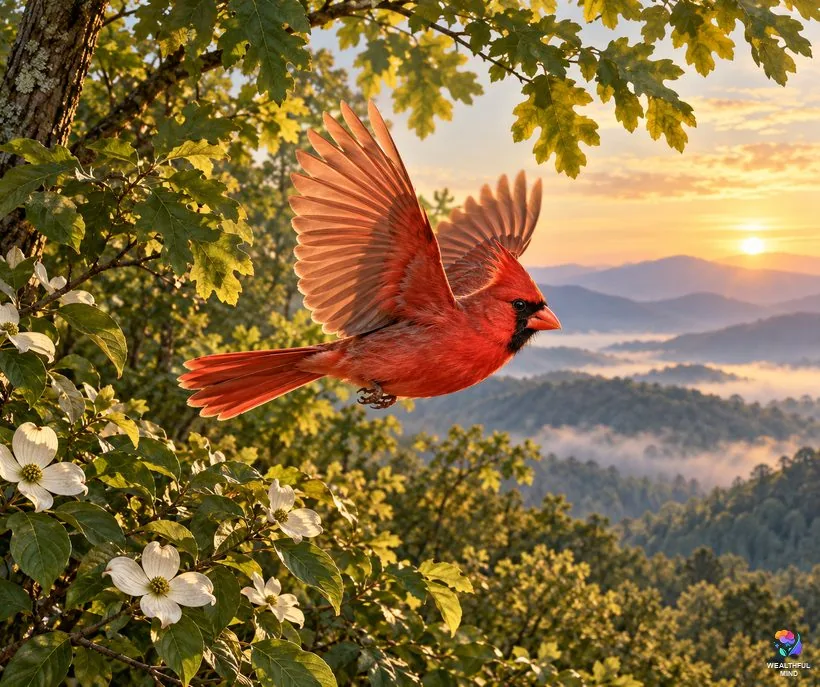
Most of what you read about cardinals online has no source at all. Here is what we were able to trace, piece by piece.
○ “When Cardinals Appear, Angels Are Near”
You have probably seen this line on a garden stone, a Christmas ornament or a sympathy card. It sounds as if people have said it for centuries. We found nothing to show that.
Our State, a North Carolina magazine, links it to a poem by Victoria McGovern and calls that poem “perhaps the most quoted expression of the legend.” The belief behind it runs in families, though. A man the magazine spoke to said his grandmother and his mother always told him cardinals are a sign from heaven.
On The Feeder, a bird-feeding blog, says the poem spread on gifts made for grieving families. You can now find it on signs in funeral homes and on comfort cards.
We could not find a date or a first printing for the poem. It is not in the Bible, and we found it in no old folklore collection. Even the Farmers’ Almanac, one of the more careful pages on cardinals, says the loved-one belief “cannot be traced to a single source.”
But a belief without an old book behind it can still be a living one. The Mountaineer, a North Carolina newspaper, writes about “Who Are You Redbird,” a 2019 bluegrass song that wonders whether the bird is a long-lost loved one or a dear departed friend coming back to visit.
According to The Mountaineer, it was the most played song on bluegrass radio that year.
If the line comforts you, you do not need it to be ancient. Comfort you found yesterday is still comfort.
○ The Cherokee Story of the Redbird
The oldest cardinal story we found is Cherokee, and it runs the other way from the belief you probably know.
In “The Daughter of the Sun,” which the ethnographer James Mooney recorded in Myths of the Cherokee, the Sun’s daughter dies. Seven men travel west to the Ghost country to carry her home in a box, and they are told never to open it until they arrive.
When they are very near home, she begs them to lift the lid because she cannot breathe, so they open it a little. Something flutters past them into the bushes, and they hear a redbird cry “kwish! kwish! kwish!” When they open the box at home, it is empty.
The story closes with two lessons. The redbird is the daughter of the Sun. And because the men opened the box, “now when they die we can never bring them back.”
So in this Cherokee telling, the redbird does not bring the dead back to you. It is the reason they stay gone, and a small, bright memory of someone the Sun loved.
(The story says “redbird” and never names a species. Older regional names for the Northern Cardinal include Red-bird and Cardinal Redbird, so most readers take it to mean the cardinal.)
Many sites claim that “Native Americans believed cardinals are messengers from the spirit world.” Not one of them names a single people, and we could not trace the claim, so we leave it out here.
The same goes for promises of good luck within a set number of days, and for cardinal lore from Japan or China, where the Northern Cardinal does not even live.
○ Why the Bird Is Called a Cardinal
The bird was named after churchmen, not the other way around. According to Etymonline, an online dictionary of word origins, English speakers have called it a cardinal since the 1670s, because its red reminded them of the red robes of Catholic cardinals.
Vatican News explains that the red in their dress stands for the cardinals’ willingness to sacrifice themselves “to the point of shedding their own blood.”
Etymonline traces the word itself back to the Latin cardo, a door hinge. Some modern writers turn that into the cardinal as a hinge between heaven and earth. It is a lovely picture, but you should know it is a new one, not an old teaching.
○ Is the Cardinal in the Bible?
No. The Northern Cardinal lives only in the Americas, from southeastern Canada through the eastern United States and down into Mexico and Guatemala, so no writer of the Bible ever saw one.
A search for “cardinal” on Bible Gateway, in the King James Version or the NIV, turns up no verse about the bird.
So what does it mean when you feel “God sent me a cardinal”? It is personal faith, and it can be a lovely one.
Many Christians see a cardinal as a small kindness from God on a difficult day, the way you might feel a sunset was meant just for you. Some, as the birding site ornithology.com puts it, see its red as the blood of Christ.
We could not find any church teaching about the bird itself, so treat these readings as devotion, not doctrine. If the thought brings you closer to God, you do not need a verse to keep it.
Why Is a Cardinal Tapping on My Window?
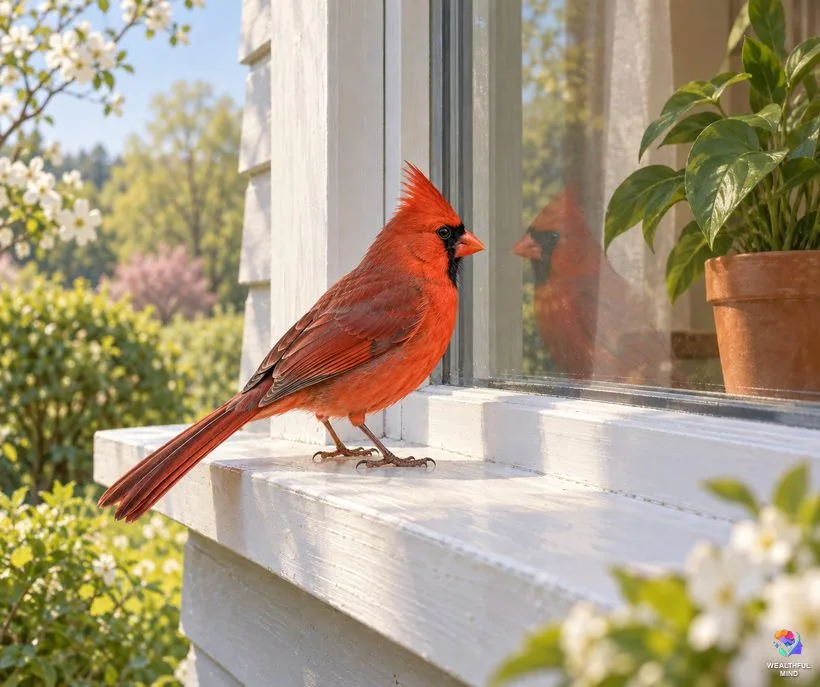
A cardinal that taps, pecks or throws itself at your window every day can be unsettling. Many people feel it is a loved one knocking, or a sign that something wants to get in.
Here is the plain reason, and you can hold it right next to the meaning.
In spring and early summer, birds that nest close to houses guard their patch hard. When a cardinal catches sight of itself in your window, it thinks it has found a rival and attacks. Males and females both do it, and car windows and side mirrors get the same treatment.
The good news is that it usually fades within a few days or, at most, a few weeks.
Our two bird sources differ a little on the risk. Audubon says it is usually not harmful, while the Cornell Lab warns the bird can wear itself out or even get hurt. So it is kind of you to help. Your fix goes on the outside of the glass, because covering the inside does nothing.
- Hang a sheet, some fabric or a flattened cardboard box on the outer side of the window for a few days.
- Rub soap streaks on the outside of the glass.
- Fold in your car’s side mirrors, or slip paper bags over them when you park.
Take everything down once the bird stops coming.
If you still feel the tapping meant something, that is yours to keep. Maybe the bird kept you company on a lonely morning, and both things can be true.
A bird that flies into a window at full speed is a different matter, and that kind of crash is often fatal. If a cardinal hit your glass and died, our dead bird meaning page explains the beliefs and the next steps.
Female Cardinal Meaning
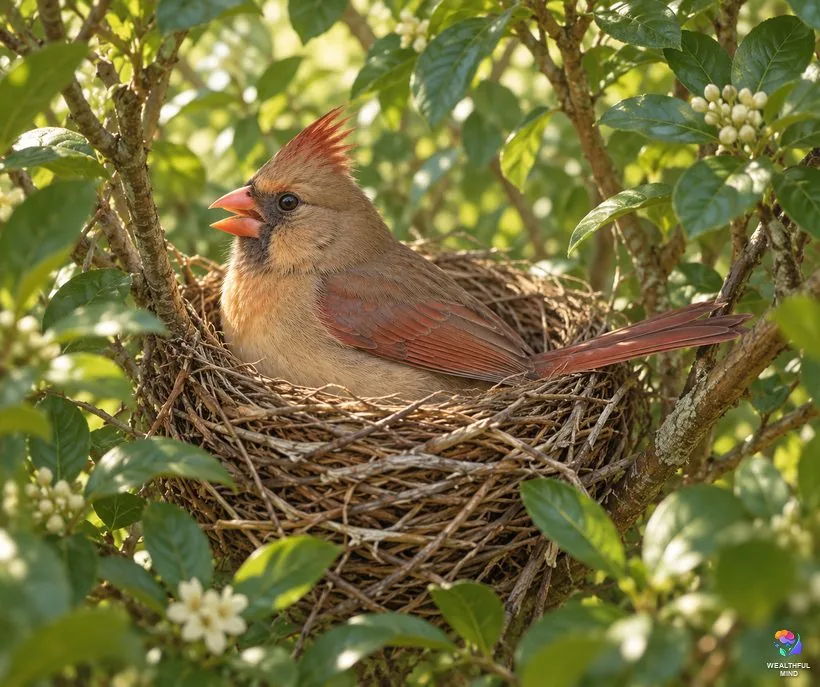
If you saw a soft brown bird with a crest and a thick pink bill, you probably met a female. She is duller than the male, but she shares his crest and has a rather long tail. If you thought she was a different bird altogether, plenty of people do.
She is also one of the more vocal female songbirds in North America, so listen for her. She often sings from the nest to tell the male when to bring food. She does most of the nest building too, crushing twigs with her beak until they are soft enough to bend.
That fits the meanings people give her. You might read a female cardinal as a caring presence, a visit from your mother or grandmother, or a nudge to use your own voice.
She speaks up even while she sits still. We think that is a good thing to take from her.
Two Cardinals, or a Pair Together
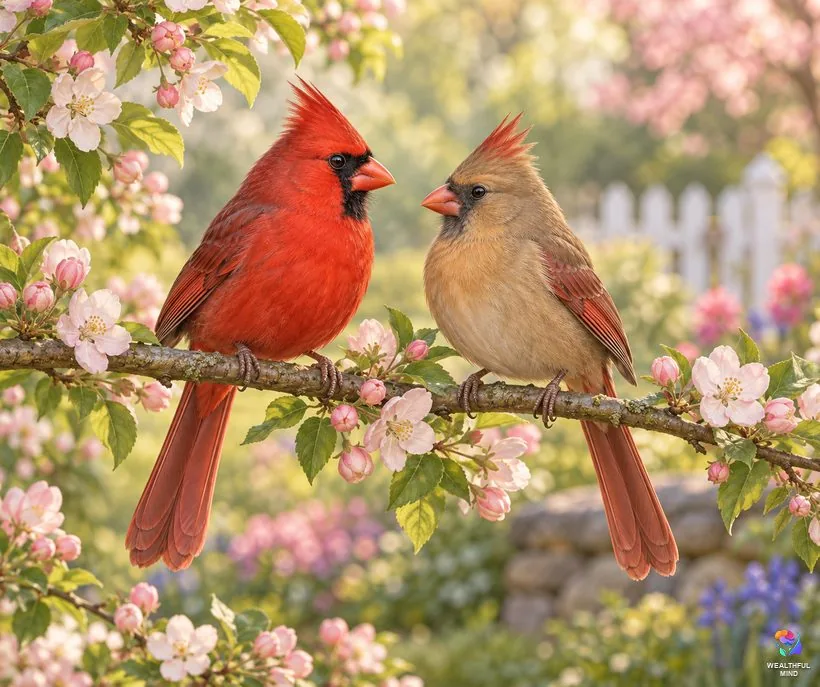
A male and a female together is the classic picture of love, and you may feel it the moment you see them. Before nesting, the female visits possible nest sites with the male following along, and the two call back and forth as they look.
You will see it claimed all over the internet that cardinals mate for life. That is too strong. Cornell’s own figures say pairs may stay together through the winter, but up to 20 percent of pairs split up by the next season.
“They often stay together” is the honest version.
For meaning, a pair is usually read as partnership and commitment. It can be a good sign for your relationship, a reminder to look after the one you have, or two people you have lost, together again.
If you saw two red males chasing each other in spring, you are more likely watching a territory fight than a love story. At that time of year, male cardinals guard their patch hard against other males. (We still count it as a sign that spring has arrived.)
Seeing Cardinals Every Day, or Several at Once
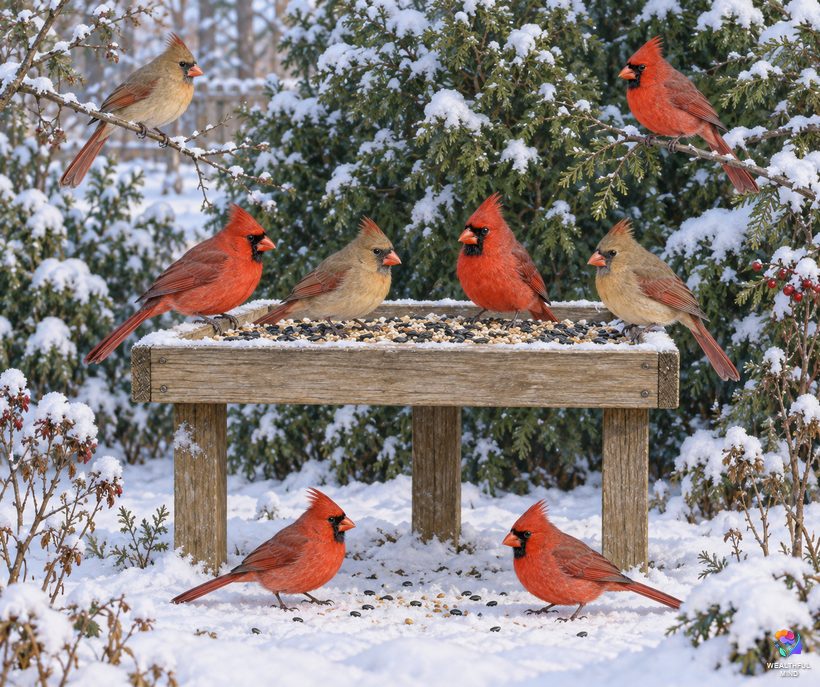
If you keep seeing cardinals, there is a simple bird reason. Northern Cardinals do not migrate. They are year-round residents, so the bird on your fence today may well be the same one tomorrow.
And in fall and winter, they gather in flocks of a dozen to several dozen birds. That is why you might see three, five or ten at once, especially around a feeder in the snow.
Does that make the meaning smaller? We do not think so. A bird that lives right beside you can still become your reminder, the way a song can belong to a person.
You may also find charts online that give a meaning for one, two, three or five cardinals. We will not give you one, because none of them has a tradition behind it.
Instead, keep a small note of the person or worry in your head each time a cardinal appears. If the same person or the same question keeps coming up, that is your answer.
○ Is It Rare to See a Cardinal?
No, at least not if you live in eastern North America. Cornell’s All About Birds guide reports that Partners in Flight estimates about 130 million breeding cardinals, and the North American Breeding Bird Survey puts their growth at about 0.32 percent a year since 1966.
It is the state bird of seven states. West of the Great Plains it is mostly absent, though, and outside the Americas it does not live at all.
So if a cardinal felt lucky to you, the luck was in the timing, not the rarity. People also ask which bird is the luckiest to see. No tradition we found names a single winner, so the lucky bird is usually the one that showed up when you needed it.
Cardinals in Winter and at Christmas
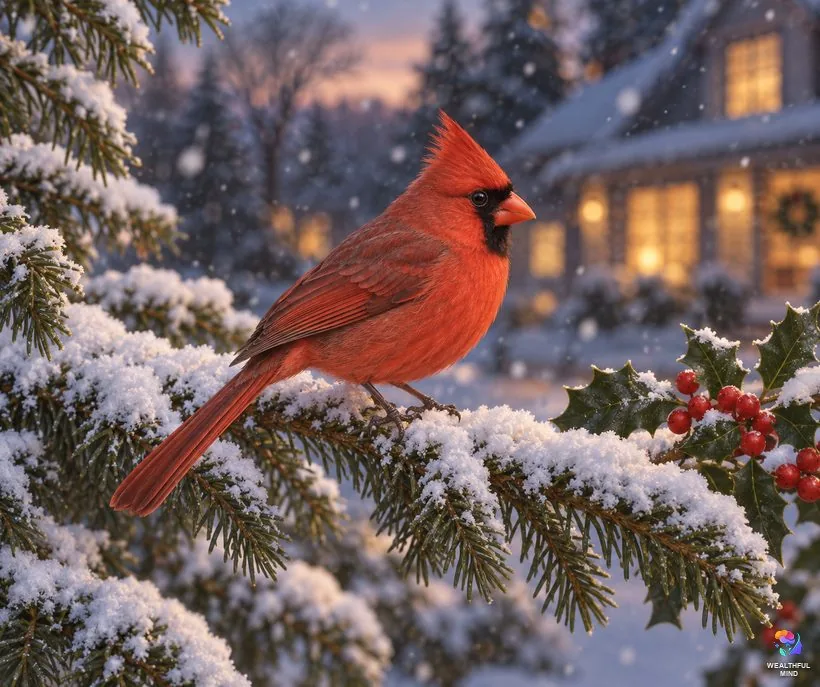
Cardinals keep their crimson color through every season, so in winter they are often the brightest thing in your snowy yard. That is where the winter meaning comes from: hope, warmth and a reminder to you that life keeps going through the cold months.
It is also why, as ornithology.com notes, you see the cardinal on so many American Christmas cards, ornaments and decorations. In Britain, the robin plays that part instead, and British Christmas cards began showing the robin carrying messages in the 1860s.
A cardinal at Christmas is often read as a loved one joining you for the holidays. If the season feels hard because someone is missing, a red bird at your feeder can feel like an empty chair at the table, filled for a moment.
A Cardinal in Your Dream
There is no old tradition behind cardinal dream meanings. Each website writes its own list, and you will notice the lists disagree with each other.
So read your dream by how it felt, and by who you connect with cardinals.
- If the cardinal felt calm or happy, you can take it as comfort, or as a visit from someone you miss.
- If you saw many cardinals in the snow, many dreamers read that as hope during a hard stretch.
- If the cardinal was inside your house, it may point to someone close to you, or a feeling you need to let in.
- If the dream left you uneasy, it is more likely your own worry about someone than a warning.
Before you look anything up, ask yourself what you were carrying when you went to sleep. That is usually where the dream started.
Yellow, Brown and Other Unusual Cardinals
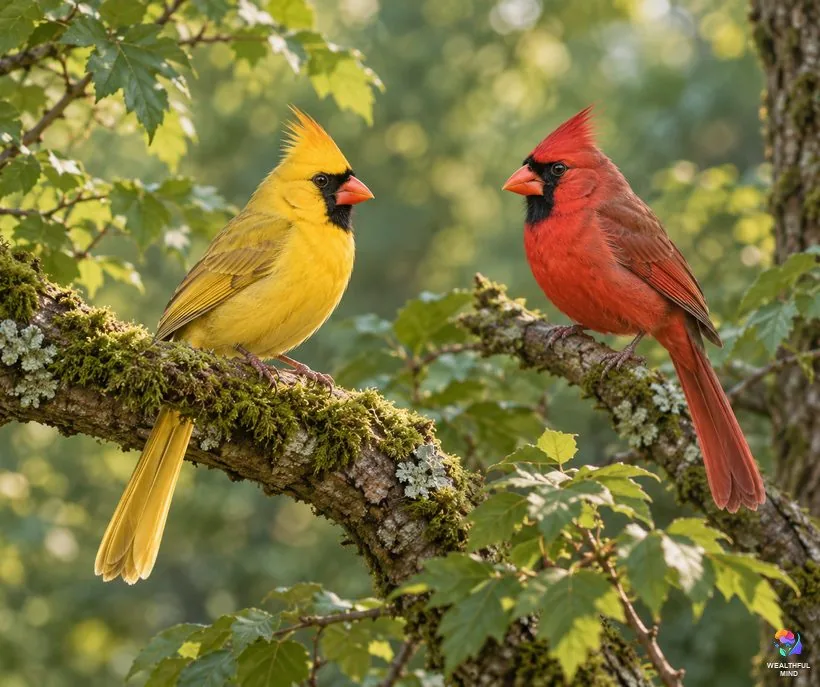
- Brown. If you saw a brown one, it is almost always a female, as described above.
- Yellow or orange-yellow. A rare genetic change leaves the bird unable to turn the yellow pigments in its food into red, and bird experts put it at about one bird in a million. If you saw one, you can call it a once-in-a-lifetime blessing, because it really is rare.
- Bald. A cardinal with a bare head in late summer is usually molting, not sick, because cardinals can lose all their head feathers at once.
- Extra red. The red itself comes from food, from pigments in fruits like wild grapes, dogwood berries and mulberries. (So that red coat really is, in part, made from berries.)
- Blue. The field guides we checked show no blue cardinal. If your bird was blue with a crest, it may have been a blue jay, a bird with meanings of its own.
How to Invite Cardinals to Your Yard

If you would like more cardinal visits, give the birds food, water and shelter.
- Offer black oil sunflower seed, a cardinal favorite, and some safflower seed too.
- Use a broad, open feeder, or scatter some seed on a low platform, since cardinals often feed on or near the ground.
- Plant dense shrubs or let a vine tangle grow. Cardinals hide their nests in thick foliage, about 1 to 15 feet up.
- Set out a shallow bath, 1 to 2 inches deep, and clean it every week.
If a red feather turns up under your feeder, admire it there and keep a picture rather than the feather.
The Northern Cardinal is named on the federal list of migratory birds that the law protects. Owning a native bird’s feathers without a permit goes against the Migratory Bird Treaty Act, according to the US Fish and Wildlife Service, and that includes molted ones.
Our page on white feathers explains the feather rules in more detail.
Then pour yourself a cup of tea, sit by your window and wait. Whatever the cardinal means to you, it is a lovely guest to have.
Frequently Asked Questions About Cardinals
When God sends you a cardinal, what does it mean?
For many Christians it is a small kindness from God on a hard day, or a sign that someone they have lost is safe with Him. That is personal faith rather than church teaching, because the cardinal is not in the Bible and we found no church document about the bird. If the thought brings you comfort or closer to God, you are free to keep it.
Are cardinals signs from heaven?
Many people in the US believe so, and families often pass the belief down. The well-known line “when cardinals appear, angels are near” comes from a poem that Our State magazine credits to Victoria McGovern, not from scripture or any old folklore we could find. Nobody can prove a cardinal comes from heaven, but the comfort people feel is real, and it is also fine if you never see one.
Is it rare to see a cardinal?
No, not in eastern and central North America. Cornell’s All About Birds guide reports an estimated 130 million breeding cardinals, and they stay in the same area all year. They are mostly absent west of the Great Plains and do not live outside the Americas, so where you live decides how often you see one.
What is the luckiest bird to see?
No tradition we found names one luckiest bird. Many people feel lucky when they see a cardinal, and a yellow cardinal, which bird experts put at about one in a million, really is a rare sight. The bird that feels luckiest is usually the one that shows up when you need it.
Do cardinals mate for life?
Not always. Cornell says pairs often stay together through the winter, but up to 20 percent of pairs split up by the next season. So “cardinals often stay together” is the honest way to put it, and a pair is still a lovely sign of partnership.
What does it mean when a cardinal keeps tapping on my window?
Many people feel it is a loved one knocking. The bird reason, according to Cornell and Audubon, is that in spring and early summer a cardinal sees its reflection, takes it for a rival and attacks it, and both males and females do this. Cover the outside of the glass for a few days with a sheet, cardboard or soap streaks, and fold in car mirrors. It usually stops within days or a few weeks.
Is the cardinal mentioned in the Bible?
No. The Northern Cardinal lives only in the Americas, so the writers of the Bible never saw one, and Bible Gateway’s search turns up no verse about it. The bird is named after the red robes of Catholic cardinals. Christians who see a cardinal as a sign from God are making a personal, devotional reading.
What does a dead cardinal mean?
People read it in many ways, from the end of one chapter of life to a loved one moving on. Our dead bird page covers those beliefs and what to do if a bird dies at your window.
Can I keep a cardinal feather I found?
In the US, the answer is no. Federal law protects the Northern Cardinal as a migratory bird, and the US Fish and Wildlife Service explains that under the Migratory Bird Treaty Act nobody may own its feathers without a permit, molted ones included. Enjoy the feather where it fell and keep a picture instead.