Piano method shifting is a visualization where you play a grand piano for a crowded hall, take a bow, and follow someone from your desired reality (DR) through a door full of warm light. Then you either fall asleep in that light or open your eyes as it fades, intending to wake up in your DR. (Moving your hand to a new spot on a real keyboard is a playing technique that just shares the name.)
Quick pick
Where Should You Start With the Piano Method?
Find the line that sounds like you and tap it to jump straight there.
- Want the whole routine in order? Start at step one
- Never touched a piano in your life? You do not need to play
- Does a crowd watching you feel stressful? Play to an empty hall
- Keep drifting into a daydream? Come back to one detail
- Shifting to Hogwarts? Use the Great Hall version
Keep reading below What it is Your song The steps Fixes Does it work? Stay safe Questions

The piano method is one of many other shifting methods. Words like DR and CR (your current reality) are explained in what reality shifting is and how it works, and before your first night, please also read how to keep shifting safe.
What Is the Piano Method for Shifting?

The piano method is a short story you tell yourself in the dark, with you as the star. You walk into a grand hall, play one song so well that the room falls silent, and leave through a door that opens onto your DR. The music holds your attention, and the walk out is the moment you let go of your CR.
It came out of the wave of shifting methods that spread online in 2020. Shifters credit it to a user on Amino, a community app many early shifters used. That original post has since disappeared, so the oldest versions left are copies on Wattpad, Reddit and YouTube.
Honestly, few shifters talk about it now. When we searched the shifting forums, the newest threads about it were years old, and newer shifters mostly talk about lucid dreams and the void instead. That does not make it a poor choice (it just means fewer people to compare notes with, and more room to make the method your own).
○ Who the Piano Method Suits
It suits you if you love music and can lose yourself in a daydream. The whole method is one long scene, so if pictures come easily to you, the hall will almost build itself.
Some guides call it a method for more experienced shifters, because you hold a busy scene for a long time. If your mind shows you no pictures at all, you can still feel the keys and hear the song, or try one of our shifting methods without visualization.
Before You Start

○ Choose Your Song
Pick your song before you lie down, because choosing one in the dark wakes your mind up. The usual advice is a song that reminds you of your DR, like the theme of your DR world or a piece your DR self loves.
Choose something you could hum all the way through without thinking. That way your imagination spends its effort on the hall, not on guessing what comes next.
One early Wattpad guide says the method’s creator suggested Clair de lune, the calm piano piece by Debussy, and it is a lovely place to start. You also do not need a piano at all. Some versions let you play any instrument you feel close to, so a violin, a guitar or a harp works just as well.
○ Set Up Your Room
If you want the falling asleep ending, save the method for your normal bedtime. If you plan to open your eyes at the end, any calm evening works.
Lie down or sit however you are comfortable (one guide even says standing is fine), and spend a few minutes breathing slowly before you begin. Real music is optional. Some shifters play soft piano music quietly in the background to set the mood, while others like silence, so the song in their head is the only one.
If you use earbuds, Cleveland Clinic’s audiologist says to keep the volume low enough that you could still hear someone nearby talk to you. She also suggests a timer, so the music stops after you fall asleep. And skip noise cancelling, Cleveland Clinic adds, so you can still hear what is going on around you, especially in an emergency.
How to Do the Piano Method, Step by Step
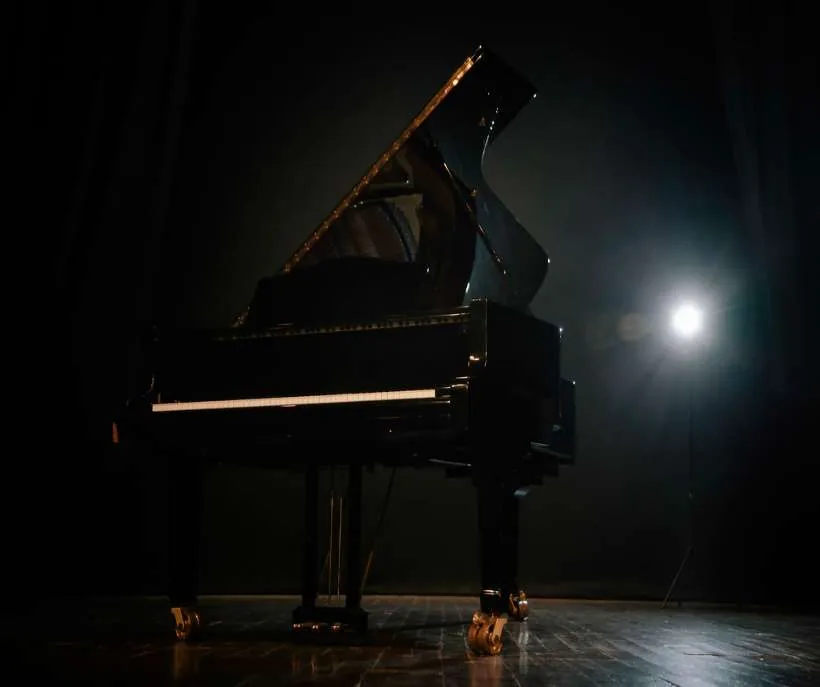
Go slowly. Nobody in the hall is in a hurry, and neither should you be.
- Get comfortable and settle your breathing. Close your eyes and let each breath get a little slower. If thoughts crowd in, let them pass and come back to your breath.
- Picture a grand hall full of people. Make it big, with a high ceiling and a soft murmur of voices. The people do not need faces, because a blur of chatter is enough.
- Walk in, dressed the way you have always wanted. Feel your outfit move as you head for the grand piano in the middle of the room. The talking dies down and heads turn to follow you.
- Sit down and play your song. The hall goes completely silent the moment you sit. Feel the cool keys under your fingers and let the music fill the room, using every sense you can.
- Finish, take a bow and say you are going home. Applause breaks out. Stand, bow and tell the audience something simple, like Thank you, it is time for me to go home.
- Take the hand of someone from your DR. They are waiting by the entrance and ask if you are ready. When you say yes, they lead you down a long corridor lined with doors.
- Stop at the dark brown door with the gold handle. They open it, and warm light spills out, with stars beyond it. Step through together as they say Welcome home.
- Choose your ending. Fall asleep inside the light, or wait until the light fades and then open your eyes slowly.
○ Affirmations You Can Use
Affirmations are optional in this method. Some shifters repeat a few lines as they walk into the light, and others use one whenever their mind wanders off. Keep them short, plain and in the present tense:
- I am shifting to my DR.
- I am safe, and I am going home.
- My DR is ready for me.
- Every note brings me closer.
- I am already there.
Reality Shifting made easy, check out our free Shifting Script Template (Free Printable PDF)
○ Fall Asleep or Open Your Eyes?
Guides split on this, and both endings belong to the method as shifters share it. The earlier version of this guide on our site ended with falling asleep in the light, while others tell you to open your eyes once the light is gone.
Pick the sleep ending if long visualizations tend to send you off anyway. Pick the open eyes ending if you stay alert easily, or if you are trying it earlier in the evening.
Nothing stops you from switching between the two from one night to the next. Whichever you choose, opening your eyes in your own room afterward does not mean you did it wrong.
Common Problems With the Piano Method

○ “I Can’t Play the Piano”
You do not need to. In your hall you can play beautifully without a single lesson, the same way you can fly in a dream without ever learning how.
One Wattpad guide suggests simply pressing keys along with the tune and pretending they are the right notes. Or let the song play by itself, like a recording filling the hall, while your hands rest on the keys.
○ “Picturing a Crowd Makes Me Nervous”
Then shrink the audience.
Play to a small room with a few friendly faces, to your DR friends only, or to an empty hall with moonlight on the floor. The method runs on calm, so a scene that makes your chest tighten is working against you.
If even a quiet hall leaves you uneasy, stop for the night. The National Center for Complementary and Integrative Health says that, now and then, people feel more anxious, have intrusive thoughts or fear losing control during relaxation practices.
○ “It Just Feels Like Daydreaming”
That is where everyone starts. The piano method is a daydream you steer on purpose, and the steering is the part that takes practice.
When your mind slides off to tomorrow’s homework, do not start over. Come back to one small detail, like the weight of the keys under your fingers or the hush after you sit down, and carry on from there.
○ “I Heard Music I Didn’t Script”
This one surprises people, but it has a name. Hearing brief sounds as you drift off is a kind of hypnagogic hallucination. The Sleep Foundation says between 8% and 34% of these involve hearing sounds, such as voices or music.
Shifters often read a stray piano note as a sign that their DR is close.
Whatever it means to you, for most people these sounds at the edge of sleep are considered harmless.
Hearing voices or music when you are wide awake during the day is different. The Sleep Foundation says daytime hallucinations need medical care, so tell a parent or another adult you trust and see a doctor.
○ “Nothing Happened”
Look at which part of the scene felt flat. If the hall never felt real, add a smell, like polished wood or rain on the tall windows. If you never made it to the door, shorten the performance to one short piece.
If you walked through the door and still woke up in your own bed, try pairing the scene with a lucid dream (see below). For the bigger picture, our page on why shifting does not always happen is honest about the reasons.
Ways to Change the Piano Method
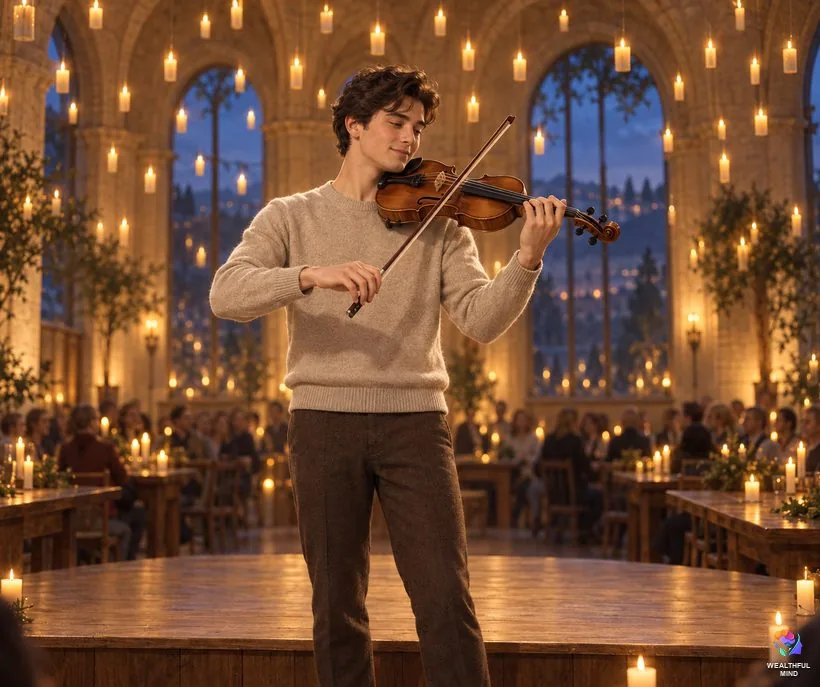
○ The Great Hall Version for Hogwarts
If your DR is Hogwarts, your hall is already built. Picture the Great Hall with its floating candles and long house tables, and a grand piano standing where the staff table usually is.
Students in robes chatter until you sit down, and then the only sounds are your song and the crackle of the candles. When you finish, a friend from your house takes your hand and leads you out to a corridor of doors. Behind the dark brown one, the warm light smells faintly of your dormitory.
For scripts and other ways in, see how to shift to Hogwarts and our ready-made Hogwarts shifting script.
○ Pair It With Lucid Dreaming or the Law of Assumption
Many shifters today say the classic methods work best alongside a lucid dream. So once you realize you are dreaming, picture the hall, play your song and walk through the door from inside the dream. Our lucid dream method explains how to get lucid in the first place.
You can also use the scene as a short loop you replay each night as you drift off. If you follow the law of assumption for shifting, the bow and the walk home become your way of feeling that you are already there.
○ Other Methods With Music or a Guide
If the music is your favorite part, try the Estelle method, where a slow dance takes the place of the performance. If the best moment is someone from your DR taking your hand, the In Your Arms method is built around being held by them.
Does the Piano Method Work?
No study has shown that anyone moves to another reality, and we will not promise that this method takes you there. But several pieces of it rest on ordinary, well-studied things.
The hall is, in plain terms, guided imagery: imagining a peaceful scene until your body starts to match it. That is how the National Center for Complementary and Integrative Health describes guided imagery. It says relaxation practices aim for slower breathing, lower blood pressure and a slower heart rate.
There is some backing for the music as well. Cochrane reviewers who pooled 13 studies found that music may improve how well adults with insomnia feel they sleep. They also asked for more research on other parts of sleep. That is about music you actually hear, so it speaks to the soft background track, not the song in your head.
Imagining your fingers on the keys is not empty either. A 2015 paper in Frontiers in Behavioral Neuroscience opens by saying that motor learning “can occur by motor-imagery (MI) practice”, which means rehearsing a movement in your mind. So picturing the piece can count as a little practice, here in your CR.
So here is our view.
The piano method is a calming bedtime story with a soundtrack, and that alone makes it worth trying. Anything beyond that is something shifters believe rather than something anyone has shown, so enjoy it as a ritual and keep your hopes light.
Is the Piano Method Safe?

It is one of the gentler methods. There is no breath holding, no alarm in the middle of the night and nothing to swallow, and most of what can go wrong is small.
Keep it at your usual bedtime rather than staying up for it. If you are a teenager, a full night of rest matters more than any single attempt.
The American Academy of Sleep Medicine advises 8 to 10 hours per 24 hours for ages 13 to 18.
If you ever find you cannot move or speak for a moment as you fall asleep or wake up, that is most likely sleep paralysis. The NHS describes it as frightening for some people, yet harmless. It suggests seeing a GP (a family doctor) if it happens often and leaves you very anxious about going to sleep or tired all the time.
The quieter risk is the daydream itself. Psychologist Eli Somer and his colleagues compare shifting to immersive daydreaming. Its harmful form, maladaptive daydreaming, causes distress and gets in the way of friendships, work and study, they write.
So pause the method if the hall starts to feel better than your real days, or if you skip sleep, school or meals to get back to it. Then talk to a parent or another adult you trust about how you feel. You can find the other signs that call for a break in our guide to the risks of shifting.
Treat the piano method like a piece of music you love: something you return to, a little more familiar each night, for the pleasure of playing it.
FAQ About the Piano Shifting Method
When and how many times do I need to affirm? Can I affirm while playing the piano?
Whenever you like, and as often as you like. Affirmations are there to pull your attention back when it drifts, so say one each time you notice your mind wandering away from the hall. You can say them while you play, whisper them or simply think them, whichever keeps the music going.
Do I need to imagine myself playing the piano in the first person or third person?
Either works. First person, looking out through your own eyes, makes the scene feel close and real, while third person, watching yourself like a film, suits people who think more like observers. You can also mix them, for example watching yourself walk to the piano and then slipping into your own eyes as you start to play.
Do I need to know how to play the piano?
No. In the hall you play beautifully without lessons, just as you can fly in a dream. If that feels false, press the keys along with the tune in your head, or let the song play on its own while your hands rest on the keys.
What song should I play for the piano method?
A song that reminds you of your DR, or one you know well enough to hear from start to finish without effort. Clair de lune by Debussy is a common pick, because one early guide says the method’s creator suggested it. Skip anything that makes you want to sing along or tap your feet, since the method needs you calm.
Can I use a different instrument instead of a piano?
Yes. Some versions of the method say any instrument you feel connected to will do, so a violin, a guitar or a harp can take the piano’s place. Keep the rest of the scene the same: the hall, the silence, the bow and the walk to the door.
Can I learn to play the piano in my DR and keep the skill?
Shifters have asked this for years, and nobody has shown that it can happen. What research does show is that rehearsing a movement in your imagination can help you learn it, so picturing your hands on the keys may give real lessons a small boost. If you want to play, the surest way is a real keyboard in your CR.