Picture a staircase, climb it slowly and step out at the top into your desired reality (DR): that is staircase method shifting at its simplest. The longer double-sided version has you climb past memories of your current reality (CR), say goodbye to yourself in a mirror, then walk down a second staircase to someone from your DR who is waiting at the door. Either version can end with your eyes opening or with sleep, and shifters believe that is the moment you arrive.
Quick pick
Where Should You Start on the Staircase?
Tap the line that sounds most like you to jump to your match.
- Trying it for the first time? Start with the single staircase
- Want a proper goodbye to your CR? Try the double-sided version
- Worried the mirror goodbye is forever? Read why you can come back
- Fall asleep before the top? That is fine, here is why
- Can’t picture the stairs? Feel them or use a guided audio
- Heading to your waiting room? Let the stairs take you there
Keep reading below What it is Single staircase Double-sided Tips Stay safe Questions

If DR and CR are new words to you, our guide to what reality shifting is explains them. The staircase is one of the main shifting methods, and before you try any of them, please read our honest look at shifting safety.
What Is the Staircase Method for Shifting?

The staircase method is a visualization. You lie still, imagine a flight of stairs in as much detail as you like, and let every step carry you a little further from your everyday life.
It comes from the first big wave of shifting. Somer and colleagues, who studied the trend, describe how talk of reality shifting grew exponentially on Reddit, TikTok, YouTube and Wattpad during the COVID-19 lockdowns. The earliest staircase versions we could find appeared in that same wave, starting with a short entry on a Reddit master list of methods.
Few people post about it now. It lives on mostly as guided meditations, where a calm voice walks you up and down the stairs (more on those below).
There are two versions. The single staircase is short and simple, and the double-sided staircase is a longer story with a goodbye in the middle.
○ Why a Staircase?
Stairs are not a random choice. Hypnotherapists use the same picture to help people relax more deeply, and Cleveland Clinic says a therapist might ask you to imagine slowly walking down a staircase during the deepening stage of hypnosis.
It is a standard tool, not a one-off. Yeh and colleagues, writing about hypnosis in health care, describe “descending a staircase” as a deepening metaphor that is often used to help patients feel more relaxed.
That matters because researchers see a lot of hypnosis in shifting. Somer and colleagues call it “a particular form of self-hypnosis”, so if you feel heavy and calm halfway down, the picture is doing what it has done for a long time, whatever else you believe is happening.
There is one difference. In hypnosis the stairs lead down into relaxation. The shifting version climbs first and descends after the mirror, so the second staircase is the part that matches the hypnotist’s picture.
Single or Double-Sided: Which Staircase Method to Try
The single staircase
- Length: short.
- What you picture: one staircase up to a bright light.
- Who meets you: no one.
- How it ends: you open your eyes or fall asleep.
- Best for: a first try, tired nights, and people who find long scenes hard to hold.
The double-sided staircase
- Length: long, with several stages.
- What you picture: stairs up past your CR, a mirror, then stairs down to your DR.
- Who meets you: someone important to you from your DR.
- How it ends: you fall asleep in your DR bed.
- Best for: shifters who want a goodbye step and a story to follow.
Our suggestion is to start with the single staircase. Once climbing feels natural, the double-sided version is easier to enjoy, because you already know how the stairs feel.
How to Do the Single Staircase Method
This is the shorter of the two, and it is our own gentle take. Most guides online teach only the double-sided version, so think of this one as the warm-up.
- Get comfortable and close your eyes. Lie or sit however you can stay still without fidgeting.
- Picture yourself at the bottom of a staircase. Design it however you like: marble, wood, a spiral of stone. If you prefer shifting without visualization, just know you are standing at the base and say so to yourself.

- Climb slowly. See each step clearly, or tell yourself that every step brings you closer to your DR. Some people notice shifting symptoms here, like tingling or a heavy body.
- Notice a soft, bright light at the top. Let it grow as you get closer.
- Walk into the light. Let your DR take shape around you: the floor under your feet, the air, the first voice you hear.
- Open your eyes, or drift off. If you would rather use this as a sleep shifting method, stay with the light until you fall asleep.
How to Do the Double-Sided Staircase Method
This is the version most guides, videos and searchers mean. It takes a while, so begin at your usual bedtime and do not rush the stairs.
- Relax first, if you like. A few slow breaths, a short meditation or a subliminal for shifting can come first. None of these is required.
- Lie down in the position you fall asleep in. This method usually ends in sleep, so get comfortable now.
- Picture a small room with a staircase leading up.
- Climb slowly while you remember your CR. Let good moments and hard ones come up, one per step, and notice how each one felt. Some shifters picture them as paintings hung along the wall.
- Find a mirror at the top. Look at your CR self, just as you are today.

- Say goodbye to your CR self. Thank them for getting you this far. Many guides call it the last time you will see yourself this way, which is easier to take as goodbye for now (see below).
- Turn to a white door. As you turn the knob, feel energy running through you. Some shifters picture the knob glowing gold until their whole body glows with it.
- Step through to a second staircase leading down.
- Walk down while you picture your DR. This time the paintings show the people and places waiting for you, and the energy grows with every step.
- Open the door at the bottom. Someone important to you from your DR is standing there: a best friend, a partner, a brother or sister. They hold out a hand and ask whether you are ready to go.
- Answer when you are ready. Take their hand only when it feels right.
- Walk down a short hallway together. They ask about your life in your DR: what you will wear, what you will eat, who your friends are. Every answer works like an affirmation, so answer in the present tense.
- Step through the last door. You are your DR self now, and your DR family and friends are there to welcome you home.
- Go to your DR bedroom and lie down in the position you started in. Picture your DR self falling asleep, then let yourself fall asleep too. As the method is usually posted, you wake up in your DR.
Here is how one attempt might look if your desired reality is a summer on a horse ranch in Montana. On the way up, the paintings show your tenth birthday, the night your dog went missing and found its way home, and a math test you still think about. At the bottom of the second staircase, the paintings turn to a red barn, a sorrel horse called Biscuit and a pink sunrise over the hills.
Your DR cousin Mateo opens the door, smelling faintly of hay. In the hallway he asks which horse you are riding first, and you hear yourself say “Biscuit, obviously” (it is always Biscuit).
○ Why Shifters Like the Goodbye Step
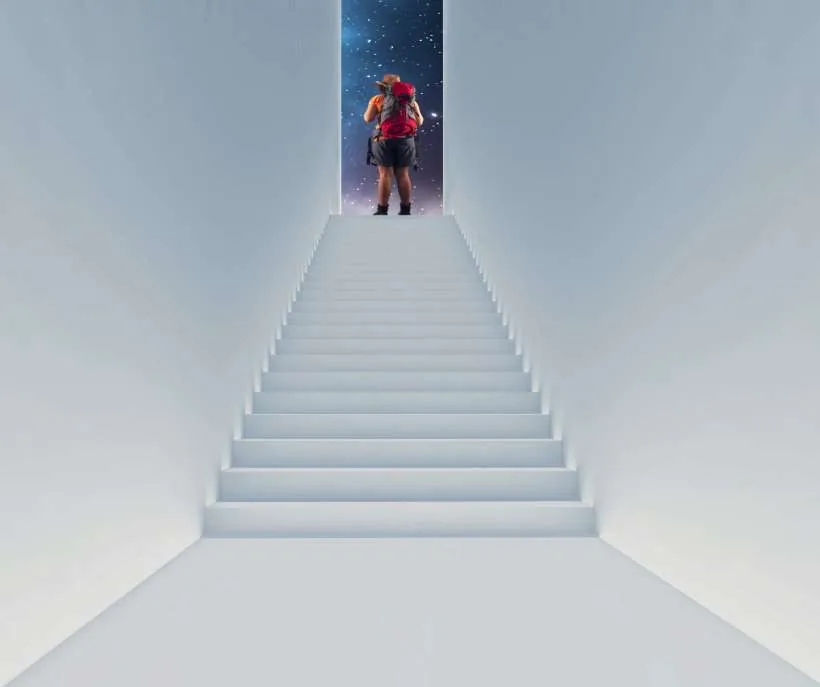
Many methods jump straight to the DR. This one makes you look back first, and shifters say that is what makes it feel complete.
Walking past your CR memories lets you thank your old life instead of running from it. Many shifters say they reach the mirror feeling lighter and with fewer doubts.
We think that is the real gift of the double-sided staircase. Even on a night when nothing else happens, a quiet stretch of gratitude for your own life is time well spent.
○ Does the Mirror Goodbye Mean You Can’t Come Back?
No. When a shifter asked exactly this on Reddit, the answer was that the mirror is simply your last look at your CR body as it is (many people script a different look in their DR), and that you can always come back.
So treat it as goodbye for now. In the scripts Somer and colleagues looked at, a safe word that brings you quickly back to your CR was a common addition, so pick yours before you climb. The rest of the return trip is in our how to come back from shifting guide.
If the question at the door, “Are you okay with leaving your family and friends?”, makes you sad, change it. Your DR person can ask “Ready to visit?” instead. It is your staircase.
Tips for the Staircase Method
○ How Long to Climb
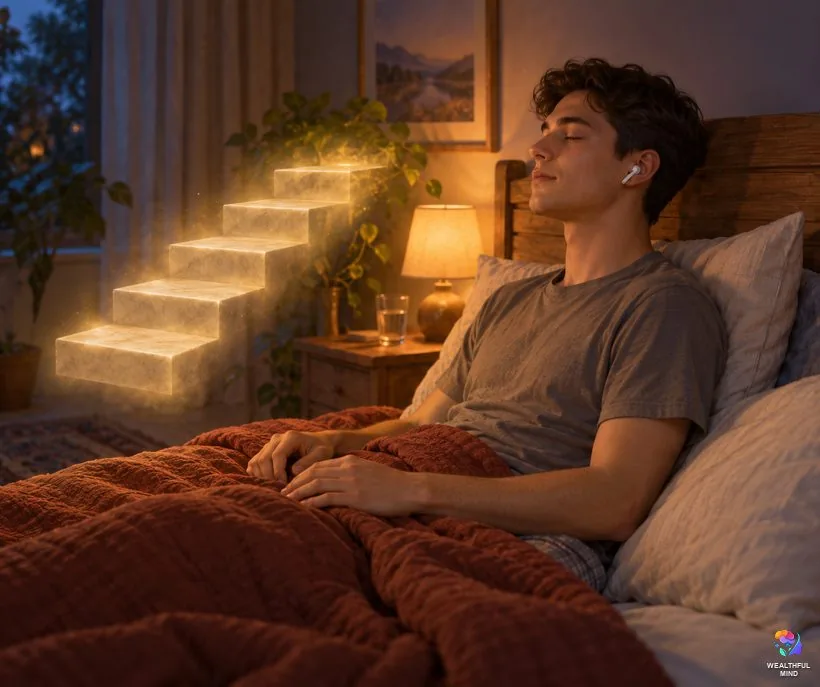
There is no right number of steps. Climb until you feel settled, then move on, and do not count.
One shifter on Reddit described the signs they wait for: a clear mind, breathing that seems to happen on its own, and a heavy body. They also said that if you rush, nothing happens, and that worrying about which step you are on gets in the way.
○ If You Can’t Picture the Stairs
You do not need to see them. Feel them instead: the rail under your hand, your legs growing heavier, the cool air near the top.
Or simply say each stage to yourself, like “I am climbing past my CR” and “I am at the mirror now”. A guided audio can also do the picturing for you.
○ If You Fall Asleep Halfway
That is fine. The double-sided version ends in sleep anyway, so dropping off on the stairs only means you got there early.
Shifters on Reddit suggest telling yourself before you start that you will shift even if you fall asleep. If you would rather stay awake to the end, try the method sitting up against your headboard.
○ Using a Guided Meditation or Video
This is how most people do the staircase method today. Search for a double-sided staircase guided meditation, and a calm voice will lead you through each stage while you just listen.
That is a recognized relaxation practice. The NCCIH, part of the US National Institutes of Health, describes guided imagery as picturing calming scenes and trying to bring that calm into your body.
Many of these videos promise theta waves, special healing frequencies or a success rate in their titles. Treat those as decoration: a 2023 review by Ingendoh and colleagues found contradictory results on whether binaural beats change brainwaves at all. Pick a voice you like, keep the volume low and set a sleep timer.
Using the Staircase to Reach Your Waiting Room

A waiting room is a calm in-between place that shifters visit before their DR, and stairs make a natural way in. If you have not built one yet, our guide to waiting room shifting explains how it works.
Here are a few ways to join the two:
- Put your waiting room at the top of the first staircase. The mirror hangs on its wall, and a door in the corner leads to the staircase down to your DR.
- Climb twice with the single staircase. The first flight takes you up to your waiting room, and a second one inside it rises to your DR when you are ready.
- Let the stairs be part of the room. A spiral staircase in a library, stone steps winding down through a garden or a ladder up to a tree house all work, and these waiting room ideas have plenty more.
We like the first one best. Saying goodbye in a room you already feel safe in makes the mirror step much gentler.
Pairing the Staircase With Other Methods

The Falling method pairs well with the single staircase. At the top, instead of walking into the light, let yourself fall gently through soft darkness to a door that opens onto your DR.
If you jolt awake as you fall, there is nothing wrong. The Sleep Foundation explains that these jolts, called hypnic jerks, are involuntary twitches as you fall asleep that often feel like falling, and that they are common and generally harmless.
You can also take the stairs into a dream. With the lucid dream method, once you realize you are dreaming, find a staircase in the dream and climb it to your DR.
For a door instead of stairs, the Coraline method has you open a small door in your bedroom wall and crawl through a tunnel to your DR. And if the mirror is your favorite part, the Mirror method builds a whole method around one.
Is the Staircase Method Safe?

For most people it is a calm way to spend some time in bed. The main things to protect are your sleep and how you feel afterward.
The double-sided version is long, and repeating it night after night can quietly cut into your rest. The American Academy of Sleep Medicine recommends that teenagers aged 13 to 18 sleep 8 to 10 hours per 24 hours. So start at your normal bedtime, never set an alarm to try again in the night, and let sleep win if it comes.
Lying awake in bed for a long time can also bring on sleep paralysis, when you cannot move or speak as you fall asleep or wake. The NHS says it can be scary but is harmless, and that sleeping on your back can make it more likely, so lie on your side if it has happened to you.
Some shifters describe a heavy chest or trouble breathing as signs they are close, but they are not. MedlinePlus, from the US National Library of Medicine, counts difficulty breathing, and chest pain or discomfort that lasts two minutes or more, among the warning signs of a medical emergency. Stop, tell an adult and see a doctor, or call your local emergency number if it is severe.
Relaxation practices are generally safe, but the NCCIH notes that people occasionally report anxiety, intrusive thoughts or a fear of losing control. The NHS lists feeling disconnected from yourself and the world around you among the symptoms of dissociative disorders.
If the unreal feeling follows you around after your attempts, or shifting starts to eat into your sleep, school or meals, put the stairs away for a while. Tell a parent, a trusted adult or a doctor what has been happening, and our guide to the real risks of shifting has more on when to step back.
Does the Staircase Method Work?
Someone asked exactly this on Reddit this summer, and nobody answered, so here is ours. There is no evidence that anyone has left this reality by any method, and we will not promise that the stairs will take you anywhere.
What the staircase does have is a picture hypnotherapists trust to deepen relaxation, plus a goodbye step that many shifters find meaningful. Plenty of people describe vivid, dreamy feelings on the stairs, and those experiences are real to them.
So try it as a calm ritual, not a test you can fail. If it still does not click after a few tries, read why you might not be shifting yet and try another method.
Your DR is not going anywhere, so take the stairs one at a time. Happy shifting!
Frequently Asked Questions About the Staircase Method
Is the staircase method an asleep or awake method?
It can be either. Use it as an asleep method by letting yourself fall asleep at the end, which is how the double-sided version is usually done. To use it as an awake method, simply open your eyes when you feel you have arrived in your DR, which suits the single staircase best.
Do you do the staircase method in first person or third person?
Whichever comes more easily to you. First person, seeing the stairs through your own eyes, can help you feel the climb in your body. But many people picture things more easily in third person, as if watching themselves on the stairs, and that works too.
What is the double-sided staircase method?
It is the longer version of the staircase method. You climb one staircase while remembering your current reality, say goodbye to your CR self in a mirror at the top, then walk down a second staircase to a door where someone important to you from your DR is waiting. You walk a hallway together, meet your DR family and fall asleep in your DR bed.
How do I know when I have reached the top of the stairs?
There is no set number of steps, so you decide. Shifters say to move on when your mind feels clear, your breathing seems to happen on its own and your body feels heavy. Do not count steps or rush, since worrying about where you are on the staircase tends to pull you out of it.
What if I fall asleep before I reach the end?
That is completely fine. The double-sided version ends in sleep anyway, so falling asleep on the stairs only means you got there sooner. Some shifters tell themselves before they start that they will shift even if they fall asleep. If you want to stay awake to the end, try it sitting up or follow a guided audio.
What is the most effective shifting method?
There is no single best method, and no method has been shown to move anyone into another reality. The most effective one for you is the one you can relax into and enjoy. If the staircase does not suit you, browse the main shifting methods for beginners and try one that matches how you think, in words, sounds or pictures.