Waiting room shifting means you shift first to a waiting room (WR), a calm place you design yourself, and then move on to your desired reality (DR) from there. You leave through a door, a portal or a second method. You do not need one, but many shifters say a small, familiar room is easier to visualize than a whole new world.
Quick pick
Where Should You Start With Your Waiting Room?
Tap the line that sounds most like you to jump to your match.
- Not sure you even need a WR? See who it helps
- Ready to try tonight? Follow the steps
- Stuck on what to write? Copy the short script
- Want to move on to your DR? Pick a way out
- Shifting with friends? Set up a communal WR
- Tried and nothing happened? Fix the common snags
Keep reading below What a WR is Is it easier? Four rooms Stay safe Does it work? Questions

Newcomers can begin with our explainer on what reality shifting is, which covers terms like CR (your current reality). Most WRs begin with a few written lines, and our shifting script template gives you the full layout. For the methods themselves, browse our reality shifting methods for beginners.
What Is a Waiting Room in Shifting?
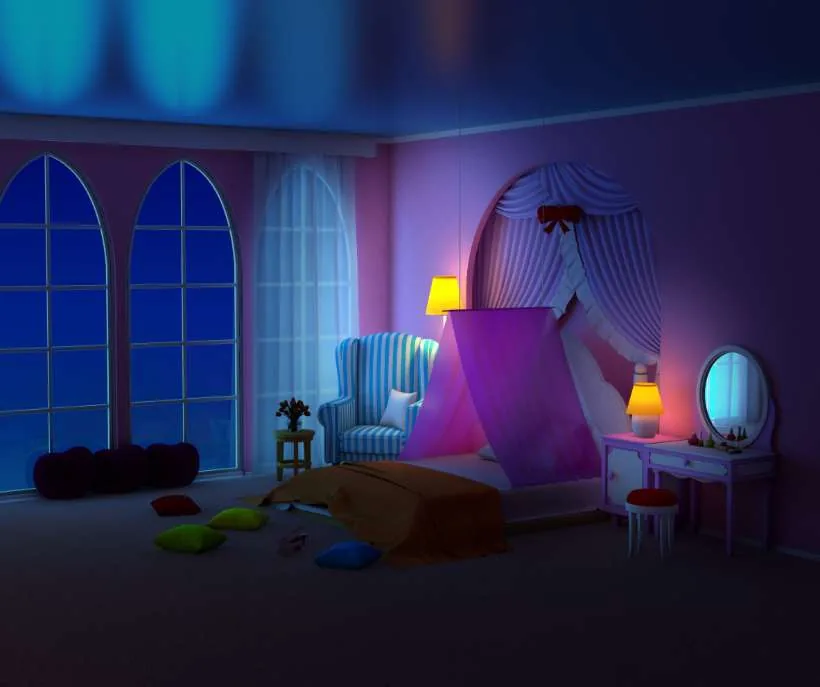
A waiting room is a place you shift to before you shift to your DR. It is entirely yours, a kind of base of operations for all your shifting.
Usually it is a room: your ideal bedroom, a reading nook, or any space where you feel safe, focused and inspired. But it does not have to be a literal room. It can be a garden, a beach or a clifftop, though shifters often say it helps if it is at least partly enclosed.
The idea has no known inventor. Eli Somer and his colleagues, who studied shifting forums, date shifting itself to 2020, when it took off online during the COVID-19 pandemic. Waiting rooms turn up in the community guides on Wattpad, Tumblr and Reddit from soon after, with nobody named as the first.
○ Why Shifters Use a Waiting Room
Shifters give a handful of reasons, and most of them come down to feeling comfortable:
- It is small and familiar. Visit it often and you will know every corner, so visualizing it gets easier each time.
- It softens the landing. You can settle in for a while before your DR’s story starts around you.
- It works as a hub. Script a door for each DR, and one room leads everywhere you want to go.
- It is a break spot. You can shift there just to rest, with no plans to go further.
- It is a meeting place. Friends who shift can meet you there (more on that below).
Shifters who lucid dream use the same trick inside their dreams. Instead of a door, they open a portal in a lucid dream.
○ Do You Need a Waiting Room?
No, you do not have to have a waiting room. It is totally up to you. You can use one sometimes and not other times, or keep a different WR for each mood.
Some shifters skip it and script a quiet first hour inside their DR instead. They wake up alone in their room, with no friends or plot yet, and simply settle in.
Our own take is simple. A waiting room is worth it if the start of your DR feels busy or overwhelming, or if you have several DRs and like one front door for all of them. If your DR already opens somewhere quiet, like your own bed on a slow morning, you can happily go straight there.
Is It Easier to Shift to a Waiting Room?
This is the question people ask most, and shifters do not agree. One side says a WR is a reality like any other, so it is no easier or harder to reach than your DR. The other side points out that you wake up in a room every single day, so a quiet room may be easier for your mind to accept than a whole new life.
We think both sides are partly right. A waiting room is not a shortcut, but it is often easier to visualize and easier to believe, because it holds fewer details and no other characters.
That only helps if rooms come easily to you. Some shifters find it simpler to imagine being their DR self than to visualize a room, and if that sounds like you, skip the WR and go straight to your DR.
How to Shift to Your Waiting Room
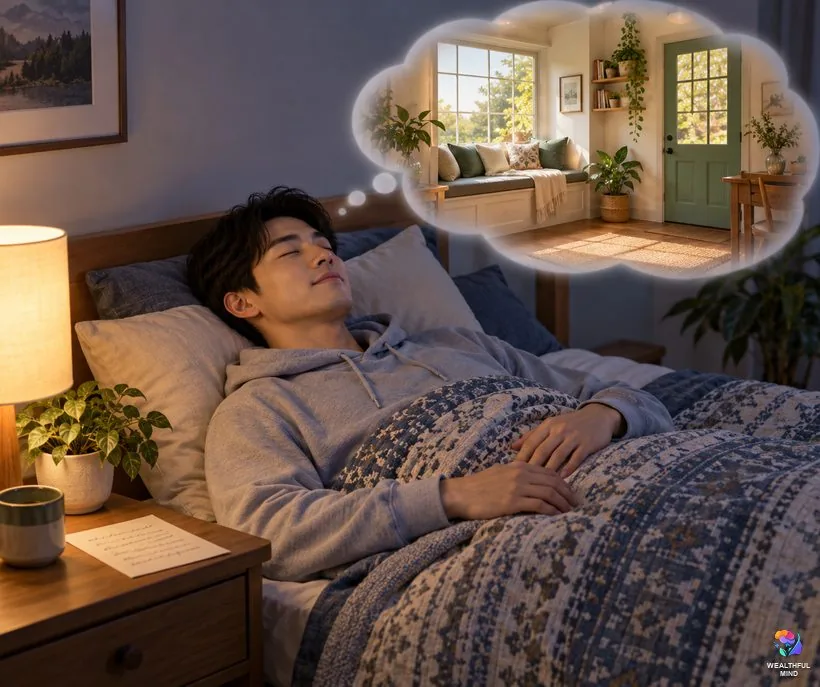
There is no special waiting room method. You use a method you already know and change only the destination.
- Write a short WR script. Keep it to the main points, so you can hold the whole room in your head (there is an example below).
- Pick a method you already like. Swap your DR for your WR and change nothing else. We especially recommend the Cinn’s method, because a room you know well is easy to describe in detail, and the 5 senses method suits small spaces too.
- Walk through your WR in your mind during the day. Do it while you wait for the bus or brush your teeth. Every visit makes the room more familiar, and familiarity is the whole point.
- Try it at your usual bedtime. Lie down somewhere comfortable and run through your method as usual. There is no need to stay up late for it.
- Focus on what is close to you. Think of the quilt under your hand, the lamp by the bed and the smell of the room. Small, nearby details are easier to hold than an enormous view.
- Script a gentle arrival. For example, write that your eyes open by themselves once you are there. One shifter on Reddit scripted a door swinging open and said the sudden movement startled them right out of it.
Some methods begin with a breathing exercise. Keep it easy, never hold your breath until it hurts, and go back to normal breathing the moment you feel dizzy or uncomfortable. If the dizziness does not pass, stop for the night and tell an adult.
○ A Short Waiting Room Script
A WR script can fit on one page. Cover these:
- What it looks like. The room, the light and one object you love.
- One sound and one smell. These tell you where you are the moment you arrive.
- Who is there. No one, a pet, or a guide who answers your questions.
- Your way out. The door, staircase or method that takes you on to your DR.
- Your way back. A safe word, plus a line that lets you go home to your CR the moment you want to.
Somer and his colleagues found that shifting scripts often hold notes on how time passes between realities and on ways to return to the CR. Our guide to coming back from shifting explains safe words and time ratios in full.
Here is how a few lines could look, written in the present tense:
I open my eyes in a round room at the top of a lighthouse. The windows look out over a calm grey sea, and the air smells of salt and warm toast. A green door beside the bookshelf opens onto my DR, and I go through it only when I feel ready. My safe word is marigold. When I say it, I wake up in my own bed in my CR straight away.
If you have not chosen where that green door leads yet, browse our desired reality ideas.
How Do I Shift to My DR From My Waiting Room?

Just as you can design your WR however you like, you have countless ways to leave it. These are the ones shifters use most.
Do your method again. Lie down in your WR and run the same method you would use in your CR. Many shifters say it goes more smoothly the second time, because they are starting from somewhere peaceful and comfortable.
Walk through a door. Add a line to your script saying that when you walk through a certain door, you will be in your DR. You can have a door for each DR, and some shifters line a whole hallway with them.
Build it into a method. If you like the train method, your WR can be a private sleeper car, scripted so that your DR is waiting when the train stops. If stairways appeal to you more, put your WR at the top of the staircase method and walk down into your DR.
Fall asleep in your DR bedroom. One shifter keeps a room in their WR that copies their bedroom in each DR. They change into the clothes from that reality, lie down and drift off there.
You can go the other way too. Many shifters script that they can step back into their WR from their DR for a rest, the same way they came in.
Four Waiting Rooms and Their Ways Out
Each of these rooms comes with its own exit. Borrow the room, the exit or both.
1. View of the Stars

Your WR can be your personal spaceship. Imagine waking in a soft bed with planets drifting past the windows. Your exit is the airlock at the end of the corridor, scripted to open onto your DR.
2. Drawing Room in the Clouds

This elegant drawing room floats among the clouds, the perfect union of indoors and outdoors. With a grand piano waiting for you, it is a natural place to start the piano shifting method the moment you arrive.
3. Floating Gateway

Who says your waiting room needs to be an actual room? Picture a carved stone archway hanging in the sky, with a spiral stair winding up to it. When you are ready, you step through the arch and into your DR.
4. Garden Stair

For an outdoor WR, try a lush garden full of bright flowers, with a stone stairway climbing the hillside. When you are ready to move on to your DR, simply climb the stairs and step out at the top into your DR, just like the single version of the staircase method.
For a whole gallery of rooms to borrow from, each with its own picture, see our waiting room ideas.
What Is a Communal Waiting Room?
A communal waiting room is like a regular WR, except that it is open to more than one person. During group shifting, several shifters can visit it at the same time.
Some groups meet there simply to spend time with friends and relax. Others use it to meet new shifters, or to gather before they travel to a shared DR together.
Setting one up is straightforward:
- Choose a host or design it together. One person can open their own WR to the group, or you can all plan a new one.
- Agree on the same few details. Write down the room, the light, where everyone sits and the door to your shared DR, and give everyone the same copy.
- Pick a meeting sign. A song playing or a candle lit on the table works well, as long as everyone scripts it as the sign that the group is there.
- Keep your own way back. Each person keeps their own safe word, whatever the group decides.
When You Cannot Reach Your Waiting Room Yet
Many shifters practice for a while before anything happens, so this stage is completely normal. Somer and his colleagues noted that not everyone can shift, and that shifting forums carry many posts from people who kept trying with no result. These are the snags that come up most often with waiting rooms:
- Something startled you out of it. Take anything sudden out of your script, like a door flying open or a loud alarm, and script a quiet arrival instead.
- You cannot smell or taste anything. Give yourself one easy cue, like peppermint toothpaste or a candle scent you would never mistake for home.
- You only dream about your WR. That still counts as practice, because the room is becoming familiar. Write down everything you remember, and experiment with an awake method on some evenings.
- Your mind keeps checking your real room. Shifters say that checking your body or your bed pulls you back. Return to one close detail of your WR and concentrate on it.
- Nothing has happened yet. Change one thing at a time, like a shorter script, a different method or a simpler room design. Our page on why some people cannot shift goes through the common reasons.
Can You Stay in Your Waiting Room Forever?

Some shifters joke that they could live in their WR forever, and some guides say you can rest there for weeks while a “clone” handles your CR life. Those are beliefs, and nobody has ever demonstrated that they are true. What is real is the time you spend in bed imagining, and that time should never cost you your actual life.
That is why many shifters write limits into their scripts. Somer and his colleagues noted that scripts often include a safe word that brings the shifter quickly back, and even a line saying they cannot get too attached to their DR. A WR deserves the same lines.
Keep your WR attempts at your ordinary bedtime. Anyone aged 13 to 18 needs 8 to 10 hours of sleep in every 24, regularly, according to the American Academy of Sleep Medicine.
Sleep paralysis is when your body stays still and you cannot speak as you drift off or wake up. It feels frightening, yet the NHS calls it harmless. The NHS also suggests not sleeping on your back, since that position makes it more likely.
Notice how your WR fits into your everyday life, too. The National Institute of Mental Health lists broken sleep and difficulty telling reality from fantasy among the warning signs to take seriously. When those changes get worse or stay with you, the National Institute of Mental Health advises talking to a health care provider, and a parent or another adult you trust is a good first person to tell.
And if part of you wants to leave this life for good, please talk to someone today. Our page on permashifting lists free help lines you can call or text, and our guide to whether reality shifting is dangerous covers the other warning signs.
Does a Waiting Room Really Work?
Will you physically sit in that lighthouse room? No. Wikipedia’s entry on reality shifting says that, scientifically, nobody can move their consciousness into another reality, which is why shifting is treated as a personal experience.
But the waiting room has a close cousin in real psychology. Somer and his colleagues compared shifting to a form of self-hypnosis. And therapists use what researchers at the University of Salzburg call the “safe place” exercise, in which you imagine a place, real or made up, where you feel completely safe and comfortable.
In their trial, published in July 2026, the University of Salzburg team found that a 3-minute rest in an imagined safe place left adults saying they felt more relaxed. The more vividly people pictured their place, the more relaxed they felt.
Put together, we think a waiting room is a relaxation exercise with a shifting purpose, and that alone makes it worth building. Shifters believe it can take them somewhere much further, and if your WR becomes the calmest place you know, it has already given you something real.
Your Waiting Room Is Your Home Away From Home
Once your WR is set up, it is always there for you: a spot to rest, to plan, to meet friends, and to step through to your DR when you feel ready. Start it small, and let it grow a little with every visit.
Happy shifting!
Waiting Room Shifting FAQ
What do WR, DR and CR mean in shifting?
WR is your waiting room, the calm in-between place you design. DR is your desired reality, the world you want to shift to. CR is your current reality, the life you are living right now.
Can you shift from your DR back to your waiting room?
Shifters say you can. Script it the same way you script your way in, for example with a door in your DR bedroom that leads back to your WR. Many shifters use it as a rest stop between visits.
Can you have more than one waiting room?
Yes. Some shifters keep one WR for each mood or season, like a snowy cabin for winter and a beach hut for summer. Give each one its own short script so you always know which one you are heading to.
Do you need a script for your waiting room?
No, but a few written lines help you remember it the same way every time. Note what it looks like, one sound and one smell, your way out to your DR and your safe word. A single page is plenty.
Can you shift to your waiting room with an awake method?
Yes. Shifters reach their WR with awake methods as well as sleep methods, often the 5 senses method, because a small room has fewer details to hold in your mind. Keep any breathing exercise gentle and stop if you feel dizzy.